Best Webflow Agencies for YC-Backed Startups (2026)

%201.avif)
Key Takeaways
- YC-backed startups need websites that communicate value fast, not just look polished. Clarity beats complexity every time.
- The best Webflow agencies for startups focus on positioning, messaging, and conversion, not just visuals.
- Speed is a real advantage. Webflow allows startups to launch, iterate, and update without engineering bottlenecks.
- Strong agencies build sites like growth systems, with scalable CMS, reusable components, and clean structure from day one.
- Agencies experienced with startups understand tight timelines, evolving messaging, and constant iteration.
- The right partner helps you move faster on launches, experiments, and fundraising updates without breaking the site.
- For YC startups, a good website isn’t just branding, it directly impacts demo requests, investor perception, and early traction.
YC startups need websites that move as fast as the company itself. In the months around Demo Day, positioning often shifts, the target customer becomes clearer, and founders start explaining their product to buyers who may not share the same technical context. A website in this stage isn’t just a marketing asset, it’s the clearest way to communicate what the company does, who it’s for, and why it matters.
That’s why many YC-backed startups choose Webflow. It allows teams to launch quickly, iterate on messaging without developer bottlenecks, and maintain control of their site as the company evolves. But the platform alone isn’t enough. The agency building the site still needs to understand early-stage realities: tight timelines, complex B2B products, and the need for founders or small marketing teams to update the site themselves.
The agencies in this list have experience building exactly that kind of website. Rather than focusing purely on aesthetics, they help startups translate technical products into clear messaging, ship quickly before or after Demo Day, and structure Webflow sites so they can evolve as the company grows. If you’re a YC founder looking for a Webflow partner in 2026, these are some of the agencies most relevant to consider.
What YC startups need from a Webflow agency (that generic agencies don’t get)
Hiring a Webflow agency as a YC startup is very different from hiring one as a mature company. Most early-stage teams are operating with small marketing functions, evolving product narratives, and tight timelines tied to fundraising or launch milestones. Because of that, the qualities that matter most in a Webflow partner are rarely the same ones highlighted in typical agency portfolios.
Below are the capabilities that tend to matter most for YC-backed startups.
Speed matters more than perfection
YC companies move quickly. Whether it’s preparing for Demo Day, announcing a launch, or supporting early sales conversations, websites often need to go live within weeks, not months.
For most YC startups, a 6–8 week timeline is already considered long. Agencies used to enterprise website redesigns may propose three- to four-month timelines with extended design exploration phases. That process can work well for large companies, but it often clashes with the pace of an early-stage startup.
The agencies that work best with YC teams tend to prioritize structured, fast execution: clear project phases, tight feedback loops with founders, and the ability to ship a high-quality MVP site quickly while leaving room for iteration later.
Messaging clarity is more important than design trends
Many YC-backed companies are building products that are technically sophisticated but difficult to explain to non-technical buyers. Infrastructure tools, AI products, developer platforms, and complex SaaS workflows are common in YC batches.
In these cases, the website’s main job isn’t simply to look good, it’s to translate complexity into clarity.
A strong Webflow agency for YC startups understands how to structure a homepage that answers fundamental questions quickly:
- What does the product do?
- Who is it for?
- Why is it better than the alternatives?
Design still matters, but the real differentiator is the ability to turn a technical product into a narrative that buyers, investors, and potential hires can understand within seconds.
Post-launch iteration is non-negotiable
A website launched before Demo Day will almost certainly change after Demo Day.
Founders refine their positioning once they start talking to more customers. New use cases emerge. The ICP becomes clearer. Pricing models evolve. All of this means the site needs to be easy to update.
The best Webflow agencies for YC companies design sites with iteration in mind — using flexible CMS structures, modular sections, and page templates that allow new pages to be created quickly without rebuilding layouts from scratch.
In practice, this means the website can evolve alongside the company rather than becoming outdated a few months after launch.
Founder-friendly systems matter
YC teams are usually small. In many cases, there isn’t a dedicated marketing team ye, just the founders and perhaps one early growth hire.
That makes ease of use after launch extremely important.
A good Webflow agency for startups ensures that:
- founders can update text and sections themselves
- new pages can be added through CMS templates
- blog posts, case studies, and resources are easy to publish
- simple edits don’t require developer intervention
When this is done well, the website becomes a tool the company actively uses rather than something that requires agency involvement for every change.
In short, the best Webflow agencies for YC startups aren’t just strong designers. They understand the pace of early-stage companies, the challenge of explaining technical products, and the need to build websites that can evolve quickly as the company finds its footing.
Quick comparison
If you’re evaluating multiple Webflow agencies as a YC founder, the differences usually come down to three things: speed of delivery, strategic depth, and what happens after launch. Some agencies prioritize fast execution so you can ship a credible site before Demo Day. Others spend more time on positioning and messaging, which can be valuable for companies still refining their narrative.
The table below summarizes how the most relevant agencies compare across those dimensions.
This comparison isn’t meant to crown a single “best” agency. Instead, it helps YC teams quickly identify which model fits their current stage. A startup racing toward Demo Day might prioritize speed above everything else, while a company moving toward Series A may benefit more from deeper messaging and long-term marketing support.
The 6 best Webflow agencies for YC companies
Not every Webflow agency is designed to work with early-stage startups. YC companies usually need a partner who understands tight launch timelines, evolving product messaging, and the reality that the website will likely change several times as the company refines its positioning.
The agencies below have experience building the type of Webflow sites YC startups typically need: fast to launch, clear in explaining technical products, and flexible enough to evolve after Demo Day. Some prioritize speed and execution, while others focus more on positioning and long-term growth support.
1. Amply
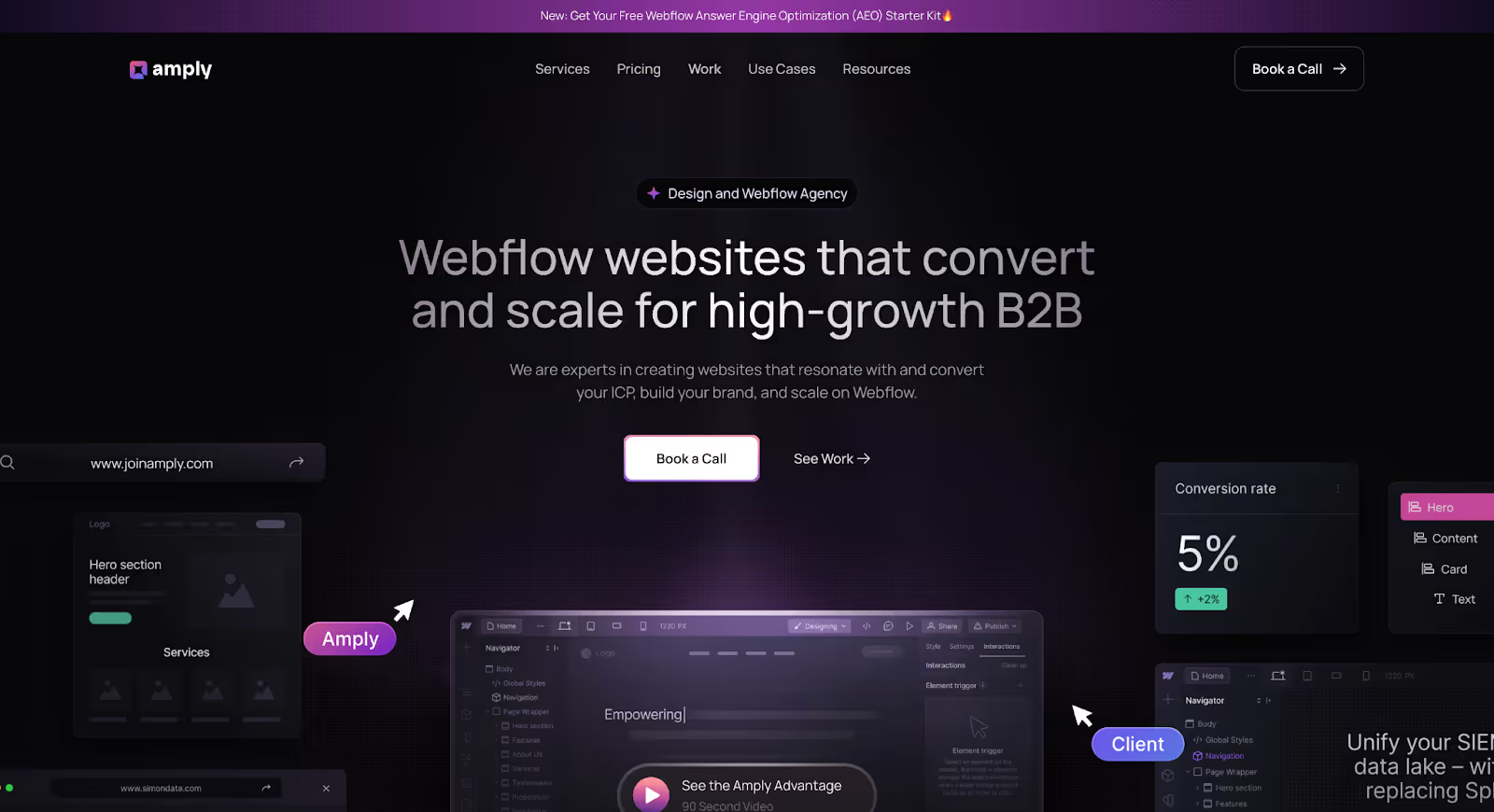
Amply is a Webflow-focused agency that works primarily with B2B SaaS startups, especially companies at the Seed to Series A stage. Their work is centered around helping technical teams turn complex products into websites that are easy to understand and built to support growth.
Amply works closely with YC-style companies building infrastructure-heavy or technical products. Many early-stage founders struggle to translate complex product capabilities into messaging that non-technical buyers can understand. Amply focuses on solving that problem by turning dense product positioning into clear, conversion-oriented websites.
Rather than treating the website as a one-time design project, Amply structures Webflow sites so they can evolve alongside the company. CMS systems, reusable page sections, and flexible layouts make it easier for founders or early marketing hires to update messaging, add pages, and publish new content without needing ongoing developer support.
Another distinguishing aspect is that Amply works exclusively on Webflow, which removes platform debates and allows the team to focus purely on execution within the platform.
- Strong fit for: Seed–Series A B2B SaaS companies coming out of YC
- Specializes in: Turning complex product positioning into clear, conversion-focused websites
- Build approach: CMS structures and modular pages designed so founders can update the site without agency help
- Platform focus: Webflow-only builds, which simplifies the stack and speeds up execution
Best for:
- YC B2B companies with a defined ICP
- Products that require explanation and clear messaging, not just a launch announcement
- Founders who want a Webflow site they can maintain themselves after launch
2. Flowout
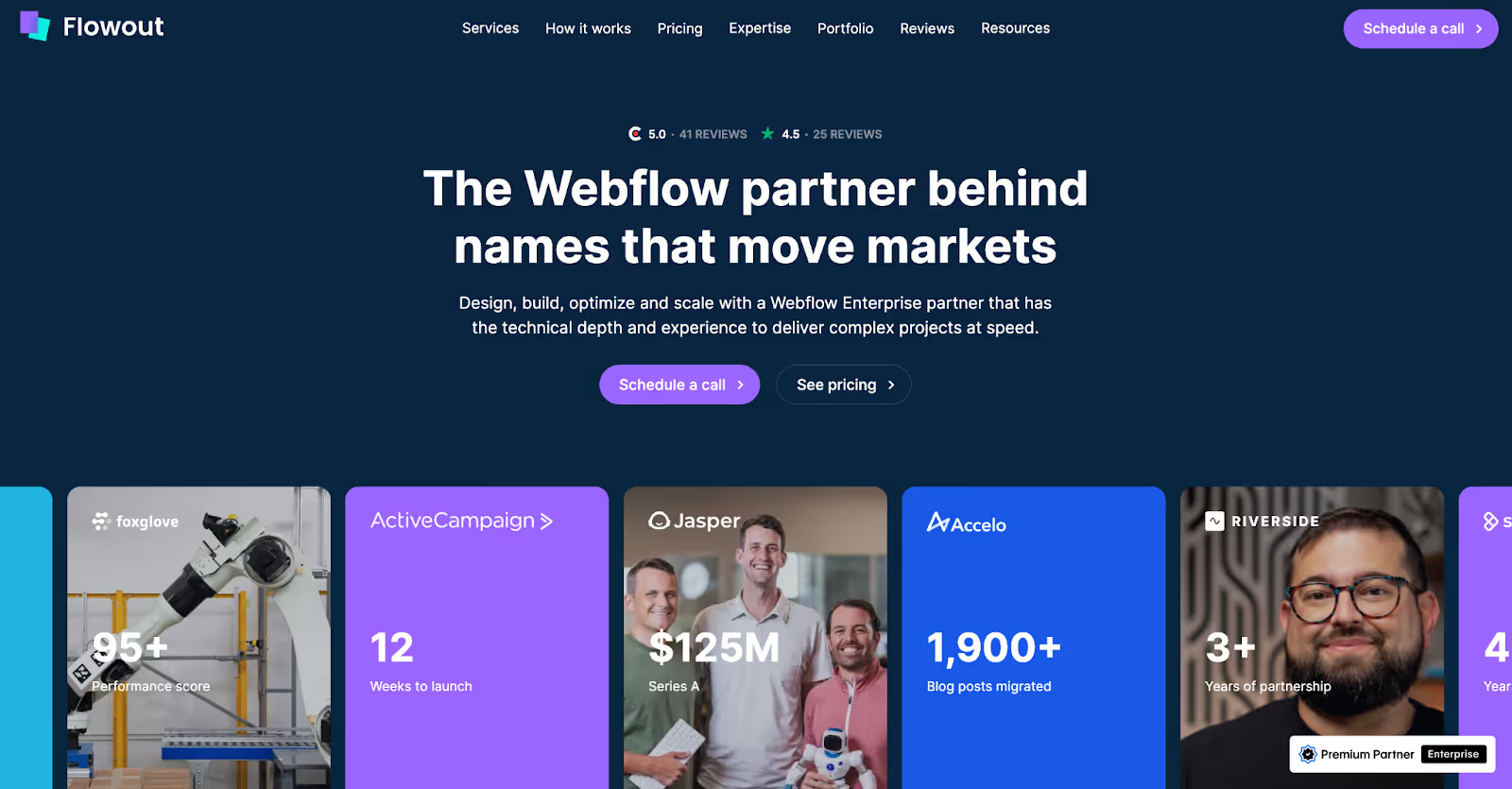
Flowout is a Webflow-focused agency known for its productized, subscription-style delivery model, designed to help startups move from idea to live website in a very short timeframe. Their model is built around speed and efficiency rather than long discovery or strategy-heavy engagements.
Flowout operates on a productized service model, which means projects follow a structured scope and a highly optimized delivery process. Instead of long discovery phases or extended design exploration, the focus is on executing quickly and getting a Webflow site live in a short timeframe.
This makes them particularly useful for startups that need to ship a credible website fast, such as teams preparing for Demo Day or launching publicly for the first time. Because the process is standardized, timelines are significantly shorter than traditional agency builds.
The trade-off is that the engagement leans more toward execution than deep strategic work, so companies that already have their messaging figured out tend to get the most value.
- Service model: Productized Webflow delivery with fixed scope and structured process
- Strength: Very fast turnaround compared to traditional agencies
- Approach: Execution-focused builds rather than heavy messaging or positioning work
Best for:
- YC startups that need a website live within 2–4 weeks
- Founders who already have clear messaging and page structure
- Teams preparing for Demo Day or a near-term launch
3. Edgar Allan
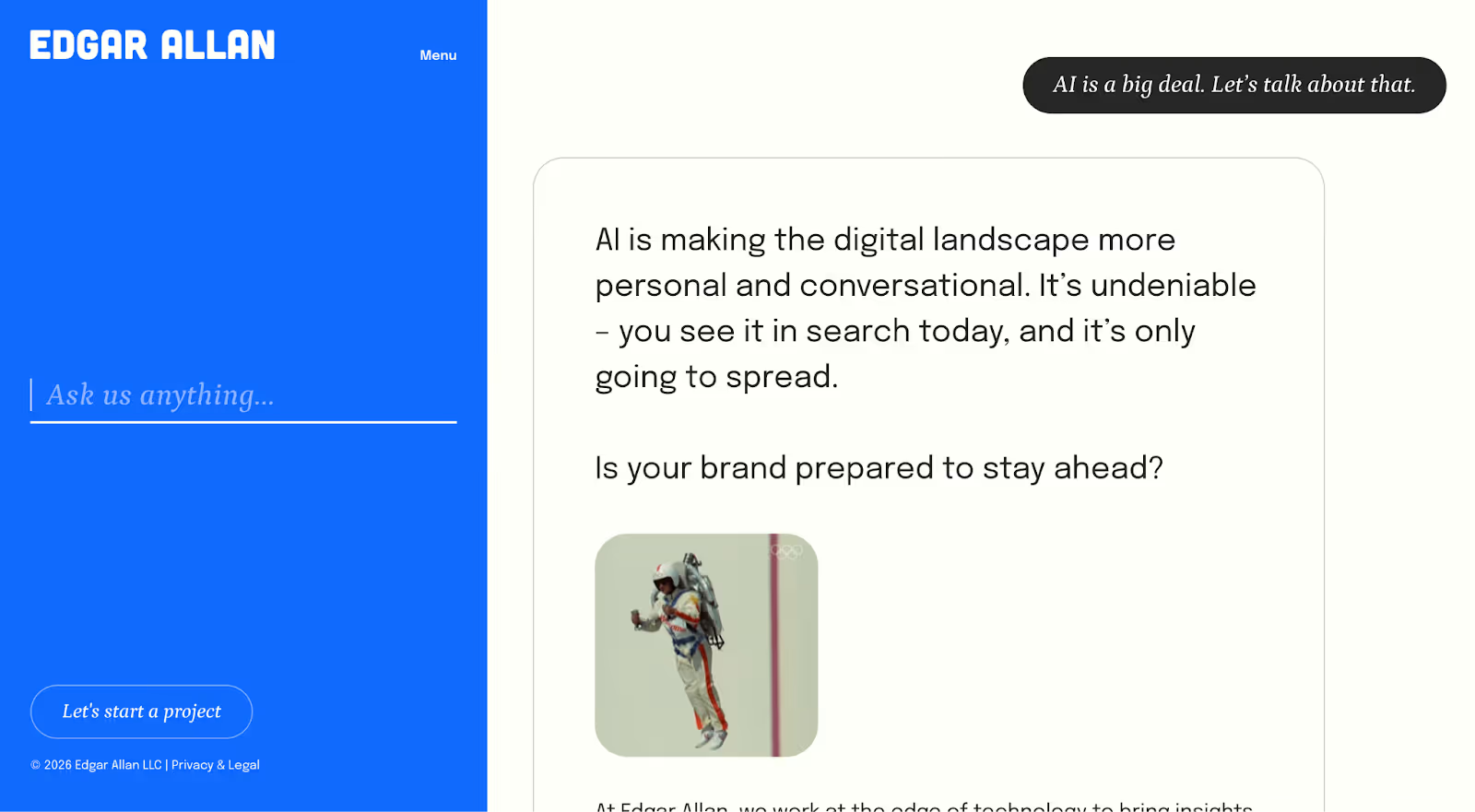
Edgar Allan is a Webflow agency that focuses on combining brand positioning, messaging, and website execution into a single process. They typically work with startups that need help not just building a site, but also clarifying how their product should be communicated.
Edgar Allan is known for combining messaging strategy with Webflow execution, which can be valuable for startups still refining how they explain their product. Instead of jumping straight into design and development, their process often includes working with founders to clarify positioning, messaging hierarchy, and how the product should be presented to buyers.
This approach can be particularly useful for YC startups that are still shaping their narrative as they move from early adopters toward a broader market. By aligning positioning and website structure during the build process, the final site tends to communicate the product more clearly and support early marketing efforts.
The trade-off is that this deeper strategic work can lead to slightly longer project timelines compared to faster productized Webflow services. However, for companies that need help defining their story as well as building their site, the additional time can lead to stronger long-term messaging.
- Approach: Combines positioning strategy with Webflow design and development
- Strength: Helps founders clarify messaging while the website is being built
- Process: Strategy-driven projects that prioritize narrative and structure
Best for:
- YC startups still refining their product narrative
- Founders who want messaging and positioning integrated into the website build
- Companies that value strategic input alongside execution
4. Unfold

Unfold is a Webflow agency that emphasizes close founder collaboration and practical, clarity-driven website builds. They typically work with startups that want to stay deeply involved in shaping their website rather than handing off the process to a fully structured agency workflow.
Unfold tends to work in a more collaborative, founder-involved style compared to agencies that follow rigid processes. Instead of heavy layers of process or long handoffs, their approach focuses on direct communication and active involvement from founders throughout the project.
The work itself prioritizes clarity and practicality over heavy design experimentation. For many technical startups, especially those with strong product opinions, this ensures the website reflects how the founders want to present their product rather than being shaped purely by agency preferences.
Because of this, Unfold works particularly well with founders who want to stay closely involved in decisions around messaging, structure, and layout.
- Approach: Direct founder collaboration rather than rigid agency process
- Design philosophy: Clarity-first, pragmatic websites rather than heavily stylized designs
- Working style: Highly collaborative with founders throughout the build
Best for:
- Founders who want to stay closely involved in the website build
- Technical teams with strong opinions about messaging and structure
- Startups that prefer clarity and practicality over heavy design experimentation
5. Daybreak Studio
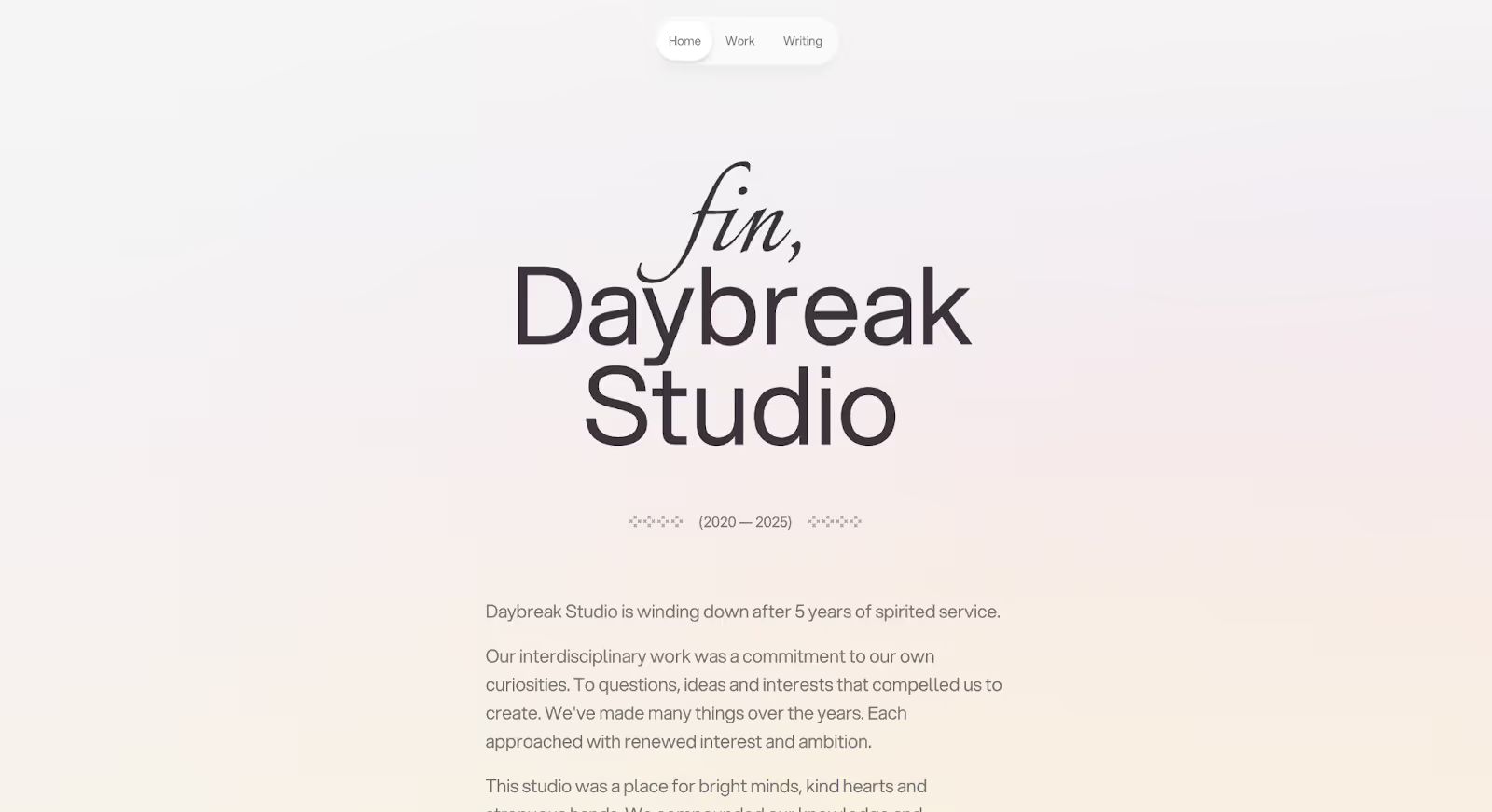
Daybreak Studio is a Webflow agency known for its editorial, content-first approach to website design, typically working with companies that need to communicate credibility and clarity rather than visual flair. Their work often reflects a more mature, structured style suited for B2B and enterprise-facing products.
Daybreak Studio takes a calm, editorial approach to website design, focusing on clarity, structure, and readability rather than flashy visuals or trend-driven layouts. Their sites tend to feel deliberate and polished, which can be especially valuable for startups selling into more traditional or enterprise environments.
This style works well for YC companies where credibility and trust are central to the buying decision. Instead of relying on bold visuals or creative experimentation, Daybreak focuses on clean layouts, strong typography, and well-structured content that helps buyers understand both the product and the company behind it.
- Approach: Editorial-style Webflow sites focused on clarity and structured storytelling
- Design philosophy: Calm, minimal layouts that emphasize readability and credibility
- Strength: Websites that signal maturity and professionalism
Best for:
- YC startups selling to enterprise or traditional industries
- Products where trust and credibility drive conversions
- Teams that prefer understated, clarity-first website design
6. Veza Digital
Veza Digital is a Webflow and growth-focused agency that works with B2B startups and scale-ups looking to turn their website into a performance-driven marketing asset. Their work typically sits at the intersection of design, development, SEO, and conversion optimization.
Veza Digital positions itself as a growth-oriented Webflow agency, combining website design and development with services like SEO, conversion optimization, and performance-driven marketing strategy. Instead of treating the website purely as a design project, their approach focuses on how the site contributes to broader growth goals.
This makes them particularly relevant for YC companies that have moved beyond the initial launch phase and are starting to scale marketing efforts. At that stage, the focus shifts from simply having a website live to improving conversion rates, increasing organic traffic, and supporting consistent demand generation.
- Approach: Webflow builds combined with SEO and conversion-focused strategy
- Strength: Websites designed to support marketing performance and growth
- Focus: Aligning website structure with lead generation and marketing funnels
Best for:
- YC alumni or startups moving from early launch into growth stage
- Companies investing in SEO and conversion optimization
- Teams that want their website tightly connected to marketing performance
Red flags when hiring a Webflow agency as a YC startup
Not every Webflow agency is built to support the pace and constraints of an early-stage startup. YC companies typically need to launch quickly, explain complex products clearly, and iterate frequently as their positioning evolves. If an agency’s process or experience doesn’t align with those realities, the project can easily become slower, more expensive, or harder to maintain after launch.
When evaluating Webflow agencies, the following signs often indicate that the partnership may not be the right fit for a YC startup.
1. No experience with B2B SaaS or technical products
Agencies that mainly work with consumer brands or ecommerce companies may struggle to structure messaging for complex B2B products. YC startups often need websites that clarify technical concepts and support sales conversations, not just visually appealing marketing pages.
2. Timelines longer than 12 weeks for an MVP website
While larger redesigns can take time, an early-stage startup site generally shouldn’t require a multi-month process. YC companies typically benefit from a faster launch followed by iteration rather than waiting several months for a “perfect” first version.
3. No clear post-launch support option
Websites almost always need adjustments after launch as messaging evolves or new features ship. If an agency offers no ongoing support or maintenance structure, startups may struggle to make changes quickly when needed.
4. The agency controls your Webflow account or CMS
Your company should always own the Webflow workspace and CMS access. Some agencies set up projects inside their own accounts, which can make it difficult to fully control or manage the site later.
5. A portfolio focused entirely on consumer or ecommerce brands
Design styles and conversion structures for consumer products are very different from B2B SaaS. If an agency’s portfolio lacks examples of SaaS or technical products, they may not be the best partner for a YC startup website.
Spotting these red flags early can help founders avoid projects that look good visually but fail to support the real goal of the website, clearly explaining the product and helping the company grow.
Final thoughts
The biggest mistake YC startups make when hiring a Webflow agency is assuming that the “best” agency is the one with the most impressive portfolio. In reality, the right partner depends much more on what stage your company is in and what problem the website needs to solve right now.
Some YC teams simply need to launch quickly before Demo Day. Others are trying to clarify complex product messaging as they move from early adopters to real buyers. And for companies a year or two out of the batch, the website often becomes a growth asset tied directly to SEO, conversion rates, and marketing performance. The agencies in this list reflect those different needs from fast execution to deeper positioning and long-term growth support.
The most important thing is choosing an agency that understands how early-stage startups actually operate: fast timelines, evolving messaging, and small teams that need to maintain the site themselves. When those pieces align, a Webflow website stops being just a design project and becomes one of the most useful tools a YC startup has for explaining its product and supporting growth.
Frequently Asked Questions
Most projects range between $10,000 and $40,000 depending on scope. MVP sites sit lower, while strategy and CMS-heavy builds cost more.
Timelines usually range from 2 to 10 weeks. Faster agencies deliver quickly, while strategy-led projects take longer.
It depends on resources. Agencies help launch faster with better messaging. In-house works if skills exist but often takes longer.
Webflow allows fast iteration without developer dependency, which is critical for early-stage startups refining messaging.
Look for B2B SaaS experience, fast execution, and strong understanding of product communication.
Yes, if built properly. A well-structured CMS allows non-technical users to manage content easily.