Best Webflow Enterprise Agencies in 2026 (Ranked & Compared)

Quick Answer: The Best Webflow Enterprise Agencies in 2026
The best Webflow enterprise agencies in 2026 are Amply, Finsweet, Flow Ninja, Edgar Allan, SVZ, Webstacks, Refokus, and Veza Digital. Each is a fit for a different kind of enterprise project:
- Amply - Best overall for B2B enterprise marketing websites that need scalable Webflow builds tied to SEO, conversion, and long-term marketing ownership.
- Finsweet - Best for advanced Webflow development and complex CMS architecture.
- Flow Ninja - Best for large multilingual builds and enterprise migrations.
- Edgar Allan - Best for premium brand storytelling at enterprise scale.
- SVZ - Best for B2B SaaS positioning and demand-generation websites.
- Webstacks - Best for website operations and ongoing marketing-site management.
- Refokus - Best for interactive, motion-led enterprise experiences.
- Veza Digital - Best for growth-focused enterprise redesigns.
The full comparison table, pricing, and detailed reviews are below.
Key Takeaways
- Enterprise websites need more than strong visuals. They need scalable systems, clean CMS structures, and easier marketing workflows.
- The best Webflow enterprise agencies help teams reduce developer dependency and move faster after launch.
- Amply, Finsweet, Flow Ninja, Edgar Allan, SVZ, Webstacks, Refokus, and Veza Digital are the strongest options for enterprise Webflow projects in 2026.
- Each agency has a different strength, from advanced Webflow development to branding, CRO, migrations, and interactive experiences.
- Enterprise Webflow projects typically run from $20,000 to over $250,000 depending on scope, migration complexity, and integrations.
- Enterprise teams should evaluate scalability, technical depth, collaboration process, performance, accessibility, and post-launch maintainability.
Enterprise websites break differently.
It is rarely just about design looking outdated. The real problems show up in operations. Marketing teams cannot launch pages fast enough. Developers get stuck handling simple CMS updates. Brand consistency falls apart across regions. Site performance drops as teams scale. And every new integration adds another layer of complexity.
That is why enterprise companies do not hire Webflow agencies just for visuals anymore. They hire them to solve operational bottlenecks, improve scalability, and help internal teams move faster without piling up technical debt.
The challenge is that most Webflow agencies are built for startups and small business websites. Enterprise teams need something different. They need agencies that can handle large CMS structures, complex migrations, governance systems, multilingual setups, performance optimization, accessibility requirements, and cross-functional work with marketing, product, and engineering.
The wrong agency leaves enterprise teams with slow workflows, fragile architecture, and a website that gets harder to manage over time. The right one turns Webflow into scalable marketing infrastructure that supports growth instead of slowing it down.
In this guide, we shortlisted the best Webflow enterprise agencies in 2026 based on execution quality, enterprise readiness, scalability, technical depth, and reputation in the Webflow ecosystem. This list is built for enterprise teams who want to scale without depending on developers for every website update.
Full disclosure: this guide is researched and maintained by the team at Amply, and Amply appears on the list. We applied the same criteria to every agency, and every profile sticks to verifiable facts so you can compare and decide for yourself.
How We Chose These Agencies
Not every Webflow agency is built for enterprise-scale work. Many are excellent at visually strong websites but struggle with the operational complexity larger companies deal with daily.
We scored each agency against five criteria, weighted toward enterprise readiness and technical depth:
- Enterprise Webflow experience - Proven work with large companies, high-traffic websites, or complex Webflow implementations.
- Scalability and technical depth - Ability to handle large CMS structures, advanced integrations, performance optimization, accessibility, and scalable site architecture.
- Strategic and operational support - Help with workflows, content operations, governance systems, and marketing-development collaboration, not just design.
- Reputation in the Webflow ecosystem - Partner status, notable client work, and consistent delivery quality.
- Long-term maintainability - Systems enterprise teams can realistically manage and scale internally, instead of dependency-heavy builds.
Comparison Table: Best Webflow Enterprise Agencies in 2026
The 8 Best Webflow Enterprise Agencies in 2026
Each agency below was selected on enterprise readiness, scalability, Webflow expertise, operational support, and execution quality. Each brings a different strength, whether that is large-scale migrations, conversion-focused systems, advanced development, or premium brand experiences.
1. Amply
Founded: 2020
HQ: Lehi, Utah (distributed team)
Team: 34+
Webflow partner status: Webflow Premium Enterprise Partner
Webflow Awards: Top New Partner finalist, 2023
Engagement: Project-based + retainer
Notable clients: Awardco, Anvilogic, Zeni, Simon Data, Dell, Jupiter
Rating: 5.0/5 on Clutch
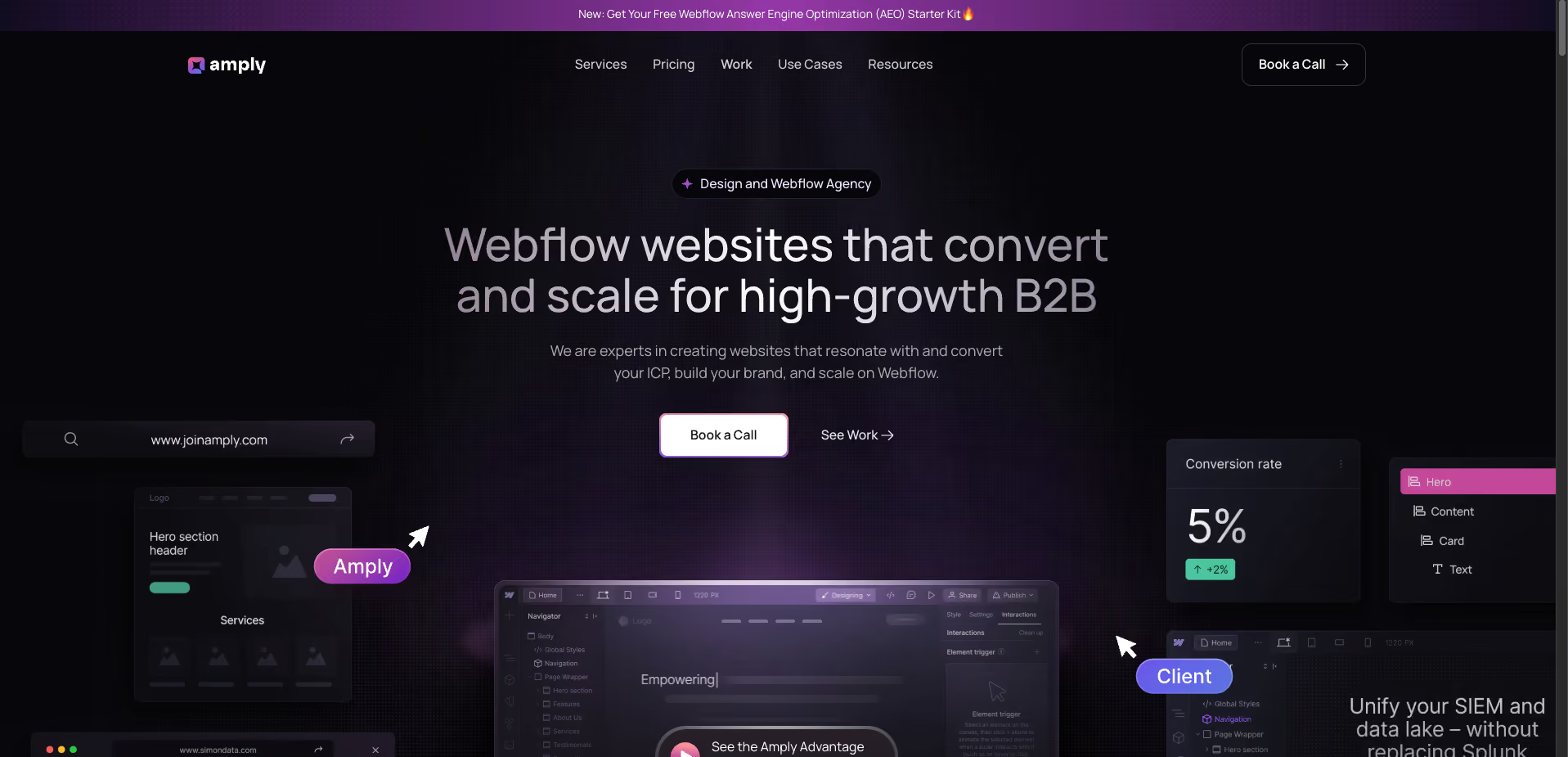
Amply builds high-performing B2B websites for companies that need more than a visual redesign. The approach fits enterprise brands that want a scalable Webflow website tied closely to marketing, SEO, and long-term growth.
Unlike agencies that treat Webflow as only a design tool, Amply treats website development as part of a broader revenue and positioning strategy. That matters for enterprise companies where trust, clarity, and conversion flows drive lead generation, demos, partnerships, and inbound pipeline.
The work emphasizes clean CMS architecture, conversion-focused landing pages, SEO scalability, and easy internal management for marketing teams. Amply builds are structured to reduce the post-launch bottleneck, so internal teams can ship pages and updates without waiting on engineering.
Best for: B2B enterprise companies that want a scalable Webflow website with strong SEO foundations, conversion-focused structure, and long-term marketing flexibility.
2. Finsweet
HQ: New York, USA
Team: Up to 50
Engagement: Project-based
Notable clients: Dropbox Sign, Weglot, Jasper
Known for: Creators of Finsweet Attributes and Wized
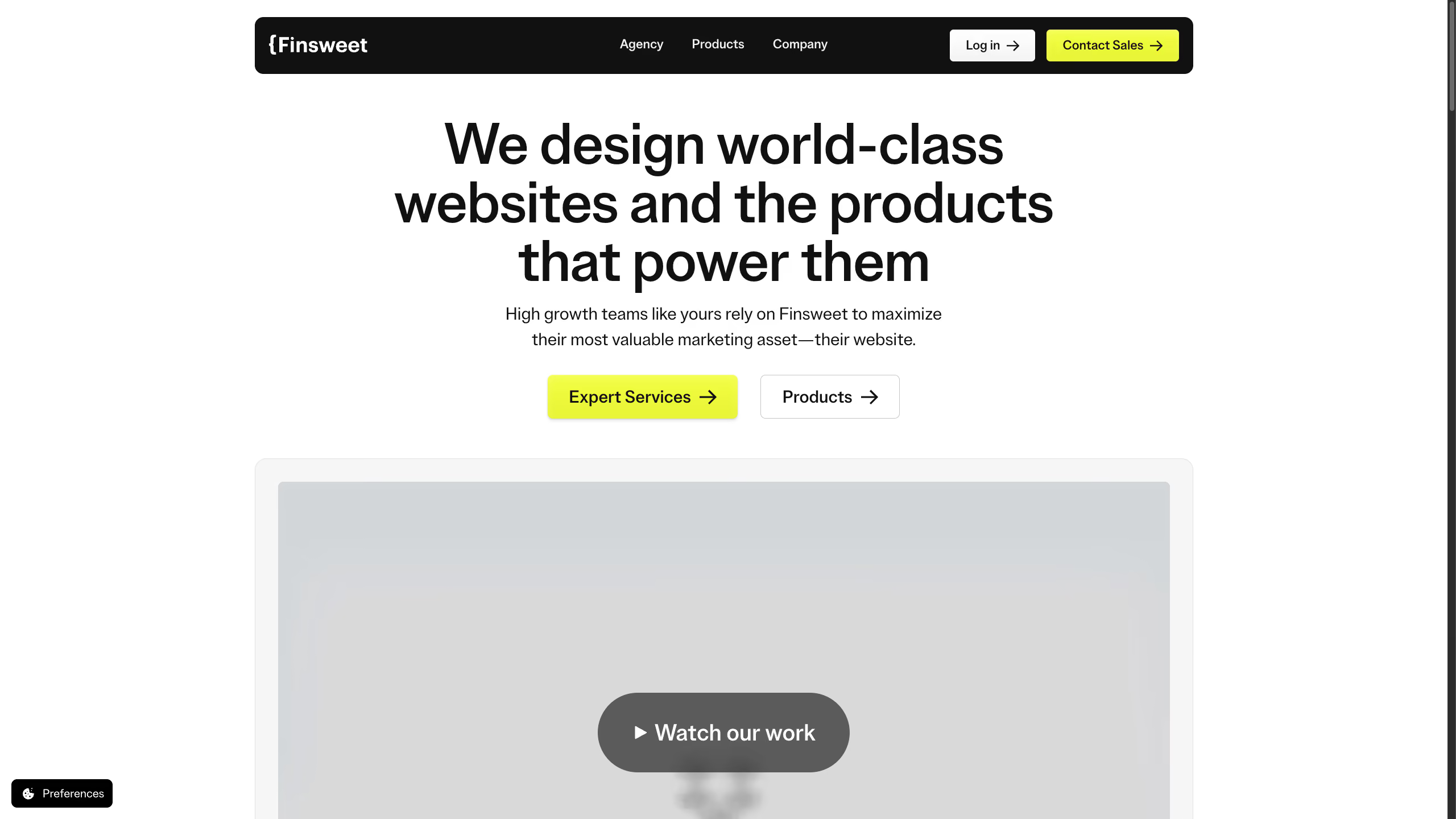
Finsweet is one of the most technically respected names in the Webflow ecosystem, especially for enterprise companies with complex CMS requirements and scalable infrastructure needs.
They are known for pushing the technical limits of Webflow: advanced CMS architecture, dynamic filtering, large component systems, custom interactions, and scalable frameworks that make enterprise websites easier to manage over time. Their tools and educational resources are widely adopted across the Webflow community, which gives enterprise clients confidence in their depth.
Finsweet is strongest for enterprise teams that already have solid brand systems and mainly need sophisticated Webflow execution, without moving to a heavily custom-coded stack that creates long-term engineering dependency.
Best for: Enterprise companies needing advanced Webflow development, scalable CMS systems, and technically complex implementations.
3. Flow Ninja
HQ: Belgrade, Serbia
Team: 50+
Engagement: Project-based
Focus: Enterprise migrations, multilingual builds
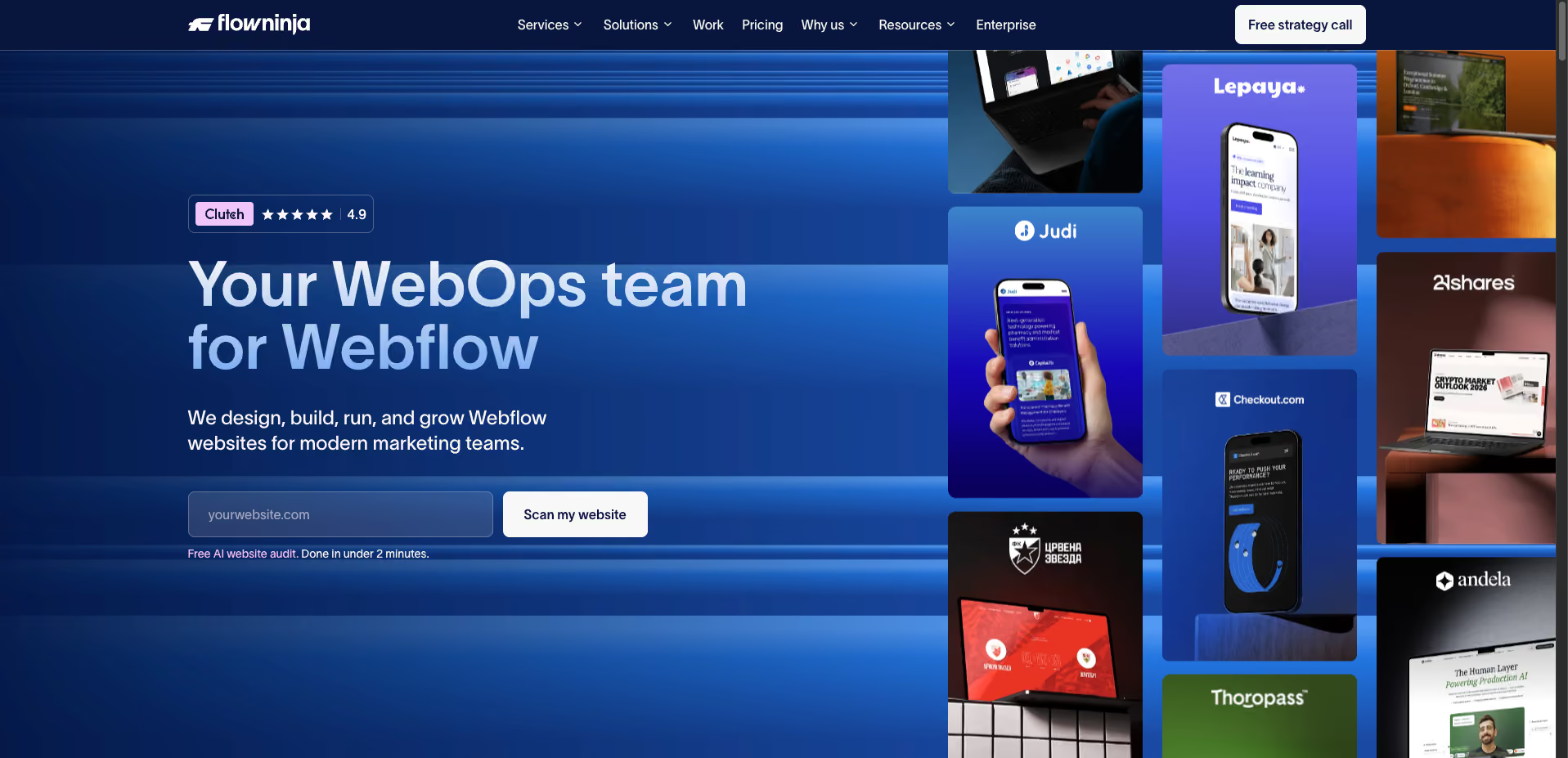
Flow Ninja is one of the strongest Webflow agencies for enterprise-scale implementation and long-term scalability. Their work fits companies managing large websites across multiple markets, teams, or product lines.
Their biggest strength is handling complexity without making the final system hard to manage internally. They are experienced with enterprise migrations, multilingual websites, localization workflows, and large CMS-driven builds, which makes them a fit for global SaaS and technology brands. Their process supports coordination across marketing, product, design, and engineering without slowing execution.
Best for: Enterprise companies managing large-scale Webflow projects, multilingual websites, or complex migrations.
4. Edgar Allan
Founded: 2013
HQ: Atlanta, USA
Team: 50+
Engagement: Project-based + ongoing support
Notable clients: GE, Calendly, Lucidworks
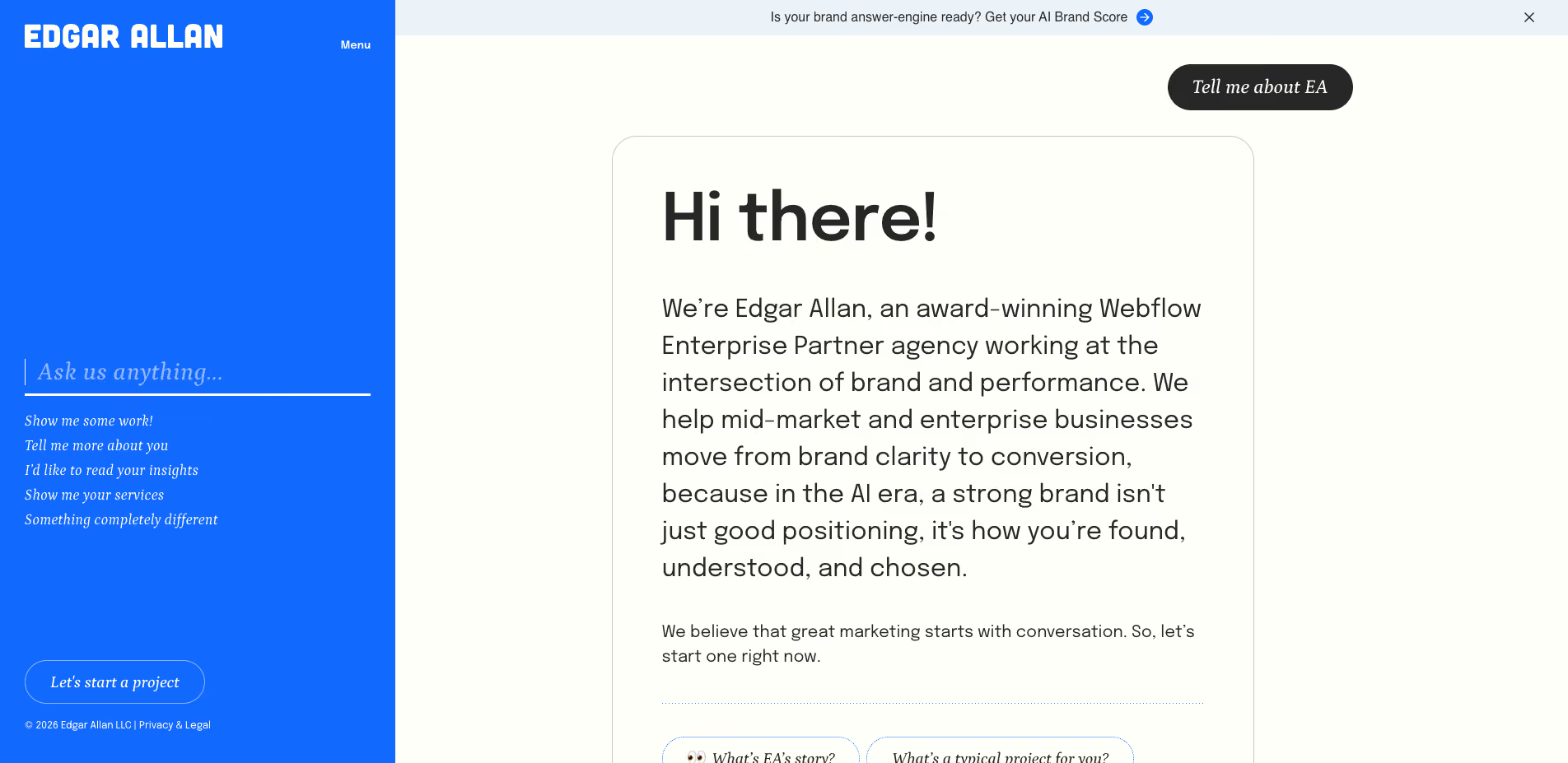
Edgar Allan is a strong choice for enterprise companies that care heavily about brand perception, storytelling, and premium digital experiences alongside Webflow execution.
Their work leans toward high-end brand presentation. For enterprise businesses in competitive markets, that reinforces market positioning, investor confidence, and recruiting, not just lead generation. They are effective for rebrands, category repositioning, and large-scale refreshes where visual identity and messaging evolve together, and their Webflow expertise keeps the result maintainable after launch.
Best for: Enterprise companies focused on premium branding, storytelling, and modern Webflow experiences that strengthen market positioning.
5. StanVision
Founded: 2018
HQ: Sofia, Bulgaria (distributed team)
Team: 20+
Webflow partner status: Webflow Premium Partner
Engagement: Project-based + retainer
Notable clients: Primer, Rillet, AST SpaceMobile, SmartSuite, OfficeRnD, emerchantpay
Recognition: 65+ design awards; 4.9 on Clutch
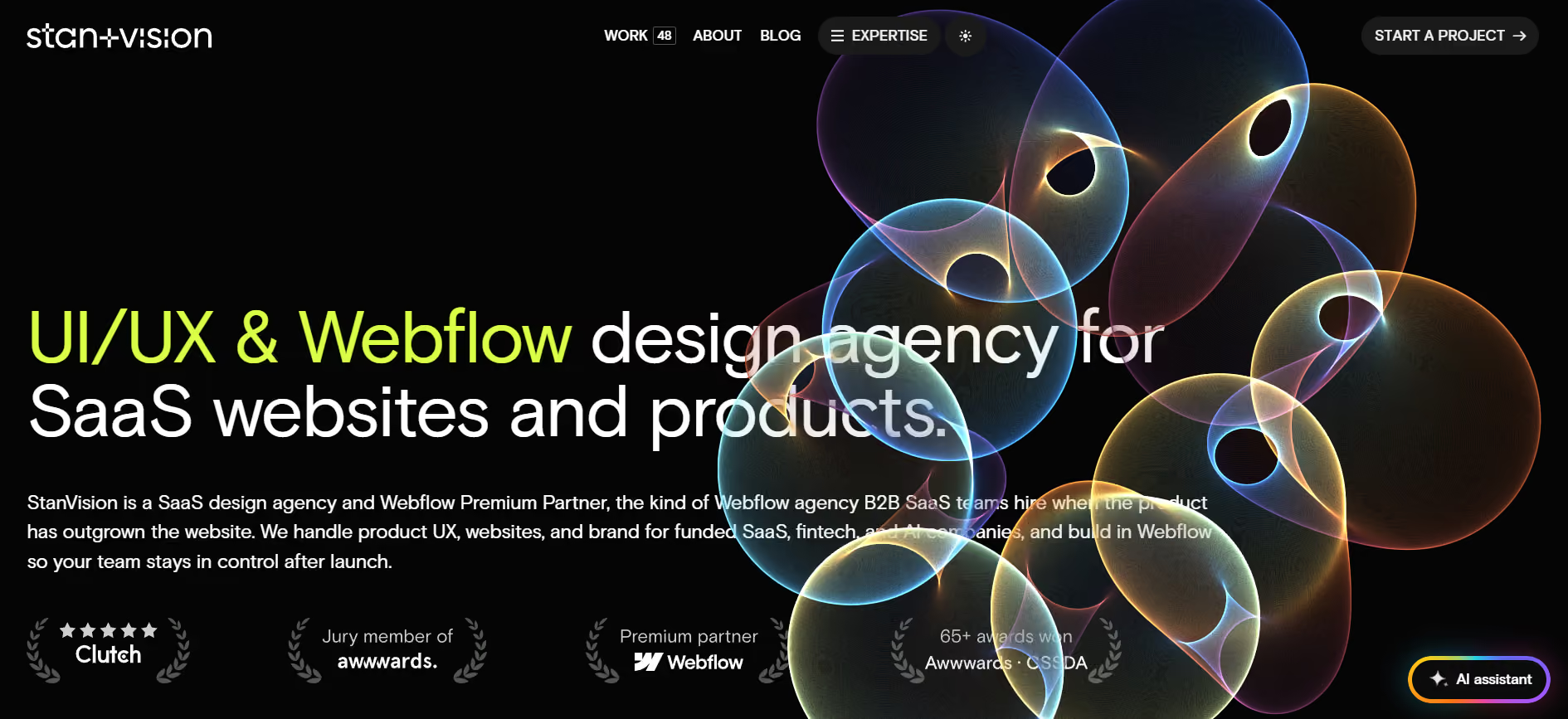
StanVision is a Webflow Premium Partner that builds on Webflow Enterprise, and treats the organization, not the website, as the hard part. Security review, procurement, governance setup, and migration at scale are handled inside the engagement rather than handed back to the client’s team. They will also tell you whether you need the Enterprise plan or whether Business covers you.
Product UX and the marketing site are designed by the same team, so the site matches what users find inside the app. Migrations run with a full URL inventory, single-hop redirects, and a ranking baseline captured before anything moves: Gridwise came off WordPress with conversions up 24% and rankings intact. Average client partnership runs 3+ years.
Best for: Enterprise and scaling B2B SaaS, fintech, and AI companies that need a Webflow build to survive security review, procurement, and governance - and a migration that holds its rankings.
6. Webstacks
Founded: 2020
HQ: San Diego, USA
Team: 50+
Engagement: Project-based + retainer
Notable clients: Snowflake, Braze, ServiceTitan
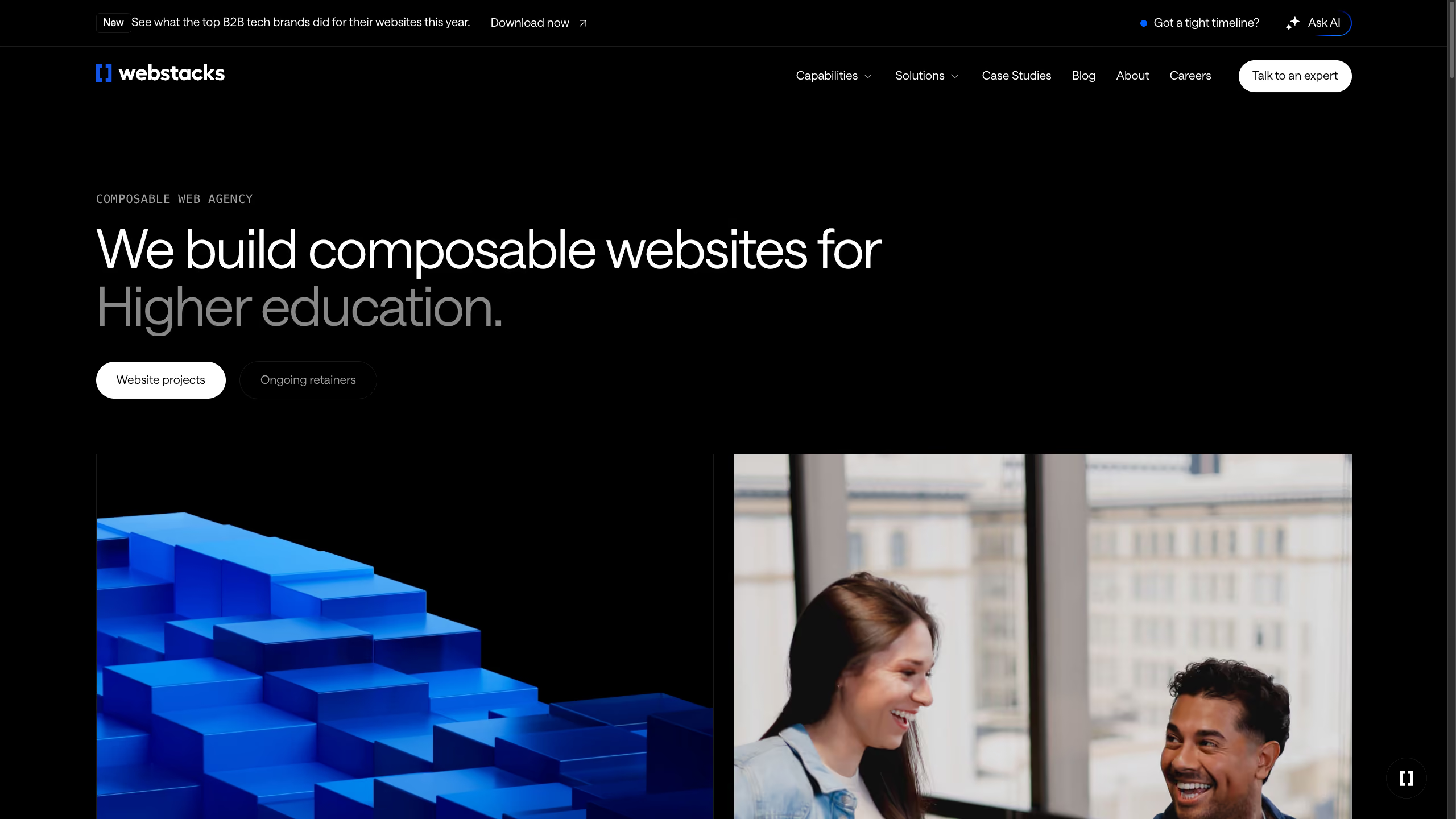
Webstacks is a website-operations agency that helps enterprise B2B companies build, manage, and scale high-performing marketing websites. They work with fast-growing SaaS and technology brands and combine Webflow development with content operations, SEO, and growth marketing.
Their model fits enterprise teams that treat the website as an always-on system rather than a one-time project. That makes them a strong option for companies that need ongoing website management, a structured design system, and a partner that can support marketing at scale after launch.
Best for: Enterprise B2B SaaS companies that want website operations, ongoing management, and growth-focused marketing sites.
7. Refokus
HQ: Remote (Europe)
Team: 20+
Engagement: Project-based
Focus: Interactive design, motion, immersive UX
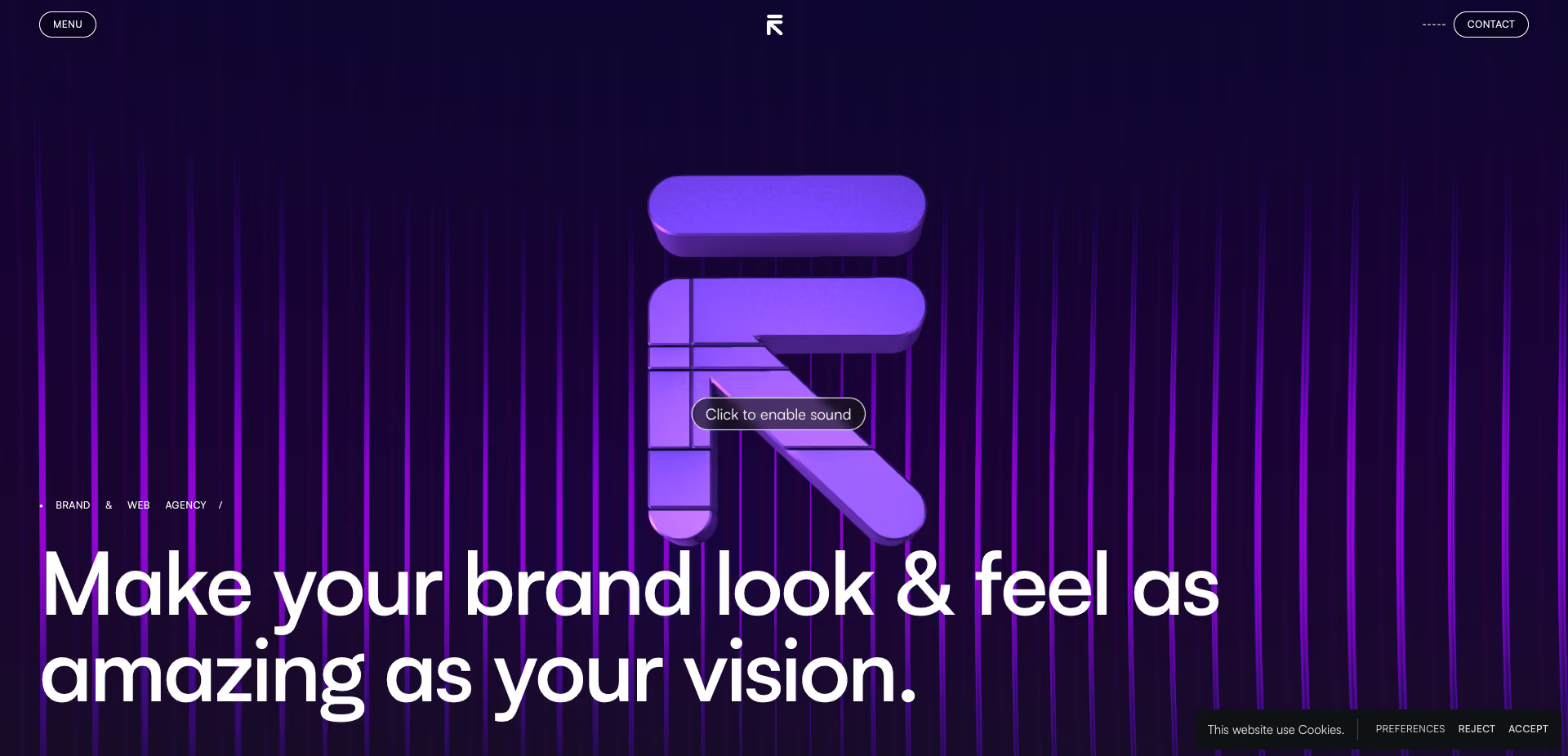
Refokus is one of the most visually distinctive Webflow agencies working with enterprise and technology brands. Their work centers on premium interaction design, immersive experiences, and high-end presentation.
For enterprise companies in competitive or innovation-driven markets, visual differentiation shapes brand perception. Refokus creates experiences that feel modern and highly interactive without losing usability, combining motion design, storytelling, and Webflow development. They can execute complex animations directly in Webflow while keeping performance reasonable, which suits brands that want premium visuals without a fully custom-coded environment.
Best for: Enterprise technology and SaaS companies that want premium interactive Webflow experiences with strong motion design.
8. Veza Digital
HQ: USA (distributed)
Team: 40+
Engagement: Project-based + retainer
Focus: Enterprise redesigns, branding, scalable Webflow
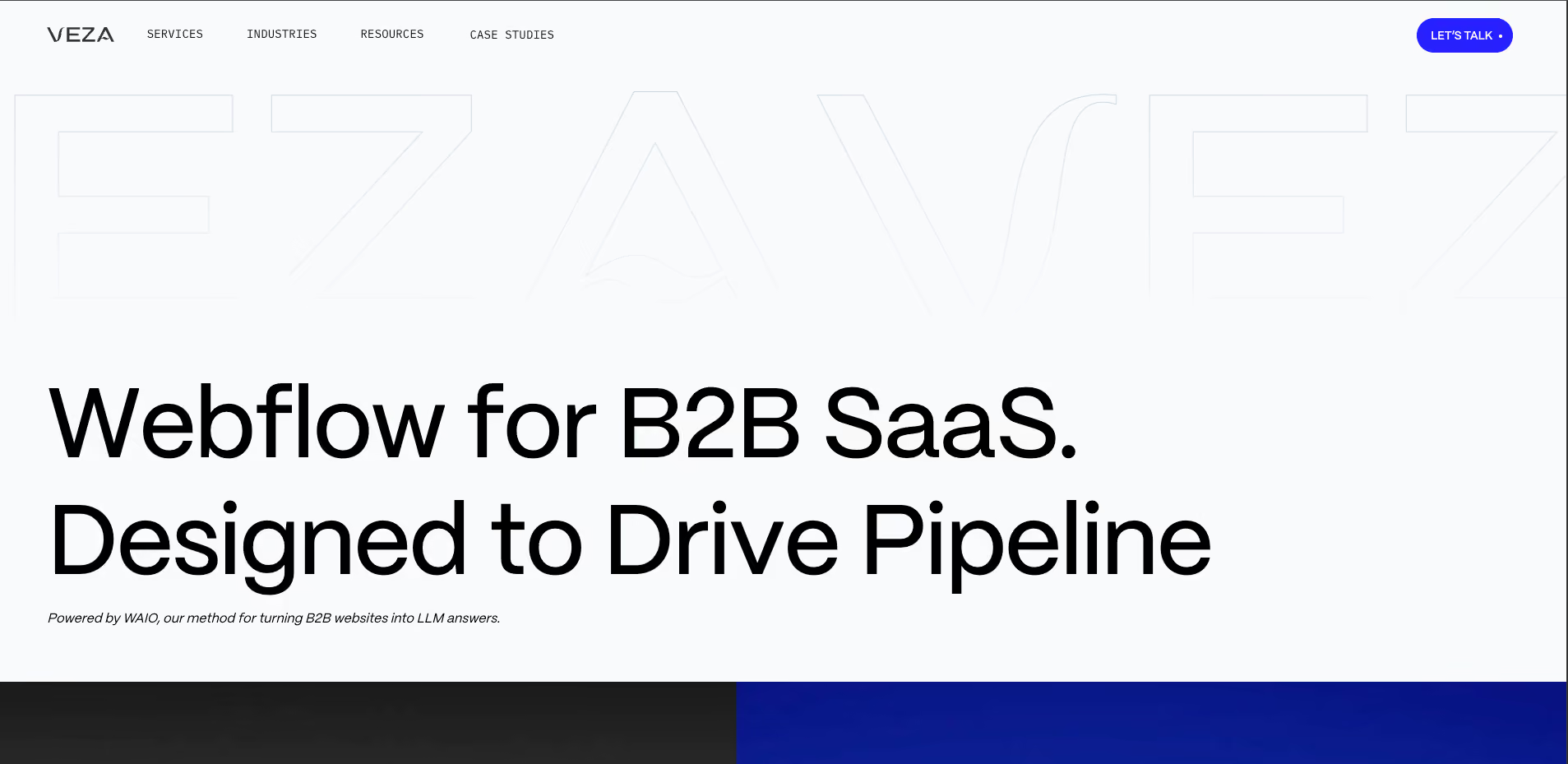
Veza Digital is a recognized Webflow agency for enterprise SaaS and B2B companies that need branding, website strategy, and scalable Webflow execution in one place.
Their approach connects branding, messaging, SEO, and conversion strategy, which often get handled separately elsewhere. They are experienced in redesigning enterprise websites that have outgrown their structure or no longer match current positioning, and they build modular Webflow frameworks that marketing teams can keep using after launch.
Best for: Enterprise SaaS and B2B companies that want a balance of modern branding, conversion strategy, and scalable Webflow implementation.
How Much Does an Enterprise Webflow Project Cost?
Enterprise Webflow pricing depends on site size, CMS complexity, integrations, migration scope, localization, and whether you need ongoing support. As a benchmark:
- Mid-market marketing sites: $20,000–$50,000. Custom design, CMS setup, SEO foundations, and conversion-focused pages.
- Enterprise builds and migrations: $50,000–$150,000+. Complex CMS architecture, integrations, multi-stakeholder governance, and extensive QA.
- Large multi-region or multi-product sites: $150,000–$250,000+. Multilingual setups, localization workflows, and advanced functionality.
- Ongoing support and retainers: $2,000–$15,000+/month for updates, landing pages, SEO, performance work, and continuous development.
- Hourly rates: typically $100–$250+ depending on agency tier and location.
Rather than choosing on price alone, weigh the long-term value: an enterprise site that internal teams can manage without constant developer help usually pays back the investment faster.
What to Look For in a Webflow Enterprise Agency
Choosing an enterprise Webflow agency is less about the most impressive portfolio and more about a partner that supports long-term scalability, operational efficiency, and business goals. Evaluate these factors before deciding.
1. Proven Enterprise Experience
Enterprise projects bring challenges smaller projects do not: large CMS structures, multiple stakeholders, governance systems, and complex workflows. An agency that mainly works with startups may struggle with that complexity.
2. Scalable CMS and Site Architecture
Many enterprise websites get hard to manage after launch because the structure was not designed for scale. Ask how the agency approaches CMS organization, reusable components, page templates, and long-term maintainability.
3. Is the Agency a Webflow Partner?
Webflow’s partner program recognizes agencies by capability, and Enterprise and Premium Partners get priority access to Webflow support and enterprise features. Ask about partner status and whether the agency can access priority Webflow support for your project.
4. Post-Launch Workflow and Developer Dependency
The website should improve team efficiency, not create new bottlenecks. Ask how much developer involvement everyday updates will require after launch.
5. Performance, Accessibility, and SEO
Enterprise sites carry real traffic and compliance requirements. Confirm the agency builds for performance, accessibility (WCAG), and scalable SEO structure, not just visuals.
Common Mistakes Companies Make When Hiring a Webflow Enterprise Agency
Enterprise teams often focus on visual design during selection while overlooking the operational and scalability factors that matter long after launch.
1. Prioritizing Visual Design Over Scalability
A polished website does not mean the underlying system is scalable. Highly custom layouts can make future updates slow for internal teams. Balance design quality with maintainable structure.
2. Choosing Agencies Without Enterprise Experience
Multiple stakeholders, governance, approvals, localization, and large CMS structures add complexity that startup-focused agencies often underestimate.
3. Ignoring Post-Launch Workflows
If marketers still need developers for every landing page or CMS edit, the bottleneck remains. Evaluate how easy the site will be to manage afterward.
4. Overlooking Content and SEO Structure
Some redesigns damage SEO, content organization, or conversion paths. Enterprise sites need scalable content structures that support search visibility and campaigns.
5. Selecting Based Only on Portfolio Style
A strong portfolio can hide weak implementation. Evaluate process quality, scalability, and technical execution alongside the creative work.
6. Underestimating Internal Team Alignment
Large projects fail when stakeholders are not aligned on goals, ownership, and success metrics before work starts. Define operational priorities up front.
Final Thoughts
The best Webflow enterprise agency is not the one with the flashiest portfolio. It is the one that helps your team scale efficiently long after launch.
Enterprise websites today need to support far more than branding. They need to enable faster marketing execution, improve workflows, hold performance at scale, and help teams adapt as the business evolves.
The right agency builds systems that are flexible, maintainable, and aligned with long-term growth. Before deciding, focus on how the agency approaches scalability, collaboration, maintainability, and operational efficiency, not just visual execution.
Frequently Asked Questions
The best Webflow enterprise agencies in 2026 are Amply, Finsweet, Flow Ninja, Edgar Allan, SVZ, Webstacks, Refokus, and Veza Digital. Amply is the strongest overall choice for B2B enterprise marketing websites, Finsweet leads on advanced development, Flow Ninja on large migrations, and Edgar Allan on premium branding.
A Webflow enterprise agency specializes in building large-scale Webflow websites for companies with complex operational, technical, and marketing requirements. They typically handle scalable CMS systems, integrations, governance workflows, localization, performance optimization, and long-term maintainability.
Enterprise Webflow projects generally range from $20,000 to over $250,000 depending on complexity, CMS requirements, integrations, branding scope, localization, and custom functionality. Large migrations and multi-region websites cost significantly more, and ongoing retainers typically run $2,000 to $15,000+ per month.
A Webflow Enterprise Partner is an agency recognized in Webflow’s highest partner tier for delivering enterprise-grade projects. These agencies get priority access to Webflow support and enterprise features, which can matter for large or business-critical builds.
Most enterprise Webflow redesigns take 8 weeks to 6 months depending on site size, stakeholder approvals, content migration complexity, integrations, and design scope.
Yes. Webflow is increasingly used by enterprise SaaS, technology, and B2B companies because it lets marketing teams move faster while keeping strong design and performance. Success depends on how the site architecture is planned to support large CMS collections, multilingual content, and scalable landing page systems.
Usually far less than before. Webflow reduces developer dependency for everyday content and marketing updates, though developers may still be needed for advanced integrations or custom functionality.
Enterprise Webflow agencies commonly work with SaaS, cybersecurity, AI, fintech, healthcare technology, consulting, and B2B technology companies that need scalable marketing websites and faster content operations.