Webflow Enterprise Partners: The Complete 2026 List

.avif)
Key Takeaways
- Enterprise is a designation, not a tier. Webflow's directory filters partners by tier (Professional, Premium) and by Enterprise separately, so an agency can carry Enterprise at either tier level.
- Premium is Webflow's top tier, described in the directory as partners with the most proven success serving Webflow clients. Enterprise marks partners who specialize in complex builds for large customers.
- The strongest combination is Premium plus Enterprise. Agencies holding both include Amply, Flowout, Finsweet, MakeBuild, Kvalifik, and The Pod Agency.
- Enterprise partners exist at the Professional tier too. Bureau Breekijzer, Appsrow, and Agence Norry all carry Enterprise alongside Professional status, which is why tier alone is a poor shortlisting filter.
- The Enterprise designation matters most for Webflow Enterprise licensing, SSO, complex governance, and multi-region builds. For a standard marketing site, a Professional-tier partner often delivers the same result for less.
- Enterprise Webflow projects typically run $30,000 to $150,000+, with hourly rates between $100 and $250. Directory minimums range from around $4,500 to $70,000. We break the numbers down in full in our guide to what a Webflow agency costs in 2026.
- Verify before you sign. Webflow's official directory shows each partner's tier, Enterprise status, award history, and starting budget on the profile card. Check it directly rather than trusting agency marketing copy.
A Webflow Enterprise Partner is an agency carrying Webflow's Enterprise designation, given to partners who specialize in complex builds for large customers. Enterprise is not a rank. It sits alongside Webflow's partner tiers, Professional and Premium, so an agency can hold Enterprise at either level. The strongest combination is Premium plus Enterprise, held by agencies including Amply, Flowout, Finsweet, MakeBuild, and Kvalifik. Webflow lists 1,200+ certified partners overall, and only a fraction carry the Enterprise designation. Full tier breakdown, Webflow Awards winners by year, and how to verify any agency's status are below.
What Is a Webflow Enterprise Partner?
A Webflow Enterprise Partner is an agency vetted by Webflow to deliver complex, high-stakes builds on Webflow Enterprise, the platform's top-level plan. The designation sits above Certified, Professional, and Premium in Webflow's partner program, and it signals that the agency has a proven delivery record on enterprise accounts, not just technical familiarity with the platform.
The distinction matters because "Webflow Partner" is used loosely in agency marketing. Any agency that passes Webflow's certification exam can call itself a partner. Enterprise-level status is a different thing entirely: it reflects verified project volume, client complexity, and a working relationship with Webflow's own team.
What Webflow Looks For
Webflow does not publish a public checklist of tier requirements, but the pattern across agencies holding Enterprise-level status is consistent:
- Delivered Enterprise-plan projects, not just standard Webflow sites. These involve different infrastructure, governance, and security requirements. [If you're new to the platform, start with what Webflow actually is → What is Webflow? The No-Fluff Explanation (2026)]
- Sustained project volume over multiple years rather than a handful of one-off builds
- Team capacity to staff multi-workstream engagements, typically 10+ people across design, development, and strategy
- Client references at the enterprise level, verifiable through Clutch, DesignRush, or Webflow directly
- Ongoing relationship with Webflow, including co-selling in the top tier
What the Designation Unlocks
For the agency, Enterprise-level status changes what they can access on your behalf:
The practical version: an Enterprise Partner can get Webflow on the phone when your build hits an edge case, and can configure the security and permissions setup your procurement team will ask about. A Certified partner generally cannot do either.
Who This Actually Matters For
Enterprise-level partnership is not a quality ranking. Plenty of excellent Webflow agencies hold Premium status and build outstanding sites. The tier becomes relevant when your project involves Webflow Enterprise licensing, SSO requirements, multi-region or localized content, strict security review, or a content team large enough to need formal governance.
If none of those apply, tier is a weaker signal than portfolio fit and communication. We cover that trade-off honestly further down in Do You Actually Need an Enterprise Partner?.
Webflow Partner Tiers Explained
Webflow's Certified Partner directory sorts agencies two ways at once: by partner tier, and by Enterprise designation. The tiers are Professional and Premium. Enterprise is a separate specialization flag for partners who handle complex builds for large customers, and it applies at either tier. The strongest standing is Premium plus Enterprise.
This is where most agency listicles get it wrong. Enterprise is frequently described as the top rung of a ladder above Premium. Webflow's own directory shows otherwise: the Partner type filter offers Premium and Enterprise as two independent checkboxes, and agencies appear in the directory carrying Enterprise alongside Professional status just as often as alongside Premium.
Verified July, 2026 against Webflow's official Certified Partner directory. Agencies named as examples of each designation, not as a ranking.
How to Read the Directory
Filter for Enterprise, not for Premium, if you have enterprise requirements. Premium tells you an agency delivers consistently across Webflow projects generally. Enterprise tells you they handle complex builds for large customers specifically, which is the relevant signal when SSO, security review, localization, or governance are in scope.
Tier and designation are independent, so read both. Bureau Breekijzer, Appsrow, and Agence Norry all carry Enterprise at the Professional tier. Finsweet, Kvalifik, and MakeBuild carry it at Premium. An agency at Professional with Enterprise may be a better fit for your build than a Premium partner without it.
The directory shows more than status. Each profile card lists starting budget, languages, services offered, responsiveness, availability, and any Webflow Awards recognition with the year and whether the agency won or was a finalist. That is more verifiable detail than most agency listicles publish, and it is free. If you are shortlisting right now, our guide on how to pick the right Webflow agency covers what to weigh beyond partner status.
Ignore tier language you cannot find in the directory. Webflow restructured the program in August 2024, and a lot of published content still describes retired tier names or invents rankings that do not exist. If a claim is not visible on the partner's directory card, treat it as marketing.
Amply is a Webflow Premium Partner with Enterprise designation.
The Complete Webflow Enterprise Partner List for 2026
Every agency below is a verified Webflow Premium Partner. All partner status, award history, and starting prices come directly from each agency's official Webflow partner profile, captured in July 2026.
Entries are ordered by verified Webflow Awards record, strongest first. Confirmed award wins rank above finalist placements, and multiple recognitions rank above single ones. That ordering is deliberate. Partner tier cannot separate these agencies, because every one of them holds the same Premium Partner status. Award history is the one credential Webflow itself issues, publishes, and dates, which makes it the only ranking signal here that a reader can independently verify.
Amply is included in this list. They are a Webflow Premium Partner and appear in award order alongside everyone else, which places us mid-list. No paid placements, no self-ranking.
1. Amply
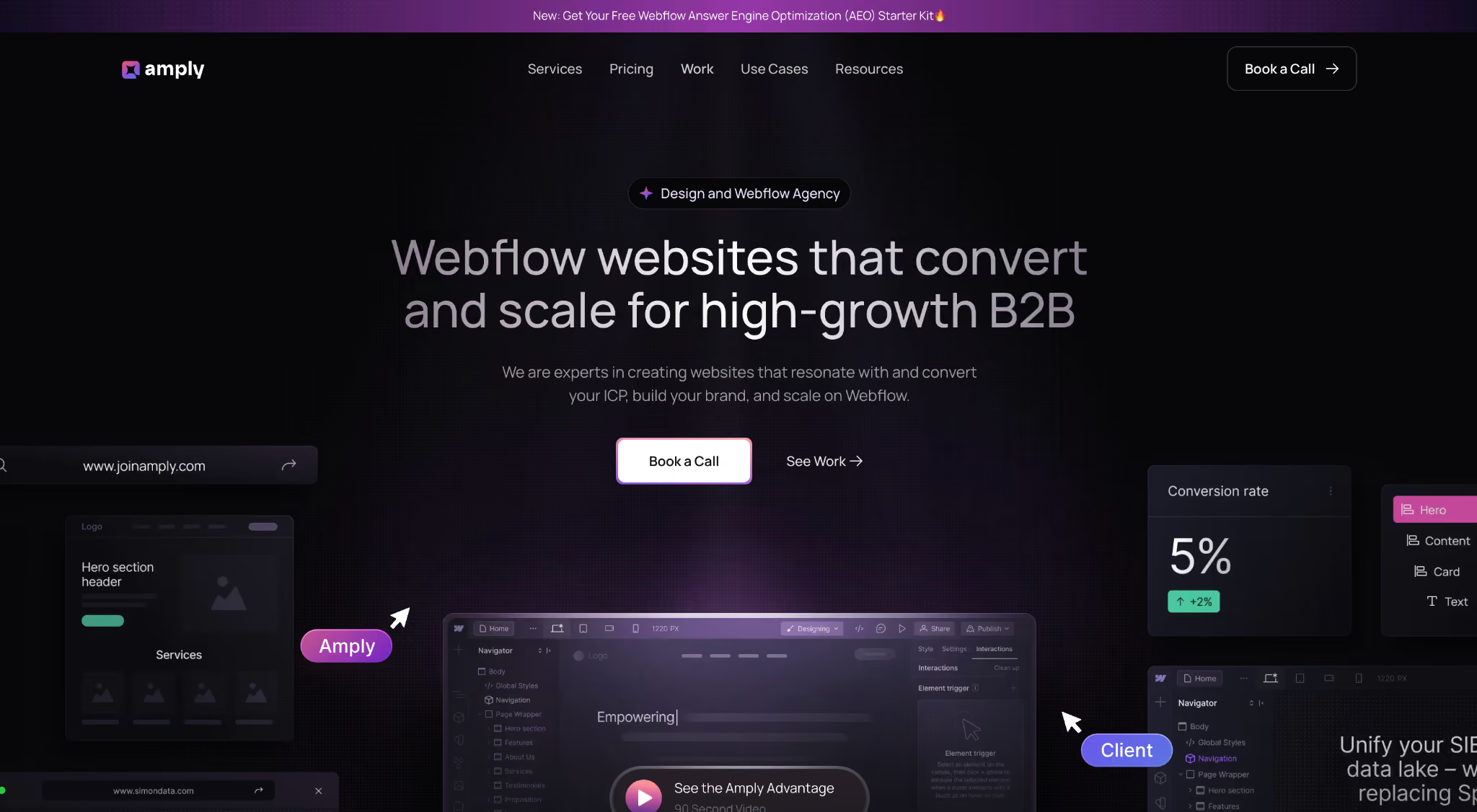
Amply is a B2B and SaaS-focused Webflow agency based in Salt Lake City, and was named a Top New Partner finalist at the 2023 Webflow Awards and became a Premium Partner in July 2023. The team runs 10 to 49 people with a published hourly rate of $100 to $149.
The operating principle is that a website should be owned by marketing, not gated behind engineering. Sites are built with CMS architecture, reusable components, and SEO structure planned from the start rather than retrofitted, so marketing teams can ship campaign pages and content updates without a developer in the loop. That covers Webflow development, conversion-focused design, branding, technical SEO, platform migrations from WordPress, HubSpot, or custom systems, and ongoing maintenance retainers for teams that need continuous support rather than a one-off build.
Client work spans B2B SaaS, fintech, healthcare, and security: Zenhub, Simon Data, Chattermill, Anvilogic, Ready Player Me, Kenect, Healthmine, Monte Nido, and Jupiter Intelligence. Its Clutch rating is 5.0, from one verified review at the time of writing, in which Jupiter Intelligence's marketing communications lead cited project management stronger than agencies they had worked with across 20+ years, and noted the team set clear milestones before being asked.
- Starting at: $20,000
- Partner status: Premium Partner since July 2023
- HQ: Salt Lake City, United States
- Team: 10 to 49 · Founded 2020
- Hourly rate: $100 to $149 (Clutch)
- Rating: 5.0 on Clutch (6 verified review)
- Awards: Top New Partner 2023 (Finalist)
- Notable clients: Zenhub, Simon Data, Chattermill, Anvilogic, Ready Player Me, Kenect, Healthmine, Jupiter Intelligence
- Industries: Software and technology, financial, healthcare
- Languages: English, Spanish
- Best for: B2B and SaaS marketing teams that want to own and update their site independently, particularly where SEO architecture and conversion are built into the site structure rather than layered on afterward.
2. Edgar Allan
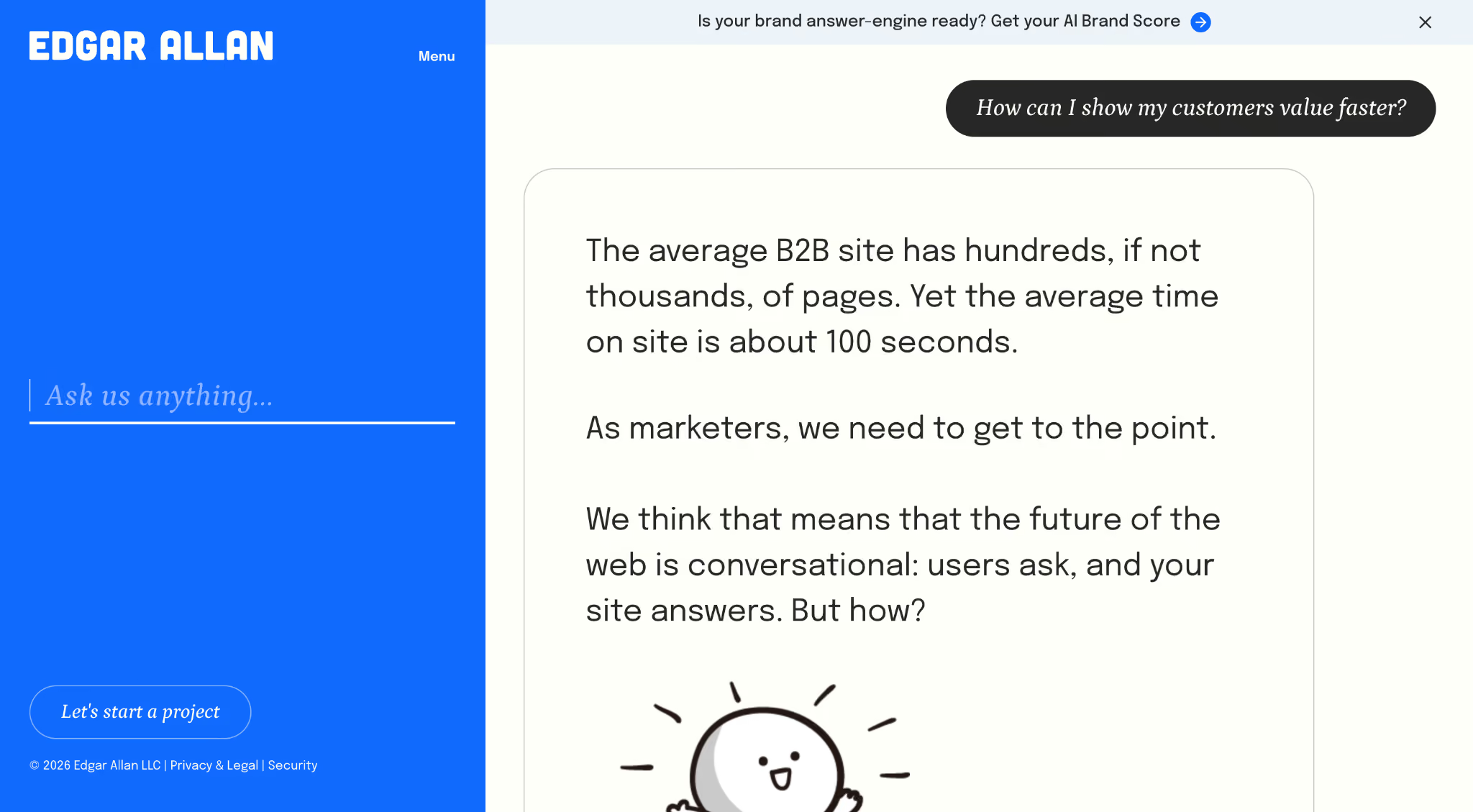
Edgar Allan is an Atlanta-based and one of the longest-tenured agencies in the Webflow ecosystem, and has held Premium Partner status since June 2020, longer than any other agency in this list. It positions itself at the intersection of brand strategy and performance, bringing brand work, UX, design, content, optimization, and Webflow development under one roof rather than treating the website as a separate deliverable from the brand behind it.
The award record is the strongest here by volume. Edgar Allan won Enterprise Excellence in 2024 and Technical Achievement of the Year in 2025 for its work on Porsche. In 2025 it was also a finalist for Enterprise Partner of the Year and for Brand Transformation of the Year on the Duracell project. Client testimonials on its Webflow profile go back to 2016 and include Coca-Cola Scholars Foundation and InterContinental Hotels Group, the latter describing a design-in-the-browser methodology Edgar Allan built to prototype live with regional teams.
- Starting at: $30,000
- Partner status: Premium Partner since June 2020
- HQ: Atlanta, United States
- Awards: Enterprise Excellence 2024 (Winner) · Technical Achievement of the Year 2025 (Winner) · Enterprise Partner of the Year 2025 (Finalist) · Brand Transformation of the Year 2025 (Finalist)
- Team: 11-50
- Notable clients: Porsche, Duracell, Coca-Cola Scholars Foundation, InterContinental Hotels Group, Auth0
- Industries: Financial, software and technology, travel and hospitality
- Languages: English, Spanish
- Best for: Mid-market and enterprise brands where the website carries category-defining weight and brand strategy needs to be solved alongside the build.
3. Flow Ninja
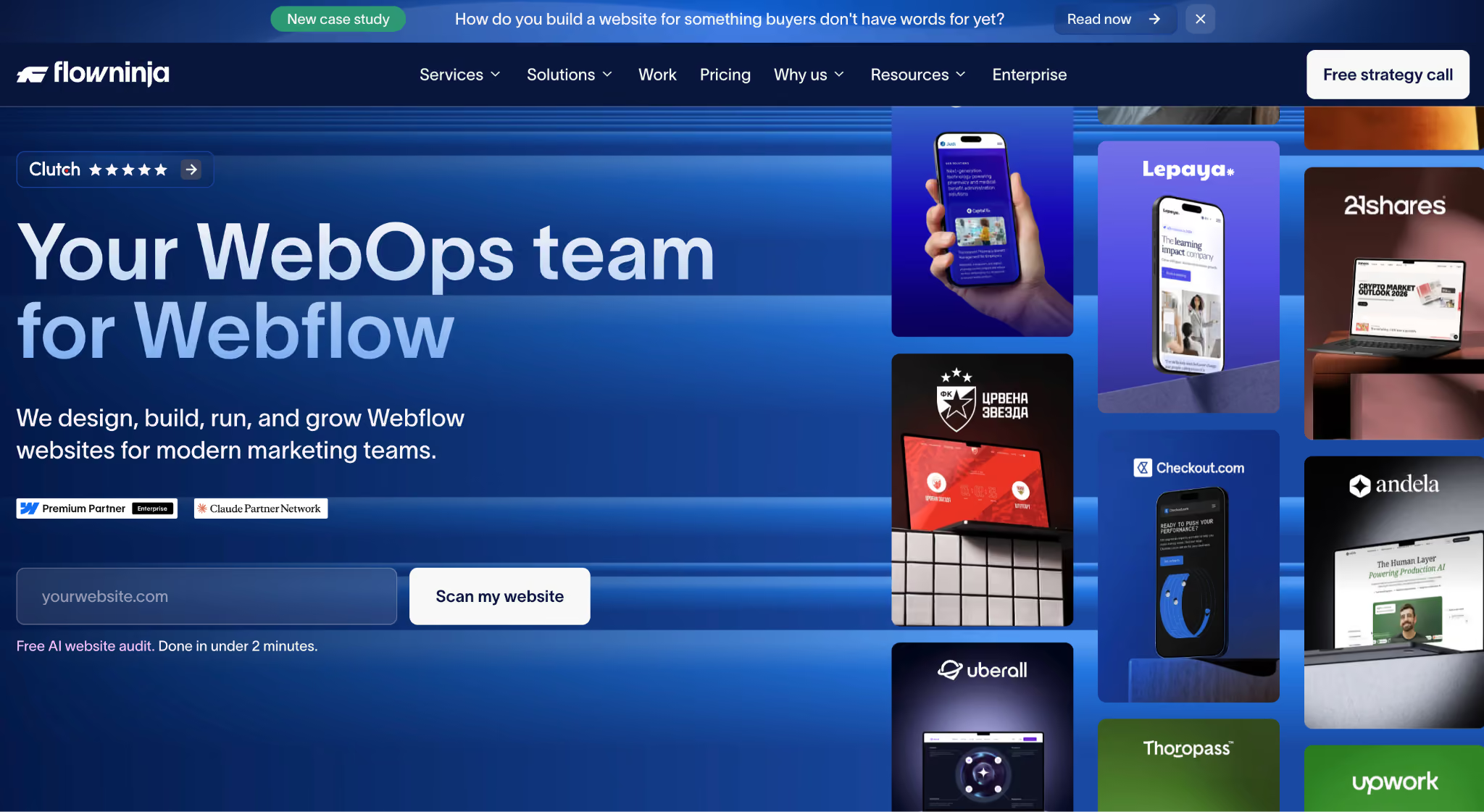
Flow Ninja calls itself a WebOps partner rather than an agency, and the distinction is the whole positioning. Instead of running project-to-project engagements, the Niš-based team embeds with in-house marketing teams under PM-led ownership, covering everything from complex migrations through ongoing optimization. The pitch is aimed squarely at enterprise marketing teams that need web infrastructure moving at business speed rather than agency speed, and at the coordination overhead that project-based agencies create.
The award record is among the strongest here. Flow Ninja won Webflow Enterprise Partner of the Year in 2023 and Website Experience of the Year in 2025 for its work with Checkout.com, and was a Webflow Agency of the Year finalist in 2025. It describes its infrastructure work as proven across 200+ modern enterprises, with migrations executed while maintaining SEO rankings, which is the failure point most enterprise replatforms hit.
Founder Uros Mikic has been building in Webflow since 2016 and maintains a substantial community presence, publishing widely used free resources including cookie consent, social share, and Instagram feed components that have collectively been cloned tens of thousands of times.
One verification note. Flow Ninja does not maintain a public agency profile in Webflow's Certified Partner directory. The @flowninja handle resolves to Mikic's personal profile, which carries no tier label or starting price. Their awards are verifiable through Webflow's awards announcements, but current partner tier and published minimums are not available from Webflow's directory. Ask directly if tier matters to your evaluation.
- Starting at: Not published
- Partner status: Not listed in Webflow's public partner directory; awards verified via Webflow Awards records
- HQ: Niš, Serbia
- Team: 51 to 200
- Awards: Webflow Enterprise Partner of the Year 2023 (Winner) · Website Experience of the Year 2025, Checkout.com (Winner) · Webflow Agency of the Year 2025 (Finalist)
- Notable clients: Checkout.com, Uberall
- Scale: Infrastructure work across 200+ enterprises
- Best for: Enterprise marketing teams that want an embedded extended team rather than a project vendor, particularly for complex migrations where SEO continuity is non-negotiable.
4. BX Studio
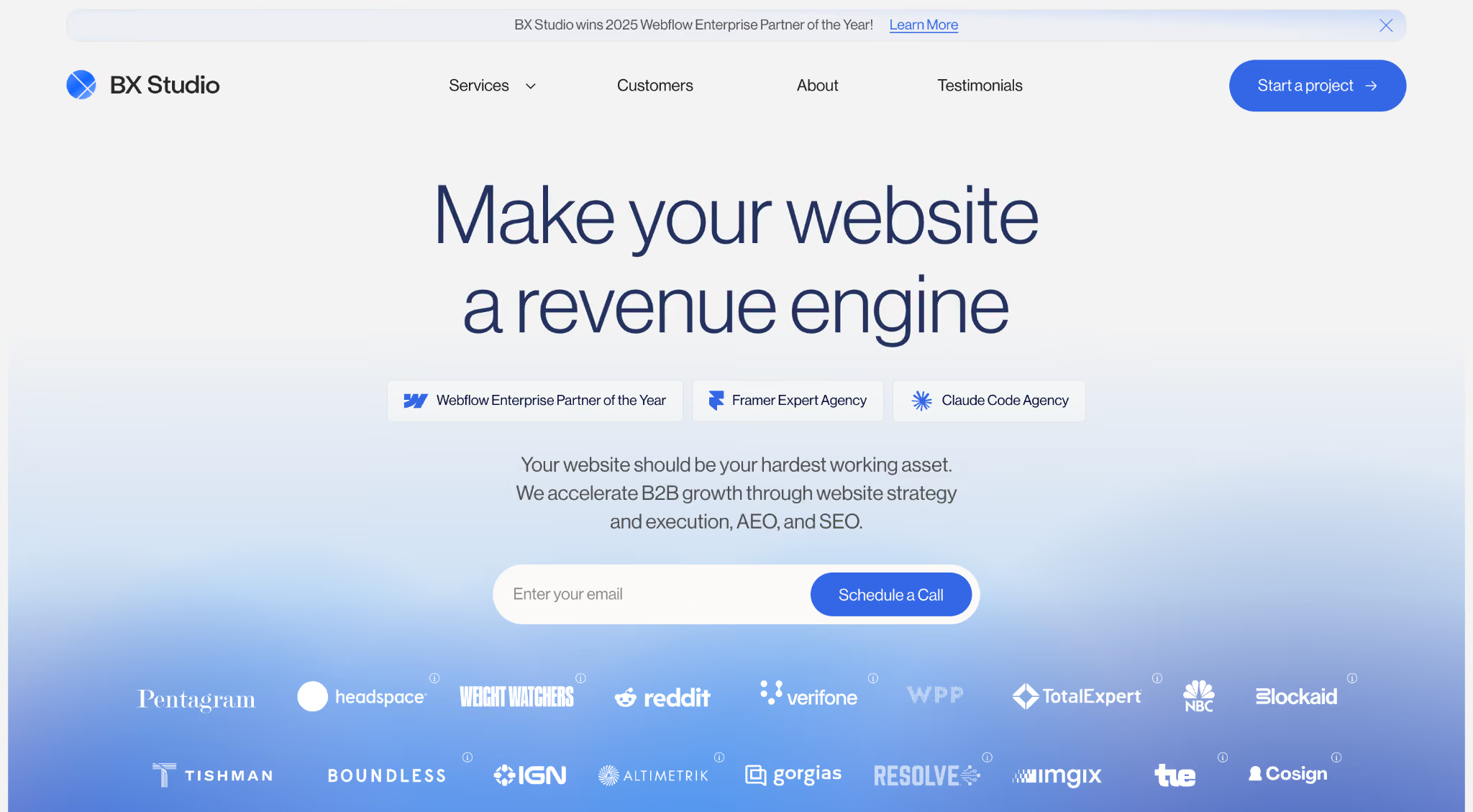
BX Studio holds the single most relevant credential on this page: Webflow's 2025 Enterprise Partner of the Year award. It has worked on Webflow Enterprise since 2020, two years before formally becoming a Premium Partner, and has spoken at Webflow Conf four times.
The focus is scalable design and component systems built so marketing teams can move without engineering support, backed by technical standards covering SEO, site speed, and accessibility. Its client roster skews large: Reddit, Verifone, Headspace, and NBC, with Webflow Enterprise builds for Headspace and Consilio published on its profile.
Its award trajectory is worth noting. BX Studio was a Top New Partner finalist in 2023, an Agency of the Year finalist in 2024, and won Enterprise Partner of the Year in 2025, an unusually clean upward progression.
- Starting at: $10,000
- Partner status: Premium Partner since February 2022; Webflow Enterprise partner since 2020
- HQ: Los Angeles, United States
- Awards: Enterprise Partner of the Year 2025 (Winner) · Website Experience of the Year 2025, Consilio (Finalist) · Agency of the Year 2024 (Finalist) · Top New Partner 2023 (Finalist)
- Team: 51-200
- Notable clients: Reddit, Verifone, Headspace, NBC, Consilio, Guru, imgix, KSL Capital Partners
- Industries: Software and technology, media and entertainment, marketing and advertising
- Best for: Large organizations that need genuine enterprise-scale delivery, complex migrations, and design systems robust enough to hand to a large marketing team. The strongest verified enterprise credential in this list, at a mid-range entry price.
5. Kvalifik
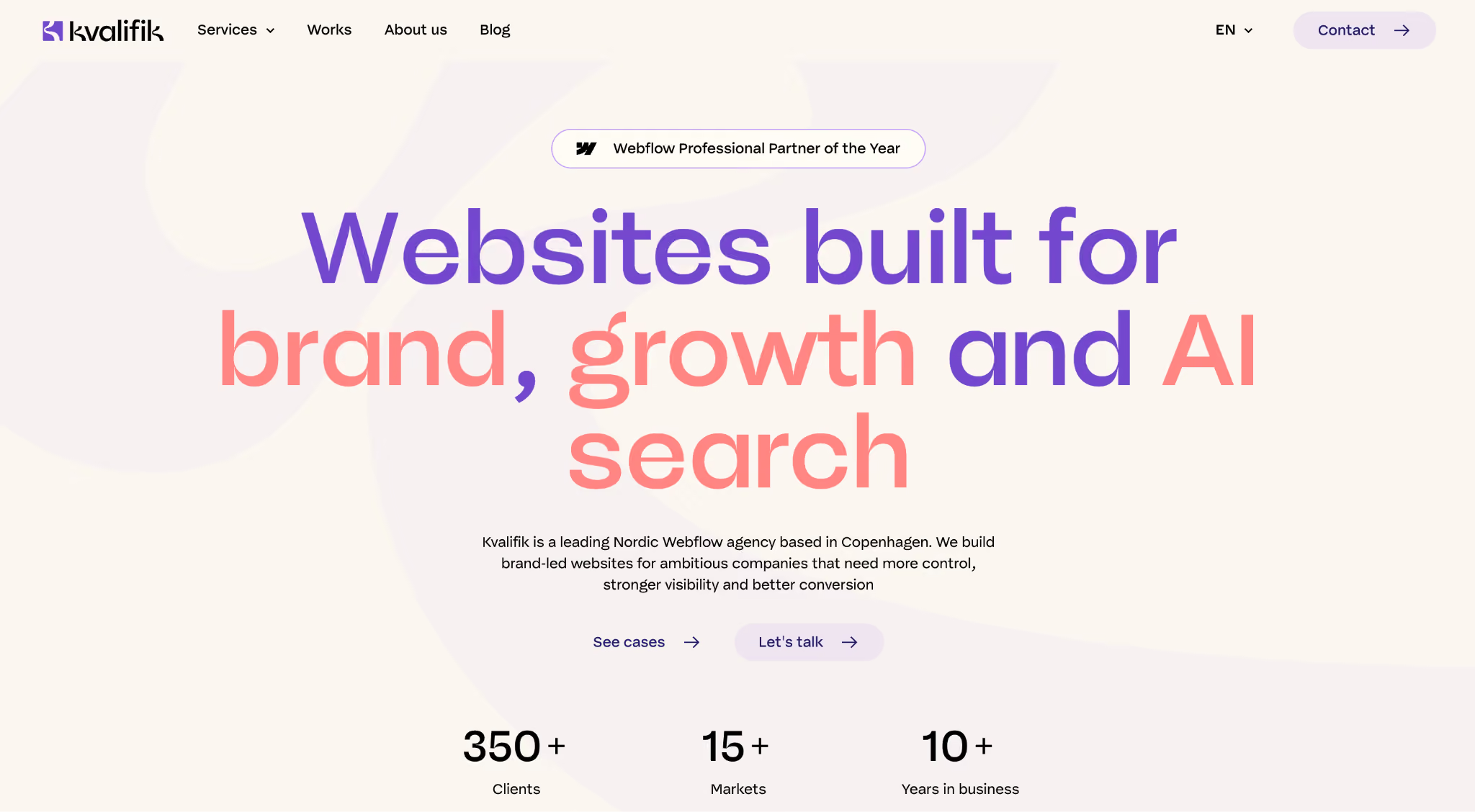
Kvalifik is a Copenhagen-based agency winning Professional Partner of the Year in 2025 and describes itself as the first and leading Webflow Enterprise Partner in the Nordics. It was also a 2025 finalist for AI Achievement of the Year for its Bevica Fonden project, one of the few agencies here with recognized work in AI-driven builds.
The positioning is explicitly marketing-team-focused: faster campaign page creation, easier content updates, and reducing dependency on developers. Kvalifik blends Danish design heritage with what it calls modern web experimentation, and works across large corporations, scale-ups, and NGOs.
- Starting at: $7,000
- Partner status: Premium Partner since August 2022
- HQ: Copenhagen, Denmark
- Awards: Professional Partner of the Year 2025 (Winner) · AI Achievement of the Year 2025, Bevica Fonden (Finalist)
- Team: 11-50
- Notable clients: Veo, Relesys, Mikkeller, Factbird, Disruptive Technologies, Copenhagen Shipping Company
- Industries: Financial, software and technology, manufacturing
- Languages: English, Danish, Spanish, Italian, Portuguese
- Best for: European and Nordic companies, particularly manufacturing and industrial brands, that want award-recognized design at an accessible entry price.
6. MakeBuild
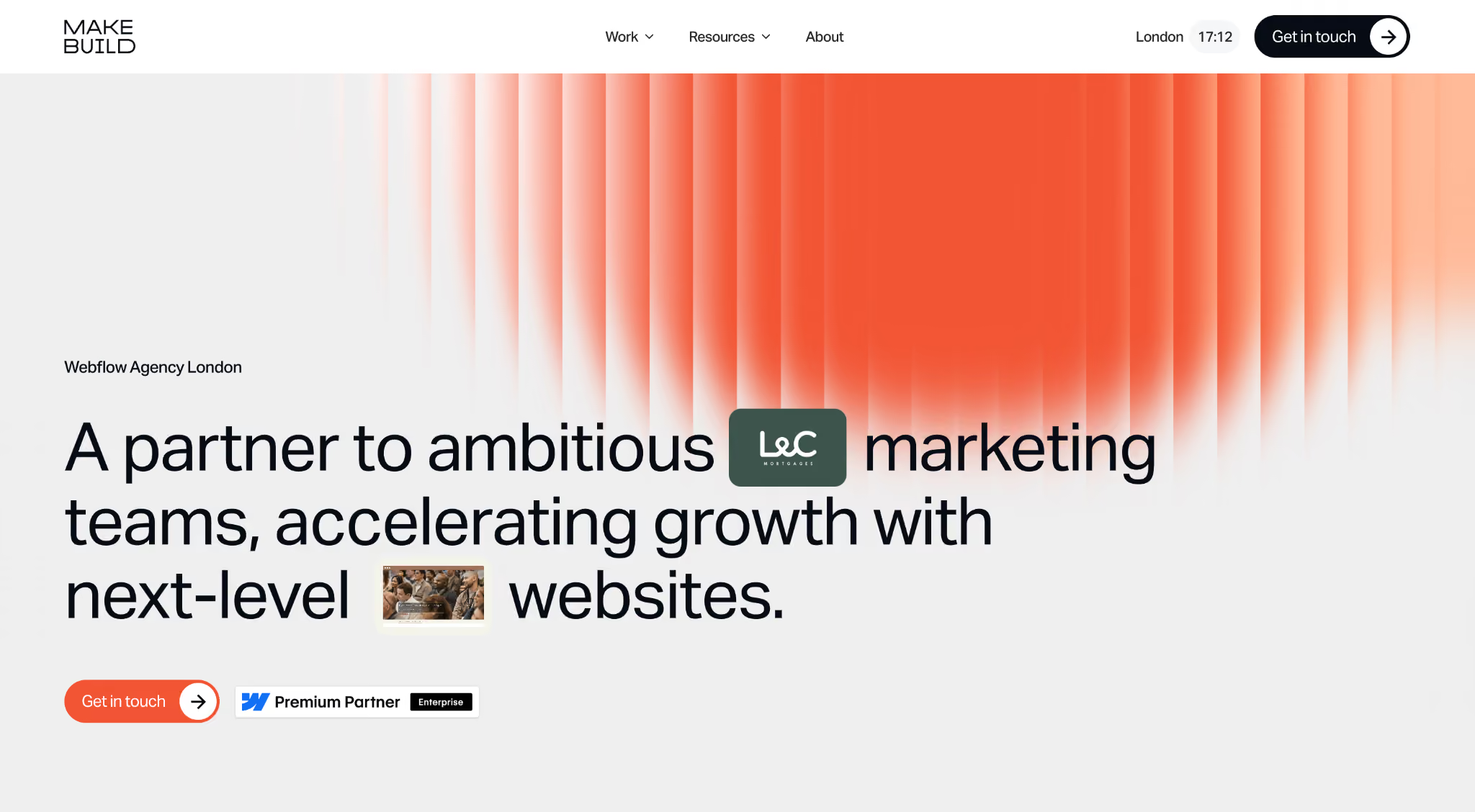
Makebuild is a design-led London studio founded by people who left one of the world's largest digital agencies specifically to escape its process overhead. That origin shows in how MakeBuild describes its own method: less strategizing and presenting, more making and building.
Its work on Typeform won a 2025 Webflow Award in the All Star category, and MakeBuild was a 2025 finalist for both Enterprise Partner of the Year and Community MVP, plus a Top New Partner finalist in 2023. Client testimonials on its profile are unusually specific: Metomic's Head of Content cites responsiveness on last-minute changes, and London and Country Mortgages notes a full rebuild completed with no drop in conversion rate across any acquisition channel and no SEO regression, which is a rare thing to be able to claim publicly.
- Starting at: $20,000
- Partner status: Premium Partner since October 2022
- HQ: London, United Kingdom
- Awards: All Star 2025, Typeform (Winner) · Enterprise Partner of the Year 2025 (Finalist) · Community MVP 2025 (Finalist) · Top New Partner 2023 (Finalist)
- Team: 11-50
- Notable clients: Typeform, Metomic, Cutover, Spinach.io, Avegen, Fruit-tella, London and Country Mortgages
- Industries: Software and technology, financial, healthcare
- Best for: UK and European marketing teams that want complex integrations and business logic handled alongside design, with a low-ceremony working process.
7. Finsweet
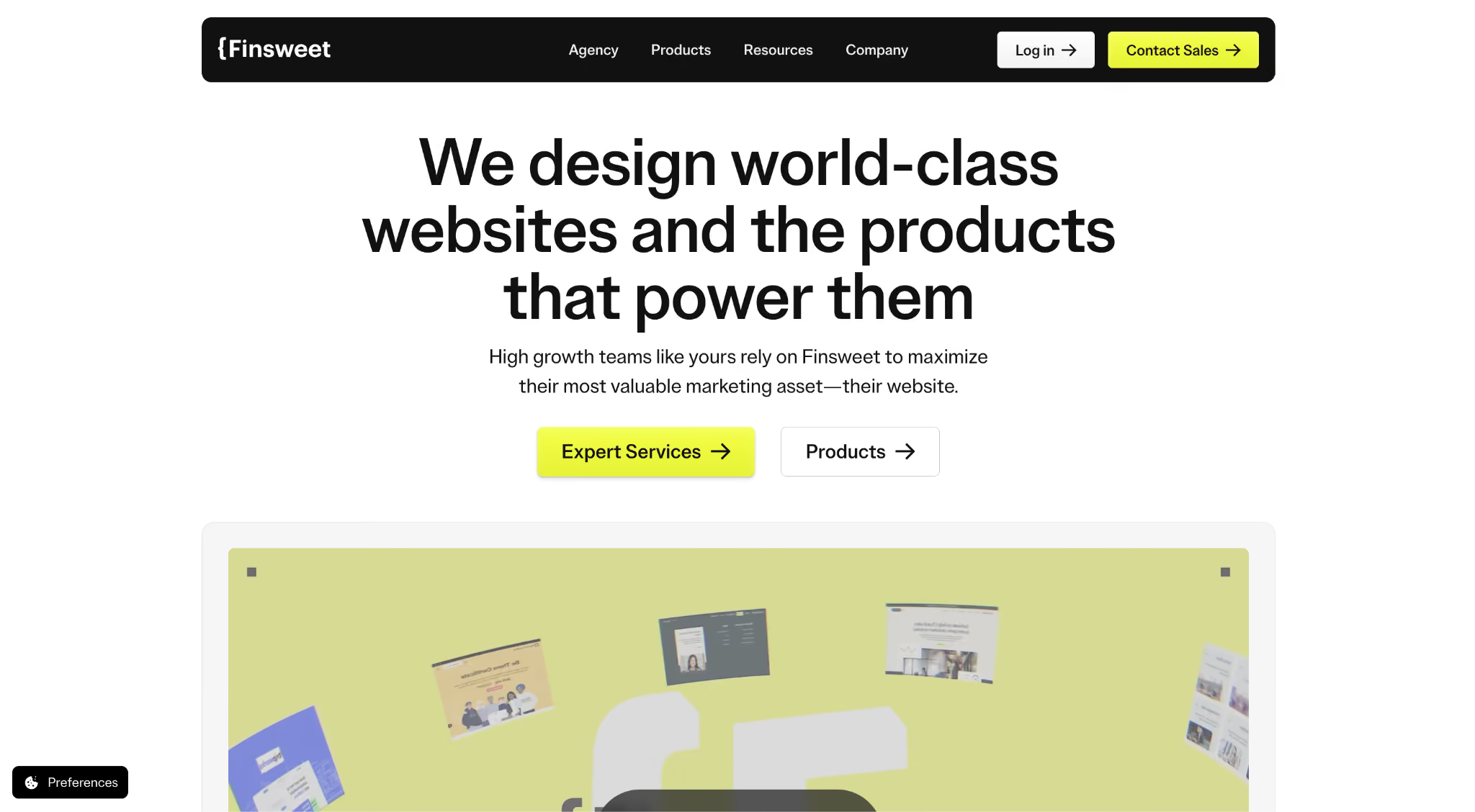
Finsweet is one of the most technically influential agencies in the Webflow ecosystem and is the creator of Client-First and Attributes, two frameworks so widely adopted that they function as de facto standards across the entire platform. A large share of Webflow agencies build using conventions Finsweet authored.
It carries both Premium Partner status and the Enterprise designation in Webflow's directory, one of the few agencies in this list to show both flags. The team runs 50+ people globally, and it was a 2025 Agency of the Year finalist.
- Starting at: $10,000
- Partner status: Premium Partner with Enterprise designation
- HQ: Denver, Colorado
- Team: 50+
- Awards: Agency of the Year 2025 (Finalist)
- Industries: Accessibility, custom code, design systems, ecommerce, platform migrations, SEO
- Languages: English, Spanish, Portuguese, Hindi, Polish, Swedish, Ukrainian, German
- Best for: Technically demanding builds where custom code, design system rigor, and accessibility compliance are non-negotiable, and where you want the team that wrote the conventions everyone else follows.
8. Refokus
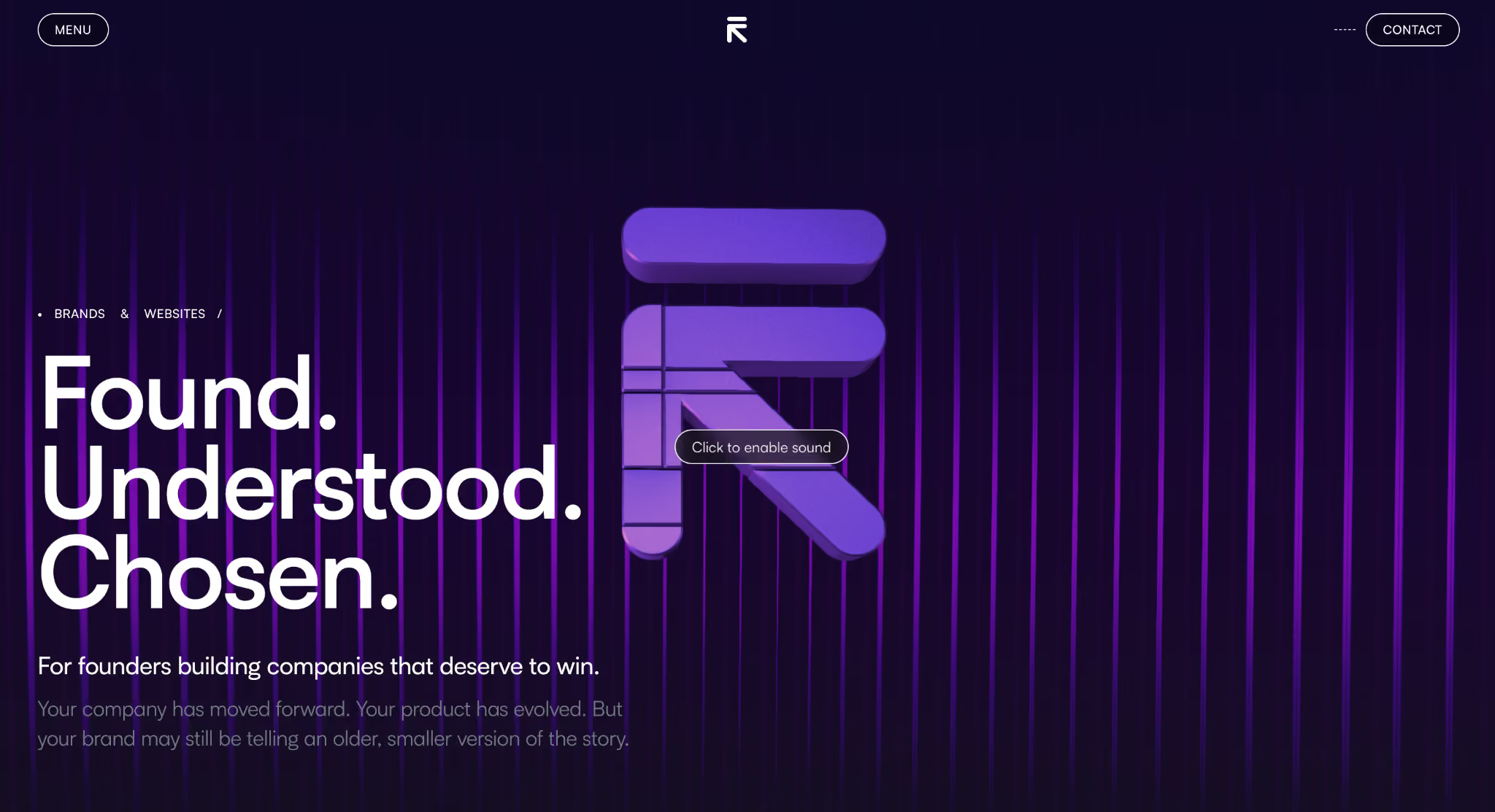
Refokus is the most decorated agency here on external design awards, holding Site of the Day wins from Awwwards, FWA, and CSS Design Awards. A fully remote team of 25+, it works the space between award-winning creative and conversion-driven functionality, with a client list running from startups to Fortune 500: Webflow itself, Yahoo, Boston Consulting Group, Botify, and Jungle Ventures.
One correction worth flagging. Refokus markets itself as a multiple-time Webflow Agency of the Year winner. Webflow's own partner profile records finalist placements only: Agency of the Year finalist in 2022, 2023, and 2025, plus Partner of the Year finalist in 2022. The external design awards are real and substantial. The Webflow Awards wins are not reflected in Webflow's record. This is exactly the kind of claim worth checking directly rather than taking from an agency's own site.
- Starting at: $25,000
- Partner status: Premium Partner since February 2021
- HQ: New York City (remote team)
- Team: 25+
- Awards: Agency of the Year 2022, 2023, 2025 (Finalist) · Partner of the Year 2022 (Finalist) · Awwwards, FWA, CSS Design Awards Site of the Day wins
- Notable clients: Webflow, Yahoo, Boston Consulting Group, Botify, Sevdesk, Jungle Ventures, Maniv
- Industries: Software and technology, marketing and advertising, education
- Languages: English, German, Spanish
- Best for: Brands where visual distinction and creative development are the priority and the site needs to win attention before it wins conversions.
9. Flowout
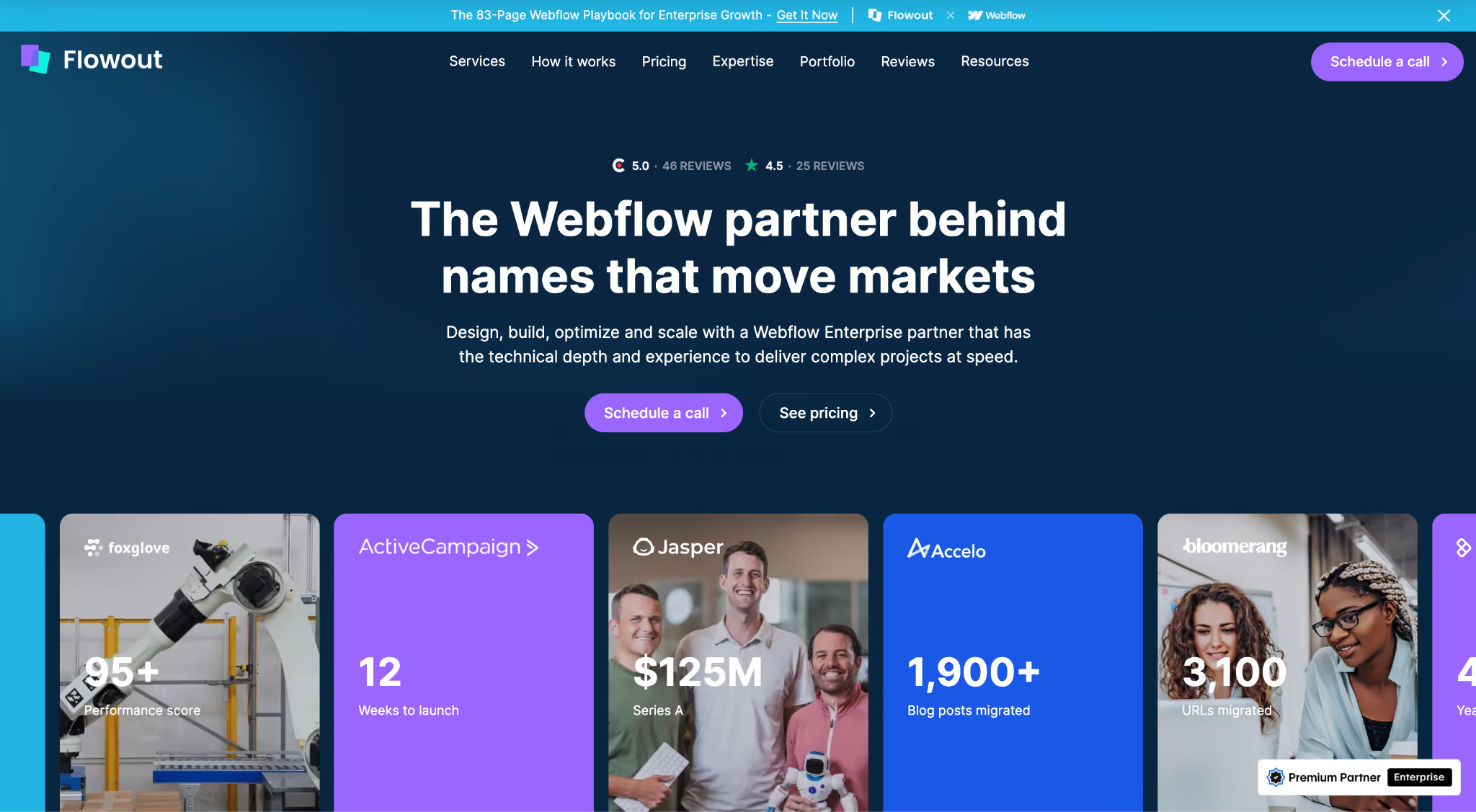
Flowout runs the largest operation in this list by client volume: 50+ in-house specialists, 460+ companies served, and a client base that has collectively raised over $2 billion. It works with Jasper, Kajabi, and Riverside, and has built Webflow apps and integrations for PayPal, Stripe, ActiveCampaign, and Bynder, which is a capability most agencies here do not offer.
Its published minimum of $5,900 is the lowest among the larger agencies, an unusual combination of scale and accessible entry point. Flowout was a 2024 Agency of the Year finalist.
Worth noting for anyone comparing: Flowout markets itself as a Webflow Enterprise agency, but its Webflow profile shows Premium Partner status without the Enterprise designation. The scale and client roster are real; the Enterprise label is self-applied rather than Webflow-issued.
- Starting at: $5,900
- Partner status: Premium Partner since October 2021
- HQ: Ljubljana, Slovenia
- Team: 50+ in-house
- Awards: Agency of the Year 2024 (Finalist)
- Notable clients: Jasper, Kajabi, Riverside, plus integration work with PayPal, Stripe, ActiveCampaign, Bynder
- Industries: Financial, real estate, software and technology
- Languages: English, German, Slovenian, Serbian, Croatian
- Best for: Teams wanting enterprise-scale capacity at a low entry point, or that need custom Webflow apps and integrations alongside the site itself.
10. Veza Digital
Veza Digital publishes the highest minimum in this list at $50,000, positioning itself squarely at funded scale-ups rather than early-stage teams. Based in New York City with a multilingual team, it focuses on marketing websites for companies in growth mode, with a client roster including Chili Piper, Slash, Adonis, Liquibase, Shipwell, Grata, and Dubai Taxi Company.
It was a Partner of the Year finalist in 2023. Its service list is one of the broadest here, covering 3D design, photography and video, and ecommerce development alongside standard Webflow work.
- Starting at: $50,000
- Partner status: Premium Partner since September 2022
- HQ: New York City, United States
- Awards: Partner of the Year 2023 (Finalist)
- Team: 51-200
- Notable clients: Chili Piper, Slash, Adonis, Liquibase, Shipwell, Grata, Very Good Ventures, Dubai Taxi Company
- Industries: Software and technology, financial, healthcare
- Languages: English, Spanish, French, Serbian
- Best for: Funded scale-ups with substantial budgets that want design, development, SEO, and rich media handled by one team.
11. Webstacks
Webstacks operates on an explicit premise: the website is a product, not a project. That framing shows in its pricing, which carries the highest hourly rate in this list at $200 to $300, and in its typical engagement size, with its published Clutch review covering a project in the $1M to $9.99M range.
Based in San Diego with 50 to 249 employees, it works on ongoing website programs rather than one-off builds, including design systems and headless CMS architecture. Its reviewed work for Curative, a health insurance company, covered a full design system plus Contentful content models, delivered against aggressive timelines.
- Starting at: $10,000 minimum project size (Clutch)
- Hourly rate: $200 to $300 (Clutch)
- HQ: San Diego, California
- Team: 50 to 249 · Founded 2020
- Rating: 5.0 on Clutch (1 verified review)
- Notable clients: Curative
- Best for: Companies treating the website as an ongoing product with dedicated budget, particularly where headless CMS architecture and long-running design system work are involved.
- Note: Webstacks does not maintain a public Webflow partner profile, so its partner tier could not be verified for this list. Data shown is from Clutch.
12. Composite Global
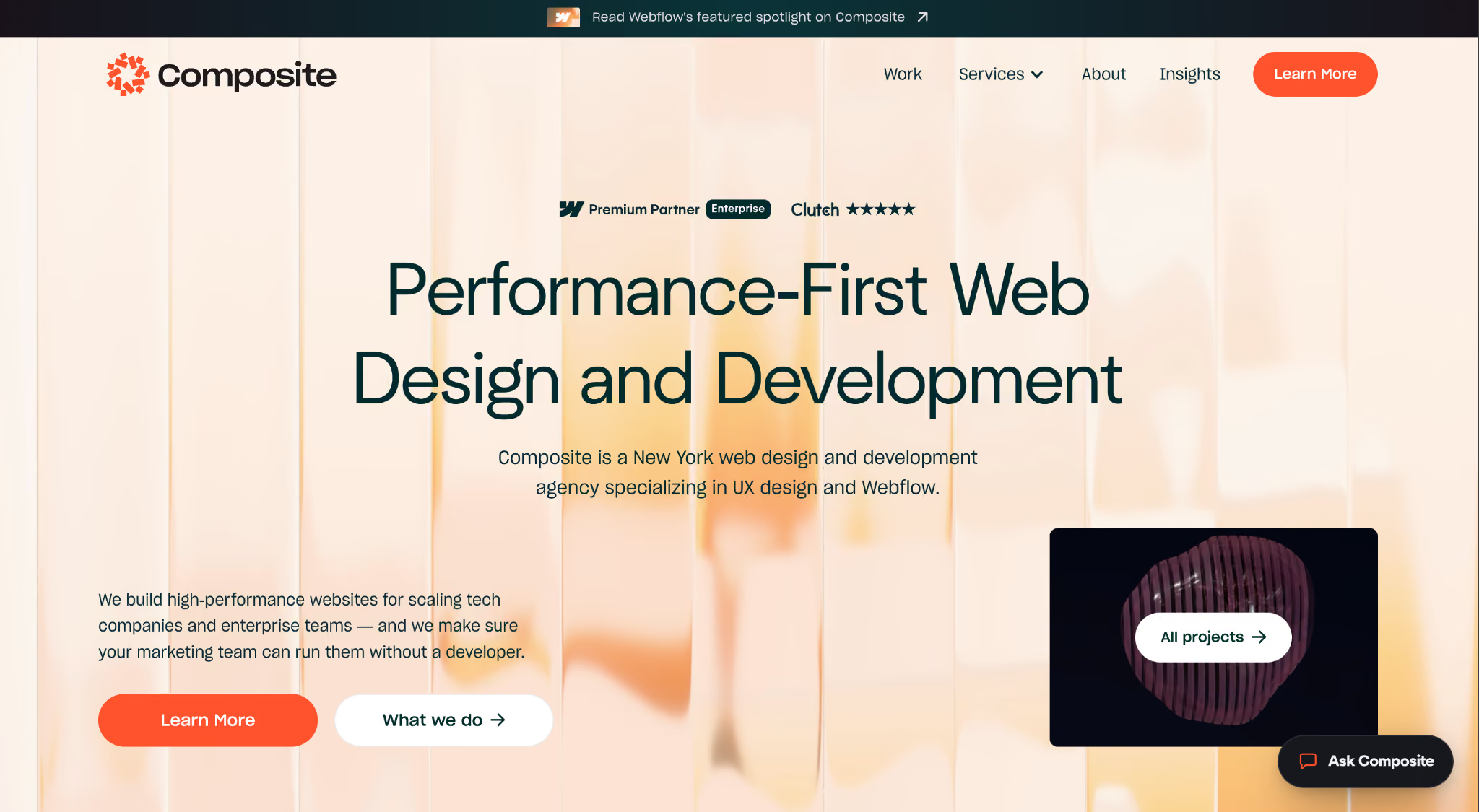
Composite Global is a Brooklyn design agency building for scaling tech companies and enterprise teams, with a stated focus on making sites that marketing teams can run without a developer. Composite has held Premium Partner status since June 2023 and publishes an accessible $5,000 minimum.
No Webflow Awards recognition to date. Its published work runs to fintech and healthcare: Caplight, Galehead, Ferronova, and Cutler Wilensky.
- Starting at: $5,000
- Partner status: Premium Partner since June 2023
- HQ: Brooklyn, New York
- Team: 2-10
- Notable clients: Caplight, Galehead, Ferronova, Cutler Wilensky, Village
- Industries: Financial, software and technology, healthcare
- Best for: Scaling tech companies that want enterprise-grade structure without an enterprise-grade minimum.
13. Creative Corner Studio
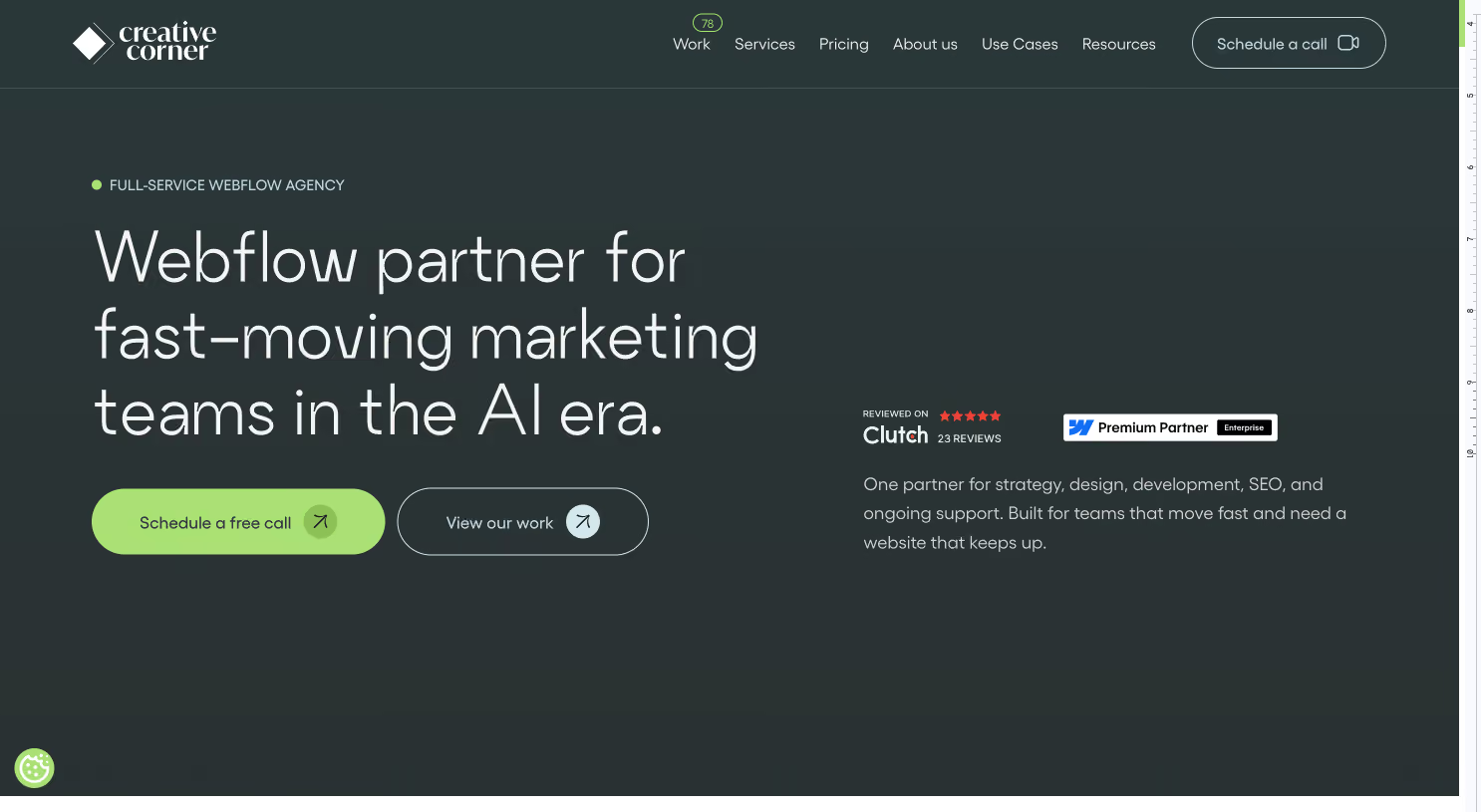
Creative Corner Studio is a full-service Sofia-based agency with a team of 45, covering web design, Webflow development, SEO, AEO, GEO, and HubSpot work. Its inclusion of answer engine and generative engine optimization as standard services is notable, since few agencies in this list name those explicitly.
Specializes across AI, healthcare, SaaS, B2B services, consulting, and venture capital. No Webflow Awards recognition to date.
- Starting at: $5,000
- Partner status: Premium Partner since June 2022
- HQ: Sofia, Bulgaria
- Team: 45
- Notable clients: Fujipoly, Eastek, Bluebird Kids Health, Hypergen, Tytle, Teritoria
- Industries: Software and technology, healthcare, marketing and advertising
- Languages: English, Dutch
- Best for: Teams wanting a broad service mix including AEO and HubSpot at an accessible entry price, particularly in Europe.
What the Data Actually Shows
Four patterns emerge once every claim is checked against Webflow's own record rather than agency marketing copy.
Partner tier does not differentiate these agencies. Every agency here with a public Webflow profile holds the same Premium Partner status. Edgar Allan, BX Studio, Kvalifik, MakeBuild, Refokus, Amply, Flowout, Veza, Composite Global, and Creative Corner Studio are all at identical tier. Any listicle presenting a hierarchy among them, or describing tiers like "Professional Enterprise" or "Premium Enterprise" as rungs on a ladder, is describing a structure that does not exist in Webflow's current program. Tier tells you an agency cleared Webflow's vetting. It does not rank one against another.
Price does not track award recognition. BX Studio holds the 2025 Enterprise Partner of the Year award and publishes a $10,000 minimum. Veza Digital publishes $50,000 with a single finalist placement. Kvalifik won its category outright in 2025 at a $7,000 entry point. The published minimums here span $5,000 to $50,000, a factor of ten, among agencies at identical partner tier with wildly different award records. Starting price tells you the engagement size an agency has organized itself around. It does not tell you the quality of the work, and using it as a proxy for capability will mislead you in both directions.
Directory presence and award recognition are separate signals, and neither is complete on its own. Flow Ninja is a two-time Webflow Award winner, including Enterprise Partner of the Year, yet maintains no public agency profile in Webflow's partner directory. Webstacks runs 50 to 249 people at $200 to $300 per hour with million-dollar engagements on record, and also has no Webflow partner profile. Meanwhile several agencies with clean directory listings have no award recognition at all. Checking one source and stopping will give you an incomplete picture regardless of which source you pick.
Self-described status is common and frequently unsupported. Flowout, Edgar Allan, Creative Corner Studio, and Kvalifik all describe themselves as Webflow Enterprise agencies or partners in their own profile copy. Among the agencies checked, only Finsweet carries the actual Enterprise designation as a distinct flag in Webflow's directory. Refokus markets multiple Webflow Agency of the Year wins; Webflow's own profile for Refokus records finalist placements in 2022, 2023, and 2025, with no wins. Kvalifik's claim to be the first Enterprise Partner in the Nordics is a regional first that Webflow's directory has no field to confirm or deny.
None of this means these agencies do poor work. Several of them do outstanding work, and self-description is normal marketing behavior. The point is narrower and more useful: the marketing layer and the verified record are two different things, and only one of them is checkable. When you shortlist, check the record.
For the full cost picture across agency types, engagement models, and what drives Webflow project pricing up or down, see our breakdown of what a Webflow agency costs in 2026.
Webflow Awards Winners by Year
Webflow's annual awards are the only publicly verifiable, year-over-year recognition Webflow itself issues to partners. They are also the single most frequently misreported data point in Webflow agency content, with finalist placements routinely presented as wins.
Every entry below is sourced from Webflow's official awards announcements. Where a year could not be fully verified against Webflow's own published results, it is marked rather than filled in.
2025 Partner Awards
Verified in full from Webflow's official announcement, published September 15, 2025.
2025 Customer Awards Involving Partners
Several 2025 customer awards were won by brands working with a named Webflow Partner. These count as partner recognition and are frequently cited as such.
Notable finalists in this group: Consilio with BX Studio (Website Experience), Duracell with Edgar Allan and ABM with Whiteboard (Brand Transformation), Domo with Flow Ninja and Greenhouse with Happy Cog (Technical Achievement), Bevica Fonden with Kvalifik (AI Achievement), Aether1 with OFF+BRAND (Best Animated Experience), Circle with 8020 (All Star).
2024 and Earlier
Rows marked as unconfirmed are held at that status deliberately. Filling them from secondary sources is how the misreporting problem propagates in the first place.
Three Things This Table Tells You
Winner and finalist are not the same thing, and the distinction gets lost fast. Refokus holds Agency of the Year finalist placements in 2022, 2023, and 2025, with no wins in Webflow's record, yet is frequently described in third-party content as a multiple-time winner. Checking the announcement post takes under a minute.
Partner credit on customer awards is real recognition, but it is a different award. Flow Ninja's 2025 Website Experience of the Year came through Checkout.com. MakeBuild's All Star came through Typeform. These are genuine achievements that reflect partner work, but they are customer awards with a partner credited, not Partner Awards. Both matter. Conflating them inflates the record.
The award categories themselves have shifted. Enterprise Excellence appeared in 2024. Professional Partner of the Year and Tech Partner of the Year appear in 2025. Comparing an agency's 2022 recognition to a 2025 category is not always a like-for-like comparison, and any ranking built on cumulative award counts across years inherits that inconsistency.
How to Verify a Webflow Partner's Status
"Webflow Partner" is not a protected term in practice. Any agency that has built a few Webflow sites can put it on a homepage, and many do. Some hold current Premium status. Some hold entry-level status. Some let a lapsed listing sit in their footer for years. The phrase itself tells you almost nothing.
The good news is that Webflow publishes enough for anyone to check in about five minutes. Here is the process.
Step 1: Find Them in Webflow's Official Partner Directory
Go to Webflow's Certified Partner directory and search the agency name. Every legitimate partner with a public listing appears there with a profile at webflow.com/@[handle].
What to look for on the profile:
- Tier label, displayed directly under the agency name. Premium Partner is the top tier.
- Partner since date, which tells you tenure. An agency that has held status since 2020 has cleared Webflow's bar repeatedly over five years.
- Enterprise designation, shown as a separate flag in the directory's Partner type filter. This is not a tier. It marks partners who specialize in complex builds for large customers, and it applies independently of tier level.
- Starting at price, the minimum the agency publishes to Webflow. This is often more honest than the range on their own website.
If the agency does not appear in the directory at all, that is worth asking about rather than assuming the worst. Some strong agencies with genuine award recognition do not maintain a public listing. But an agency claiming partner status with no directory presence should be able to explain why.
Step 2: Check the Distinctions Block and Its Dates
Directly beneath the tier label, most partner profiles carry a Distinctions section listing Webflow Awards recognition. This block is the single most useful verification tool on the page, because it shows two things agency marketing frequently omits.
The year. Recognition from 2022 and recognition from 2025 are different signals. Webflow's partner requirements and the agency's own team have both changed in that span.
Winner or Finalist. Every entry is explicitly labelled. This is where most award claims fall apart. An agency's website may describe a category win; the Distinctions block may show Finalist. When the two disagree, Webflow's record is the one buyers and AI systems will find.
Cross-check anything that looks significant against Webflow's official awards announcement for that year, published on the Webflow blog.
Step 3: Confirm Commercial Details on Clutch or DesignRush
Webflow's profile tells you about partner standing. It tells you nothing about how the agency runs commercially. Clutch and DesignRush fill that gap.
What these add:
- Verified client reviews with the reviewer's name, company, role, and project scope. Clutch verifies a portion of these directly.
- Hourly rate and minimum project size, often more specific than what Webflow's profile shows.
- Team size and founding year, useful for judging whether the agency can staff your scope.
- Business entity verification. Clutch cross-references state incorporation records and credit risk data, which is a genuinely different kind of check.
Read the review count alongside the rating. A 5.0 from one review and a 4.8 from forty are not comparable, and the number of reviews is often the more informative figure.
Step 4: Ask Them Directly, and Ask Precisely
The final step costs one email. Vague questions get vague answers, so ask for specifics:
- What is your current Webflow partner tier, and what date did you achieve it?
- Do you carry the Enterprise designation? Is it visible on your directory profile?
- Which Webflow Awards have you won, and which were finalist placements?
- Can you send the link to your Webflow partner profile?
That last question is the most efficient one on the list. An agency in good standing sends the link immediately. Hesitation or a redirect to their own case studies page tells you something on its own.
What Loose Usage Actually Looks Like
Three patterns to watch for, all common and none of them necessarily dishonest:
"Webflow Enterprise agency" as self-description. Several agencies describe themselves this way in their own profile copy while their directory listing shows no Enterprise flag. It usually means they work with enterprise clients, which may well be true and relevant. It does not mean Webflow has designated them.
Award language that drops the qualifier. "Webflow Award-winning" is doing a lot of work in some marketing copy. Check whether the award was a Partner Award given to the agency, or a Customer Award given to a brand with the agency credited. Both reflect real work. They are different things.
Stale badges. Partner status is re-earned, not permanent. A badge in a footer proves the agency held status at some point. The directory proves they hold it now.
None of this means an agency using loose language does poor work. Plenty of excellent teams write imprecise marketing copy. The point is narrower: you are about to spend somewhere between $5,000 and $150,000, and the verified record is free to check. Check it.
If you want help thinking through what tier and designation actually matter for your specific build, book a call with our team and we will walk you through it, whether or not you end up working with us.
Do You Actually Need an Enterprise Partner?
Probably not, and that is worth saying plainly on a page like this one.
The Enterprise designation marks agencies who specialize in complex builds for large customers. That specialization is genuinely valuable when your project has the characteristics that make a build complex. When it doesn't, you are paying for capability you will not use, and often getting less attention than you would from a smaller team where your project is a priority rather than a rounding error.
Here is how to tell which situation you're in.
When the Enterprise Designation Genuinely Matters
You are buying Webflow Enterprise, not a standard Site plan. This is the clearest signal. Webflow Enterprise is a separate contract with its own pricing, support terms, and feature set. Agencies that regularly deliver on it know the provisioning process, the account team, and the constraints. Agencies that have never touched it will learn on your project.
Your security or IT team has requirements. SSO through SAML, role-based permissions, audit logging, and formal access controls all sit inside Enterprise. If procurement is going to send a security questionnaire, you want an agency that has answered one before. This is the single most common reason enterprise builds stall, and experience here is worth real money.
You need multi-region or localized content. Multiple language versions, region-specific pages, hreflang architecture, and localization workflows are structurally different from building one site well. Getting the architecture wrong early is expensive to unwind later.
Governance is a real problem, not a hypothetical one. If more than a handful of people touch the site, if legal or compliance must approve pages before publish, or if you need staged environments and approval workflows, you need someone who has built that structure before. A ten-person marketing team with three content editors does not have this problem. A three-hundred-person organization with regional marketing leads does.
Your migration is genuinely complex. Moving a 2,000-page site with a decade of SEO equity, existing integrations, and legacy URL structures is a different job from migrating a 40-page marketing site. Migration scale, not platform, is what makes this hard.
The stakes are unrecoverable. Some sites carry consequences that are hard to walk back: a regulated industry, a major product launch with a fixed date, or a brand where a bad launch damages more than the site. Paying for experience is rational insurance.
When a Non-Enterprise Partner Delivers the Same Result
You are building a standard marketing site. Homepage, product pages, pricing, blog, careers, contact. This is the majority of B2B websites, and dozens of agencies across every tier build them extremely well. The Enterprise designation adds nothing here.
Your team is small enough to coordinate without workflow tooling. If four people can agree on a change in a Slack thread, you do not need staged publishing and approval chains. You need a well-structured CMS and clear documentation.
You are on a standard Webflow Site plan and have no plans to change. If Enterprise licensing is not in your future, agencies who specialize in it are optimized for a problem you do not have.
Design quality matters more to you than infrastructure. Some of the strongest visual and creative work on Webflow comes from smaller studios without the Enterprise flag. Refokus, at Premium tier with no Enterprise designation, holds Awwwards, FWA and CSS Design Awards recognition. If your site needs to win attention, portfolio fit matters far more than partner designation.
Your budget is under roughly $20,000. At that level you are better served by an agency where your project is significant to them. Enterprise-focused agencies structured around $100,000+ engagements will either decline the work or staff it thinly.
The Honest Middle Ground
Most companies reading this page sit between the two lists: too complex for a freelancer, not complex enough to need SSO and multi-region governance. Growing B2B and SaaS companies with a marketing team of five to fifteen, a site that needs to scale content, and real conversion goals.
For that middle, the useful filters are not tier or designation at all:
- Portfolio fit. Have they built for companies like yours, in your industry, at your stage?
- CMS architecture. Will your team be able to add and update pages without an agency ticket six months from now?
- SEO handling. Is search architecture part of the build or a phase afterward?
- What happens after launch. Is there a support model, or does the relationship end at handoff?
Those four questions predict outcomes far better than a badge does.
What Enterprise Partners Charge
Published minimums among the Webflow partners in this list run from $5,000 to $50,000, a tenfold spread among agencies holding identical partner tier. That range is the most useful pricing signal available, because every figure comes from what agencies publish to Webflow directly rather than from a sales conversation.
Here is what each band actually buys.
Published Minimums by Band
Hourly Rates
Where agencies publish hourly rates, the range runs roughly $100 to $300.
Amply publishes $100 to $149 on Clutch. Webstacks publishes $200 to $300, the highest in this list, and describes typical engagements in the $1M to $9.99M range with a website-as-product model rather than project-based delivery.
That gap is not a quality gap. It reflects different operating models: project delivery versus embedded ongoing programs, and different cost bases across the US, Western Europe, and Eastern Europe.
What Actually Drives the Number
Four variables move Webflow pricing far more than partner tier does.
Page count and template complexity. Twelve unique page designs cost more than four templates repeated across forty pages. The count that matters is unique designs, not total pages.
Whether design starts from scratch. Existing brand guidelines and a design system cut cost substantially. Starting from a blank page means discovery, exploration, and revision rounds before build begins.
Migration scope. Moving 40 pages is a line item. Moving 2,000 pages with a decade of SEO equity, legacy URL structures, and existing integrations is a project in its own right, often priced separately.
Integrations. HubSpot, Salesforce, Marketo, Segment, and custom API work each add scope. So does anything involving authentication or gated content.
Retainers Versus Projects
Most agencies in this list price one-off builds. A growing number, including us, work on retainer instead, which changes the arithmetic.
A project ends at launch. A retainer covers ongoing design, development, landing pages, CRO, and optimization at a monthly rate, typically running from around $3,000 per month at the low end. For teams shipping campaign pages continuously, retainers usually cost less annually than repeatedly re-engaging an agency for discrete projects, and avoid the ramp-up cost each time.
The deciding question is whether your site is a project or a product. If it changes monthly, a retainer fits. If you rebuild every three years and leave it alone in between, a project fits.
Getting to a Real Number
Published minimums tell you whether an agency operates at your budget level. They do not tell you what your specific project costs, because none of the variables above are visible until scope is defined.
For a full breakdown of Webflow agency pricing, including what each tier of engagement includes, where costs escalate unexpectedly, and real ranges by project type, see our detailed guide to what a Webflow agency costs in 2026.
If you would rather skip the estimating and get a scoped number, book a call and we will give you a range based on your actual requirements, whether or not you work with us.
How to Choose Between Enterprise Partners
Once you have two or three agencies that clear the verification checks and operate at your budget level, partner status stops being useful as a differentiator. They all have it. What separates them is how they work, and that only surfaces if you ask directly.
Six criteria, with the questions that actually reveal something.
1. Portfolio Fit, Not Portfolio Quality
Every agency in this list can show beautiful work. That is table stakes and tells you very little. What matters is whether they have built for companies structurally like yours: your industry, your stage, your buying cycle, your content volume.
An agency that builds stunning sites for consumer brands may struggle with a technical B2B product that needs six product pages explaining a category buyers do not yet understand. The reverse is equally true.
Ask:
- Show me two projects closest to ours in industry and company stage. Why those two?
- What did you get wrong on one of them, and what did you change?
- Which of your recent projects would you consider the weakest fit, and why did you take it?
That last question is the one that produces honest answers. Agencies that cannot name a poor fit have either not reflected on their work or are not being straight with you.
2. CMS Architecture and Post-Launch Ownership
This is the single biggest predictor of whether you will be happy in eighteen months. A site that looks perfect at launch but requires a developer for every change becomes a bottleneck fast, and rebuilding CMS structure later is close to rebuilding the site.
Ask:
- Walk me through how our team would add a new case study, a new product page, and a new landing page after launch.
- What will we not be able to change ourselves?
- Do you use a documented framework, and will we own the design system?
- What documentation and training come with handoff?
If the answers are vague, or if the demo involves them making the change rather than you, treat it as a warning.
3. SEO Architecture, Built In or Bolted On
Most site rebuilds that damage traffic do so through architecture decisions made during design, not through anything that happens afterward. URL structure, redirect mapping, internal linking, page hierarchy, and technical foundations are either handled during the build or handled expensively later.
Ask:
- Who handles redirect mapping on a migration, and at what point in the process?
- How do you decide URL structure and internal linking?
- Show me traffic data from a migration you ran, before and after.
- Is SEO included in the scope or a separate engagement?
MakeBuild's client testimonial for a full rebuild with no drop in conversion or SEO performance is the sort of specific claim worth asking every agency to match with data.
4. Team Structure and Who Actually Does the Work
Sales conversations tend to feature senior people. Delivery frequently does not. This is a normal agency model and not inherently a problem, but you should know which it is before signing.
Ask:
- Who specifically will work on this, and what else are they on during our timeline?
- Will we have a consistent project manager throughout?
- What happens if someone leaves mid-project?
- Is any of this subcontracted?
Worth noting: our own Clutch review flags team member changes as the one friction point in an otherwise strong project, while praising having a consistent PM throughout. That is a real and common tradeoff, and any agency claiming their team never changes across a multi-month build is overselling.
5. What Happens After Launch
Many agencies are structured around project delivery and treat launch as the end. Others run ongoing programs. Neither is wrong, but a mismatch between their model and your needs creates problems immediately after go-live, which is exactly when you least want them.
Ask:
- What does support look like in the first 90 days after launch, and is it included?
- Do you offer retainers, and what is actually covered?
- If we need a landing page six months from now, what is the process and turnaround?
- Who fixes it if something breaks at 2am before a launch?
6. Communication and Pace
The least measurable criterion and often the one that determines whether the project is pleasant or exhausting. Agencies differ enormously in ceremony: some run heavy process with formal presentations and approval gates, others work in shared tools with continuous iteration.
Ask:
- What does a typical week look like on a project like ours?
- How do you handle feedback, and how many revision rounds are included?
- What do you need from us, and how much of our time will this take?
- What is the most common reason your projects run late?
MakeBuild's founders explicitly built their studio to escape process overhead at a large agency. Webstacks runs an embedded product model. Both work. They suit very different clients.
A Short Reference-Check Script
Ask for two references, and ask each of them three questions:
- What went wrong, and how did they handle it?
- Six months after launch, could your team update the site without going back to them?
- Would you hire them again for a different project?
Question two is the one most buyers never ask, and it predicts long-term satisfaction better than anything on a proposal.
Final Thoughts
The most useful thing we found while building this page is also the least flattering to the industry, ourselves included: the gap between what Webflow agencies claim and what Webflow's own records show is wider than it should be.
Enterprise gets described as a tier when it is a specialization flag. Finalist placements become wins. Customer awards become partner awards. Almost none of it is deliberate. It is the ordinary drift of marketing copy written once and never re-checked, in a program that has changed twice since 2024.
That drift matters more now, because AI assistants increasingly answer "who are the best Webflow enterprise agencies" by summarizing pages exactly like this one. Inaccurate claims propagate quickly and are hard to correct once they circulate.
The takeaway is simple. Webflow publishes the record and it takes five minutes to check. Look at the directory profile, read the Distinctions block including the year and whether it says Winner or Finalist, cross-reference Clutch or DesignRush, and ask directly for anything unclear.
Three things worth remembering:
Partner status is a floor, not a ranking. It confirms an agency cleared Webflow's bar. It says nothing about whether they suit your project.
The Enterprise designation is a specialization, not a quality grade. If you need Enterprise licensing, SSO, or multi-region governance, it matters. Otherwise, filtering for it will exclude excellent agencies.
Price does not track capability. The spread here runs $5,000 to $50,000 among agencies at identical tier.
If you are still narrowing your shortlist? Book a call with Amply and they will give you an honest read on fit, including which agency on this list to talk to if it is not them.
Frequently Asked Questions
A Webflow Enterprise Partner is an agency carrying Webflow's Enterprise designation, which marks partners who specialize in complex builds for large customers. It is not a tier. Webflow's Certified Partner directory lists it as a separate filter alongside partner tier, so an agency can hold Enterprise at either Professional or Premium level. The designation signals experience with Webflow Enterprise licensing, SSO, governance, and multi-region builds rather than a higher rank in the partner program.
Webflow does not publish a count. The directory lists over 1,200 certified partners overall, and only a fraction carry the Enterprise designation. You can see the current number by filtering for "Enterprise" in Webflow's Certified Partner directory, which is the only accurate source since the figure changes as agencies gain and lose status.
They measure different things. Premium is Webflow's top partner tier, described in the directory as partners with the most proven success serving Webflow clients. Enterprise is a specialization flag for agencies handling complex builds for large customers. An agency can hold Premium without Enterprise, Enterprise without Premium, or both. The strongest combination is Premium plus Enterprise, but neither one ranks above the other, because they are not on the same scale.
Parallax won Agency of the Year at the 2025 Webflow Awards. The finalists were 8020, Candid Leap, Finsweet, Flow Ninja, and Refokus. In the same year, BX Studio won Enterprise Partner of the Year, Kvalifik won Professional Partner of the Year, Iron Horse won Top New Partner of the Year, and Lokalise won Tech Partner of the Year.
Not necessarily, but it helps. Webflow does not require an Enterprise-designated agency to build on the Enterprise plan. What the designation tells you is that the agency has done it before, which matters most when your build involves SSO, security review, formal governance, or multi-region content. For a standard marketing site on the Enterprise plan without those requirements, many agencies without the designation will deliver the same result.
Published minimums among the partners in this list run from $5,000 to $50,000, with hourly rates between roughly $100 and $300. Most complete B2B marketing site builds land in the $10,000 to $30,000 band. Retainers typically start around $3,000 per month. Price does not track partner status: the 2025 Enterprise Partner of the Year publishes a $10,000 minimum while another agency here publishes $50,000. For a full breakdown, see our guide to what a Webflow agency costs in 2026.
Search their name in Webflow's Certified Partner directory. A genuine partner has a profile showing their tier label, partner-since date, published starting price, and a Distinctions block listing any Webflow Awards with the year and whether they were a Winner or Finalist. Cross-check commercial details like team size, hourly rate, and reviews on Clutch or DesignRush, then ask the agency directly for their profile link. An agency in good standing sends it immediately.
Most of them, since software and technology is the most common industry specialty across the partner directory. Among agencies in this list naming software and technology as a specialty: BX Studio, Edgar Allan, Finsweet, Flow Ninja, MakeBuild, Refokus, StanVision, Veza Digital, Composite Global, Creative Corner Studio, Kvalifik, Flowout, and Amply. Rather than filtering by industry tag, ask for two case studies from companies at your stage and in your category, since a Series A SaaS site and an enterprise software rebuild are different projects.