Best Webflow Agencies for Fintech and AI Startups (2026)

%201.avif)
Key Takeaways
- Fintech and AI startups need websites that build trust and explain complex products fast, not just look polished.
- The best Webflow agencies for this space know how to simplify technical messaging without losing credibility, which is critical for both investors and users.
- Webflow is a strong fit because it allows teams to launch quickly, iterate often, and reduce engineering dependency.
- Strong agencies treat the website like a product, not a one-time project, continuously improving performance and conversions after launch.
- AI and fintech companies benefit from flexible engagement models, since their websites often need frequent updates as the product evolves.
- Agencies with experience in B2B, SaaS, and regulated industries tend to deliver better outcomes than design-only studios.
- The right partner helps position your startup to build credibility, improve conversions, and support fundraising efforts.
Fintech and AI startups don’t struggle with building powerful products, they struggle with explaining them in a way that earns trust fast enough to convert. You’re often asking users to hand over financial data, trust automation in critical workflows, or adopt technology they don’t fully understand yet. And your website is the first (and sometimes only) place that trust gets built or lost.
That’s what makes choosing a Webflow agency in this space fundamentally different. This isn’t about visual polish or trendy interactions. It’s about whether an agency understands how to translate complexity into clarity, risk into reassurance, and skepticism into action. The margin for error is smaller: unclear messaging, missing compliance signals, or weak product storytelling can quietly kill pipeline before it even starts.
There’s also a structural challenge unique to fintech and AI. These companies rarely sell to a single buyer. A CFO, CTO, CISO, and product team might all evaluate your website differently, each looking for specific signals before moving forward. The best Webflow agencies don’t just design pages; they design decision paths that speak to multiple stakeholders without overwhelming any of them.
This list focuses on agencies that understand that context. Not just who builds on Webflow, but who knows how to design for high-trust, high-complexity products and where they differ depending on whether your priority is brand, conversion, technical depth, or narrative positioning.
What fintech and AI companies need from a Webflow agency
Most Webflow agencies can design a good-looking site. That’s not the bar here. Fintech and AI companies operate in high-risk, high-skepticism environments which means your website has to do more than explain your product. It has to de-risk the decision for the person evaluating it.
The difference shows up in how the site handles trust, complexity, and action. It’s not just about clean UI, it’s about whether your messaging accounts for compliance constraints, whether your product is understandable within seconds, and whether the experience is built to support real buying journeys (not just clicks). The agencies that get this right design for credibility first, conversion second because in this category, that’s the only order that works.
1. Compliance-aware design (not just compliance checkboxes)
In fintech especially, what you can’t say is just as important as what you can. Claims around returns, security, or performance often need to be qualified and that affects everything from headline writing to CTA placement.
A strong agency understands how to:
- Structure copy so it’s persuasive without being non-compliant
- Place disclaimers where they support (not interrupt) conversion
- Design pages that feel credible without overpromising
This is where generic SaaS design breaks down. Compliance isn’t a footer problem, it’s a messaging and layout problem.
2. Trust is the first conversion
Before a user clicks “Book a demo” or “Start trial,” they’re asking a quieter question: “Can I trust this?”
For fintech and AI, that question is heavier:
- Am I risking financial data?
- Will this integrate safely into my workflow?
- Is this company credible enough to rely on?
The best agencies design for this before pushing action:
- Clear product explanations above the fold
- Social proof that actually reduces perceived risk (logos, case studies, security signals)
- Structured pages that answer objections before they arise
If trust isn’t established early, conversion tactics won’t matter.
3. Demo and product visualization aren’t optional
Most fintech and AI products are not instantly intuitive. If your website relies on users “getting it” from text alone, you’re already losing them.
High-performing sites in this category use:
- Interactive product walkthroughs
- Embedded demos or sandbox environments
- Short, focused explainer videos
- Visual breakdowns of workflows or outputs
The goal isn’t to show everything, it’s to make the core value tangible within seconds.
4. Integration-ready Webflow builds
For many fintech and AI companies, the website isn’t just a marketing layer, it’s part of the product funnel.
That means your Webflow build needs to support:
- CRM integrations (HubSpot, Salesforce)
- Product-led growth flows (trial signups, gated demos)
- Analytics and attribution tracking
- Data syncing across tools
Agencies that treat Webflow as a static site builder will create problems later. The right ones design with your go-to-market system in mind from day one.
The common thread across all of this: fintech and AI websites aren’t just about design quality, they’re about decision clarity under uncertainty. The agencies in the next section stand out because they understand how to build for that reality, not just for aesthetics.
Quick comparison
If you’re scanning for fit, this is the fastest way to narrow your shortlist. Each of these agencies is strong, but they optimize for very different problems.
What this comparison actually shows:
The differences here aren’t about “better vs worse”, they’re about where each agency creates the most impact. Some are built to clarify complex products and drive pipeline, others to shape brand perception, and some to handle technical depth behind the scenes.
Fintech and AI teams usually run into one dominant constraint at a time: unclear positioning, low trust, weak differentiation, or technical limitations. The right agency is the one that solves that specific constraint, not the one with the most impressive portfolio overall.
Use this as a directional filter, not a final decision. The next section breaks down each agency in detail so you can evaluate them against your actual stage, product complexity, and go-to-market motion.
The 6 best agencies for fintech and AI company websites
Once you understand what actually matters: trust, clarity, compliance, and technical depth, the shortlist becomes much tighter. A lot of agencies can build on Webflow, but very few consistently deliver in environments where the product is complex and the buyer is skeptical.
The agencies below stand out because they’ve proven they can handle that pressure. Some are stronger on conversion and sales-driven structure, others on brand and category positioning, and a few on technical execution. There’s no single “best” choice, only the one that aligns with your current bottleneck.
Use this section to evaluate them the way a buyer would: not based on aesthetics alone, but on how well they translate complexity into confidence and whether that matches what your website actually needs to do right now.
1. Amply
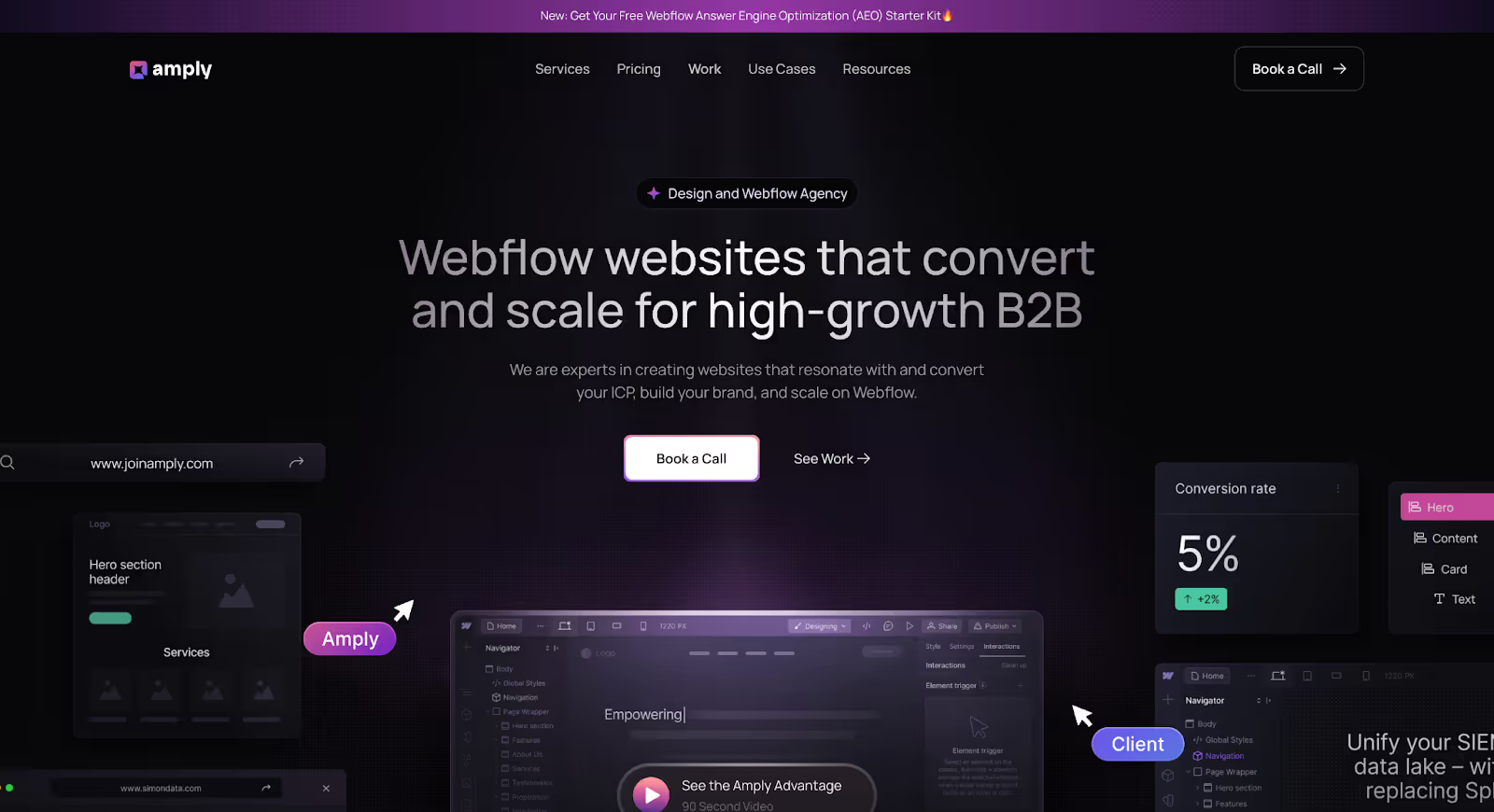
Amply is a Webflow agency focused on B2B companies operating in complex, high-trust environments, particularly fintech, AI, and data-driven platforms. Their work sits at the intersection of product clarity, conversion strategy, and scalable Webflow systems, making them a strong fit for companies where the website plays a direct role in pipeline generation.
What sets Amply apart is how intentionally they design for decision-making, not just presentation. In fintech and AI, users don’t convert because a site looks good, they convert when uncertainty is reduced. Amply structures websites around credibility signals, clear product narratives, and buyer-specific journeys that make complex offerings easier to evaluate quickly.
They also understand that these buying processes rarely involve a single persona. Amply builds Webflow sites with multiple entry points for different stakeholders, from CTOs and CISOs to CFOs and operations teams while continuously iterating post-launch as the product and positioning evolve. This combination of clarity, structure, and adaptability is what makes them a strong choice in this category.
Best for:
- B2B fintech SaaS companies with enterprise or mid-market buyers
- AI website design requirements for complex or hard-to-explain products
- Regtech and compliance-focused tools where trust is critical
- Data infrastructure and ML companies with long sales cycles
2. Clay
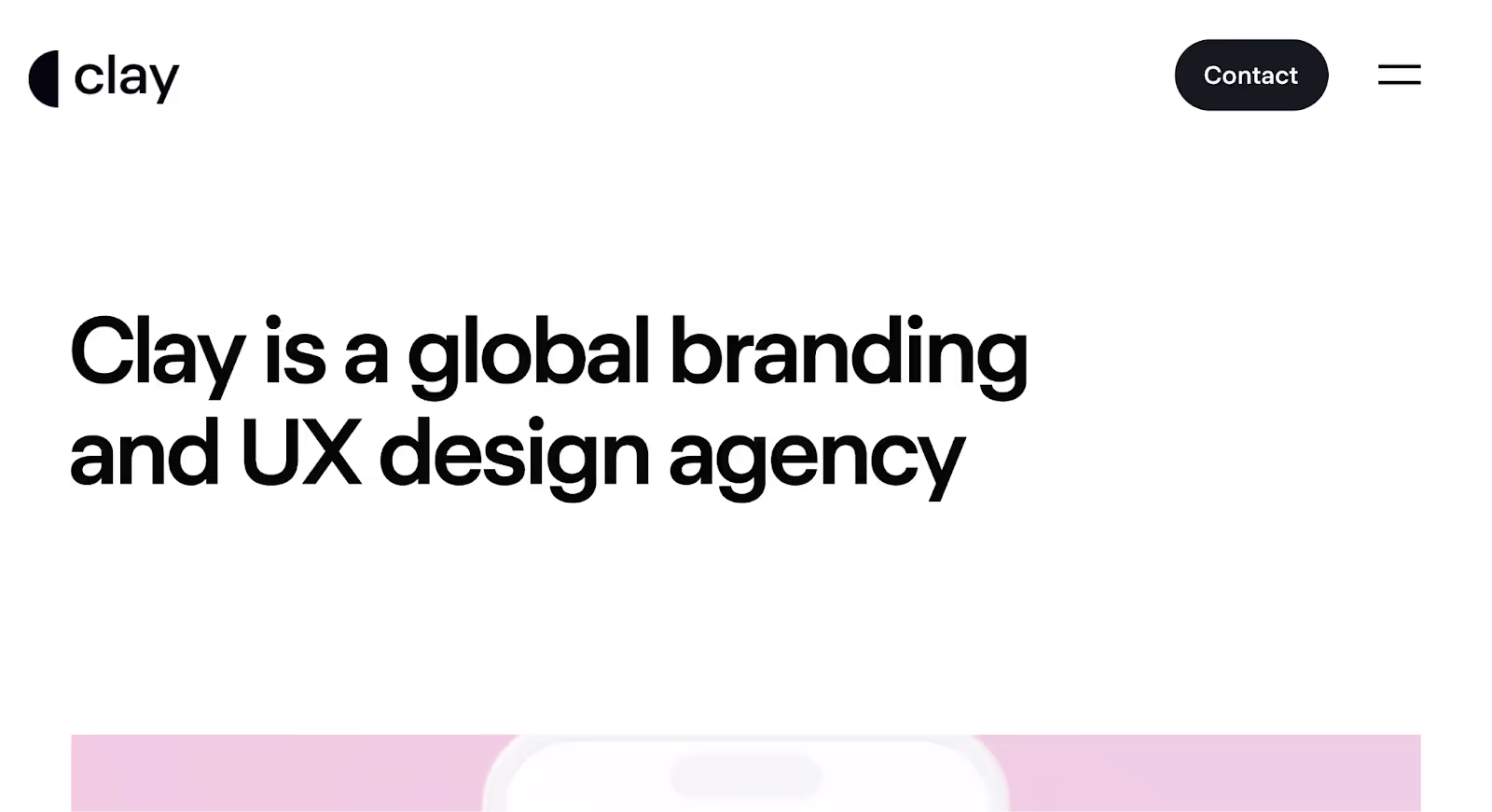
Clay is a design-led agency known for working with high-growth technology companies at moments when their brand needs to evolve alongside their product. For fintech and AI startups especially, this often happens when the company outgrows its early positioning and needs a more defined, differentiated identity in the market.
Their strength lies in translating complex or abstract product categories into a cohesive brand system. Instead of starting with pages or layouts, Clay focuses on shaping how the company is perceived: visual identity, tone, and positioning and then carries that through into the website. This makes them particularly effective when the challenge isn’t just explaining the product, but defining what the company stands for in a crowded or emerging category.
Clay is also a strong choice when brand and website need to be built together, not in isolation. For teams going through a rebrand, category shift, or major repositioning, this integrated approach ensures the website doesn’t feel like a layer added on top, it becomes a natural extension of the brand itself.
Best for:
- AI and fintech companies going through a rebrand or positioning shift
- Teams that need to define a strong, differentiated identity in a crowded market
- Companies building brand and website simultaneously
3. Refokus
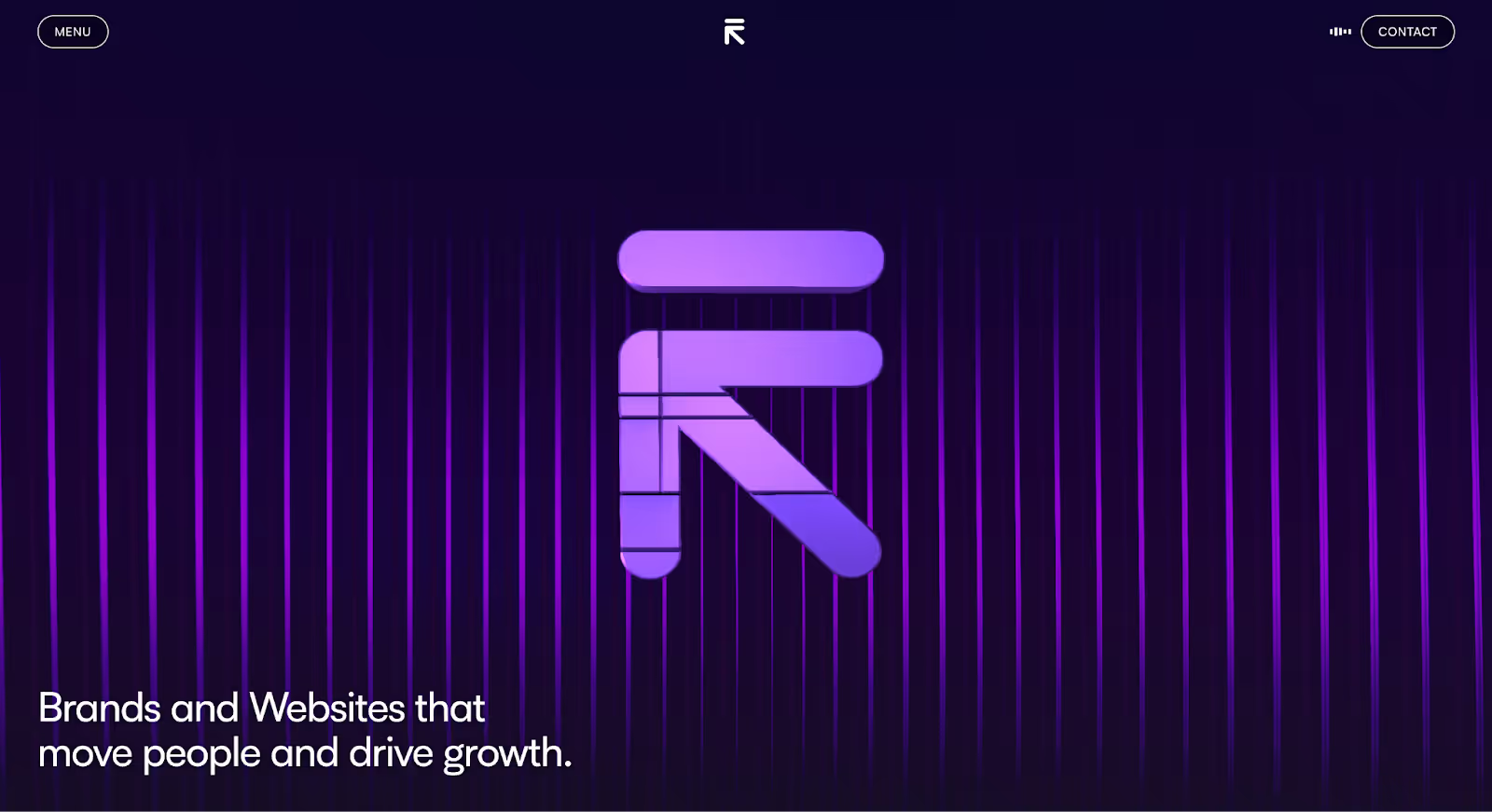
Refokus is a Webflow agency known for pushing the boundaries of motion, interaction, and immersive web experiences. Their work is highly visual and dynamic, making them a strong fit for AI companies that want their website to feel as innovative as the product itself.
Their core strength lies in advanced animations and interaction design. Instead of relying on static sections, Refokus builds experiences that guide users through the product using movement, transitions, and layered storytelling. This works particularly well when the product itself is a differentiator where showing how it feels to use matters just as much as explaining what it does.
That said, this approach isn’t universally applicable. In more conservative fintech categories like lending, compliance, or insurance overly dynamic design can sometimes work against trust and clarity. Refokus is at its best when the goal is to stand out and create a memorable experience, not when the priority is risk reduction and straightforward communication.
Best for:
- AI companies with innovative or experiential products
- Teams that want a visually distinctive, motion-driven website
- Products where the user experience is a key differentiator
4. Ramotion
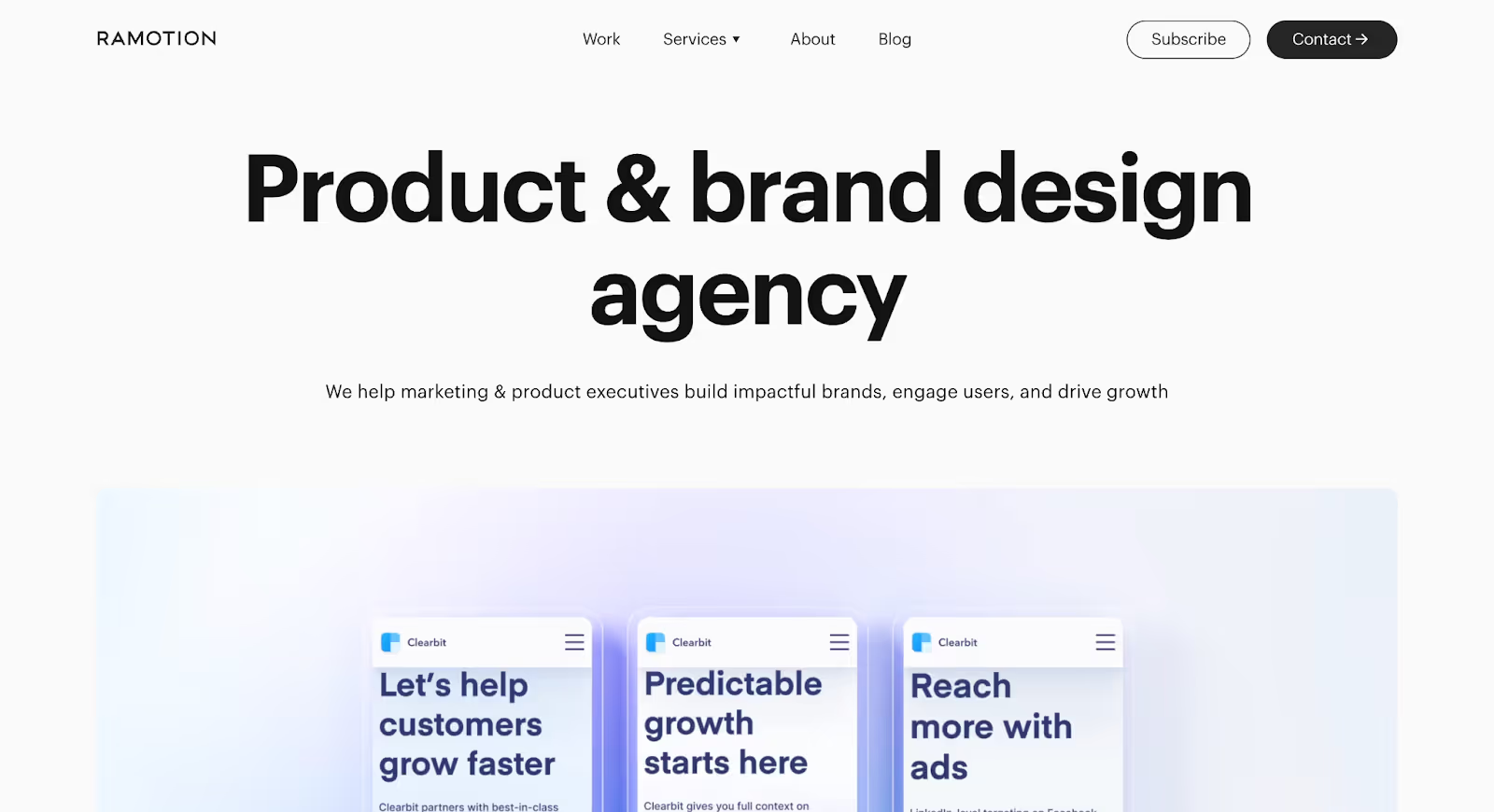
Ramotion is a design agency with a strong reputation for building brand identities for technology companies, especially in fintech. They’re often brought in at moments when a company needs to establish a more mature, credible presence, not just through a website, but through a cohesive visual system.
Their work leans heavily into what fintech buyers expect: clean layouts, structured information, and a polished, professional aesthetic that signals stability and trust. This makes them a strong fit for financial products where perception matters just as much as functionality, and where the brand needs to feel established from the first interaction.
Ramotion is particularly effective when the need goes beyond a website. If your company doesn’t yet have a well-defined visual identity or if your current one doesn’t reflect the product’s maturity, they can build both the brand and the website in parallel, ensuring everything feels consistent and intentional.
Best for:
- Fintech companies building or refining their brand identity
- Teams that need a credible, structured, and polished visual presence
- Companies developing brand and website together
5. Finsweet
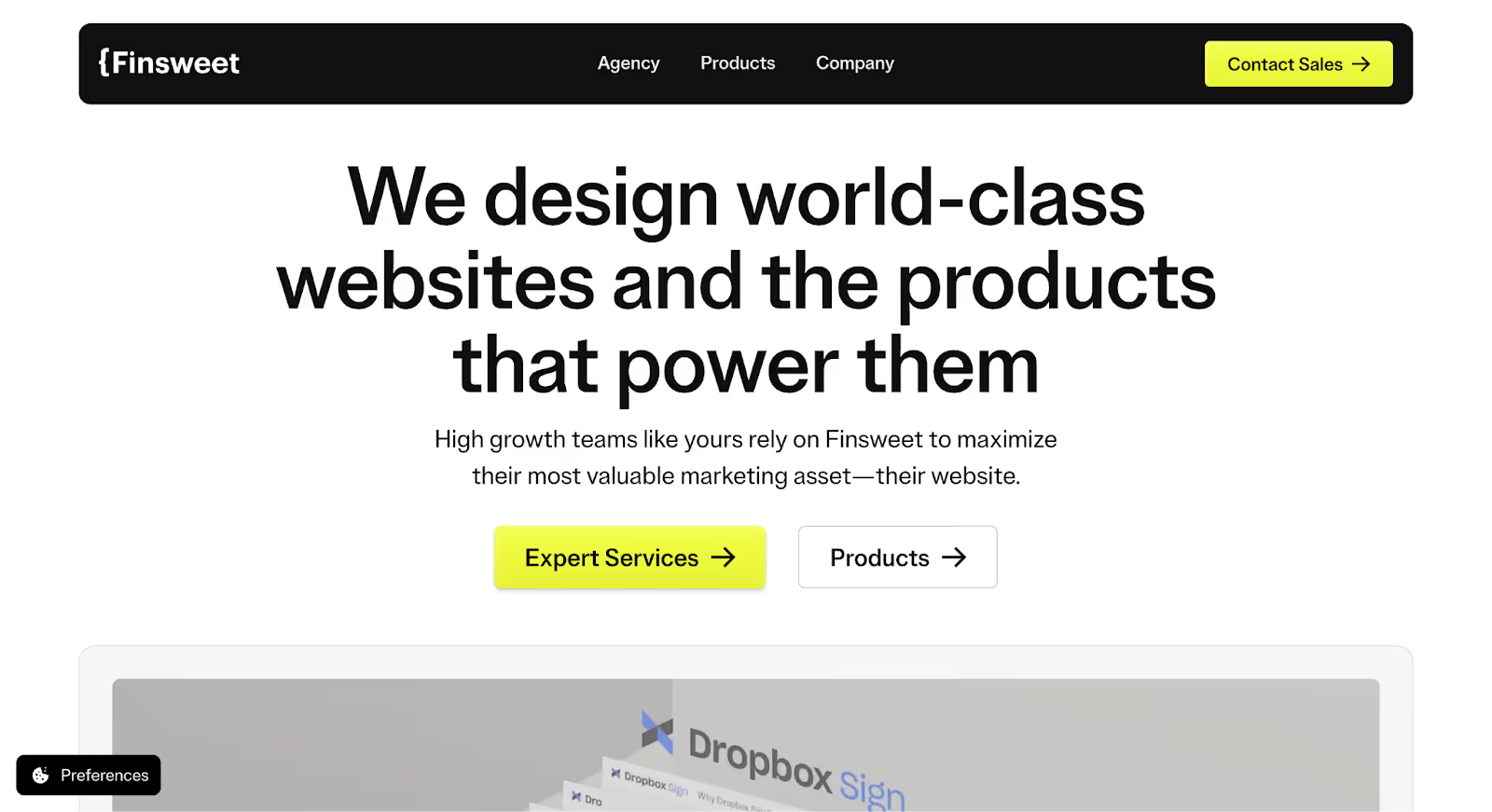
Finsweet is widely known in the Webflow ecosystem for its engineering depth. While many agencies focus primarily on design, Finsweet stands out for building highly functional, scalable Webflow implementations, especially for projects that go beyond standard marketing sites.
Their strength shows up when your website needs to handle complexity behind the scenes. This includes advanced CMS architectures, dynamic content systems, custom logic, and integrations with external tools. For fintech and AI companies where the website is closely tied to product flows or data systems, this level of technical capability becomes critical.
Finsweet is less about crafting brand narratives and more about making sure the site works exactly as needed: reliably, flexibly, and at scale. If your biggest challenge is technical execution rather than positioning or messaging, they’re one of the strongest options available.
Best for:
- Fintech and AI platforms with complex CMS or data-driven requirements
- Teams that need custom integrations or advanced Webflow functionality
- Products where the website is tightly connected to internal systems or workflows
6. Hello Monday
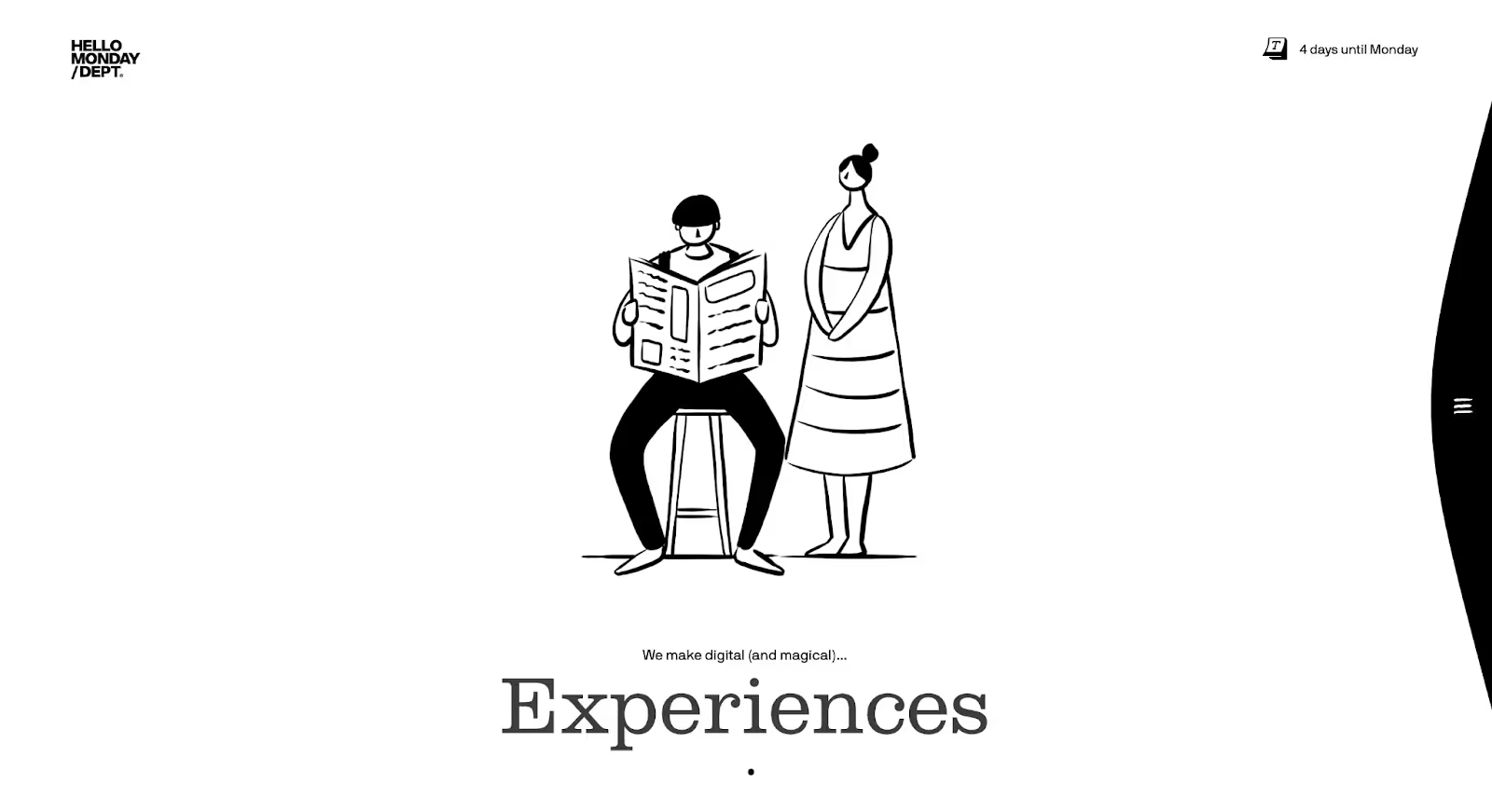
Hello Monday is a design studio known for crafting story-driven digital experiences. Their work is less about traditional product marketing and more about shaping how a company’s ideas, perspective, and narrative are experienced online which makes them a strong fit for certain types of AI companies.
They work best when the company has a clear point of view, not just a product to sell, but a perspective to communicate. This could be a research-driven organization, an AI infrastructure company with a strong thesis, or a team investing heavily in thought leadership. In these cases, the website becomes more than a conversion tool, it becomes a platform for expressing ideas and building credibility over time.
That approach is powerful, but specific. Hello Monday is most effective when storytelling and narrative are central to the company’s strategy. If the primary goal is straightforward product explanation or conversion optimization, other agencies may be a better fit.
Best for:
- AI companies with a strong narrative, thesis, or point of view
- Research labs and AI infrastructure companies
- Teams investing in editorial content and thought leadership
Common website mistakes fintech and AI companies make
Most fintech and AI websites don’t fail loudly, they fail quietly, by creating just enough confusion or doubt for buyers to hesitate. The product might be strong, the design might look polished, but if the site doesn’t align with how users evaluate risk, trust, and clarity, it won’t convert the way it should.
What makes this tricky is that these mistakes often feel like “best practices” on the surface: focusing on features, investing in visuals, simplifying CTAs. But in high-stakes categories like fintech and AI, those same decisions can work against you. The patterns below show where most companies go wrong and why those gaps directly impact pipeline.
1. Leading with technology instead of outcomes
A common pattern: the homepage opens with infrastructure, models, or features: how the product works, instead of why it matters.
Buyers don’t convert because your AI uses a proprietary architecture or your fintech stack is scalable. They convert when they understand:
- What problem this solves
- What changes after they adopt it
- Why it’s better than their current approach
If that’s not clear within the first few seconds, everything else becomes harder.
2. Missing compliance and trust signals near conversion points
Fintech and AI buyers are naturally skeptical and that skepticism peaks right before action.
If your “Book a demo” or “Start trial” section doesn’t reinforce trust with:
- Security assurances
- Compliance indicators
- Customer proof
…you’re creating friction at the exact moment users are deciding whether to move forward.
Trust shouldn’t live in a separate “Security” page, it needs to be embedded where decisions happen.
3. Over-indexing on visual design at the cost of clarity
A visually impressive site can still underperform if users don’t understand what the product does.
This often shows up as:
- Abstract headlines
- Heavy animations without context
- Beautiful sections that don’t communicate anything concrete
In fintech and AI, clarity is more persuasive than creativity. If users have to interpret your message, you’ve already lost momentum.
4. No demo or product visualization
Asking users to request a demo without showing the product is one of the biggest conversion blockers in this category.
Most buyers won’t commit time unless they can first see:
- How the product works
- What the interface looks like
- What kind of output or results to expect
Even a simple walkthrough, video, or interactive preview can significantly reduce hesitation.
5. One generic CTA for all buyer types
Fintech and AI purchases are rarely made by a single person and different stakeholders are looking for different things.
A CISO might want security details.
A CTO might want integration clarity.
A CFO might want ROI and outcomes.
If your site pushes all of them toward the same CTA (“Book a demo”), you’re forcing different decision-makers into the same path, which weakens conversion.
High-performing sites create multiple pathways, allowing each persona to move forward based on what they need to see next.
The pattern across all of these: the issue isn’t effort, it’s alignment. The best fintech and AI websites work because they mirror how real buyers think, evaluate risk, and make decisions.
What to ask a Webflow agency before hiring for fintech or AI
Most agencies will say they can “handle fintech” or “work with AI companies,” but that claim doesn’t mean much on its own. The real difference shows up in how they think about risk, trust, and complexity and you only uncover that by asking the right questions.
These aren’t surface-level screening questions. They’re designed to reveal whether the agency understands how compliance shapes design, how trust impacts conversion, and how your website fits into a larger go-to-market system. The answers will tell you very quickly whether they’re equipped for this category or just approaching it like any other SaaS project.
Here are the ones that matter:
1. Do you have experience with regulated or compliance-sensitive industries?
This goes beyond logos in a portfolio. You want to understand:
- Have they worked within constraints on claims, disclaimers, and messaging?
- Do they know how compliance impacts layout, CTAs, and user flow?
If they treat compliance as a legal review step at the end, that’s a red flag. It should shape the design from the start.
2. Can you build integration-ready pages (CRM, product flows, analytics)?
Your website isn’t just a marketing asset, it’s part of your growth system.
Ask how they handle:
- CRM integrations (HubSpot, Salesforce)
- Product-led growth flows (trials, gated demos)
- Analytics and attribution setup
Agencies that don’t think about this early often create friction later when you try to scale.
3. How do you handle copy: do you write it or do we?
In fintech and AI, messaging is usually the hardest part.
Clarify:
- Do they take ownership of positioning and messaging?
- Or do they expect your team to provide finalized copy?
If the agency can’t support messaging, you may end up with a well-designed site that still doesn’t convert.
4. Have you worked on sites where trust is the primary conversion challenge?
This is the most important question and the easiest to overlook.
You’re looking for:
- Examples where users needed reassurance before taking action
- How they approached credibility, proof, and risk reduction
Because in fintech and AI, conversion doesn’t come from pushing harder, it comes from removing doubt.
These questions do more than qualify an agency, they help you understand how they think. And in this category, that matters more than any portfolio piece.
Final thoughts
Most fintech and AI teams don’t struggle to find good agencies, they struggle to choose the one that actually solves their biggest bottleneck. And that’s where most decisions go wrong. A visually impressive portfolio or a well-known name doesn’t guarantee your website will perform if it’s not built for your specific constraints: trust, complexity, compliance, and multi-stakeholder buying.
If your challenge is clarity and conversion in a long sales cycle, an agency like Amply will feel like a better fit because they structure sites around decision-making and trust. If you’re at a brand inflection point and need to define how your company is perceived, Clay or Ramotion are stronger choices. If your differentiation is experience and visual innovation, Refokus stands out. And if your biggest constraint is technical complexity: CMS, integrations, or data-driven builds, Finsweet becomes a strong option. For companies leaning heavily into narrative, research, or thought leadership, Hello Monday might fit well.
The common thread across all of this: your website isn’t just a design project, it’s a risk-reduction system for your buyers. The right agency is the one that understands why your users hesitate and builds the site to remove that hesitation step by step. Choose based on that, and the decision becomes a lot clearer.
Frequently Asked Questions
Yes, most fintech and AI companies can use Webflow effectively, especially for marketing websites. The key is understanding that Webflow handles the front-end experience, not sensitive backend infrastructure. As long as you’re not storing or processing financial data directly on the site, Webflow is a viable and widely used option.
Webflow provides strong baseline security (SSL, hosting infrastructure, DDoS protection), which is sufficient for most marketing use cases. However, for fintech companies, the real requirement is how your site integrates with secure systems, not where it’s hosted. Security signals, compliance messaging, and proper integrations matter more than the CMS itself.
Most fintech and AI websites built by specialized agencies fall between $15K and $60K+, depending on complexity of the product and messaging, number of pages and CMS requirements, and level of custom design, motion, and integrations. Higher-end agencies typically charge more because they focus on positioning, trust, and conversion, not just design.
Focus on alignment with your biggest constraint. If you struggle with clarity and conversion, choose an agency strong in messaging and structure. If you need brand positioning, prioritize identity-focused agencies. If your site requires technical depth, choose engineering-led teams. The best agency is the one that solves your current bottleneck.
Some do, some don’t. This is a critical distinction. In fintech and AI, messaging is often the hardest part of the project. Agencies that support positioning and copywriting tend to deliver better outcomes than those relying on client-provided content.
The most effective approach combines clear, outcome-focused messaging, visual product walkthroughs or demos, and structured content that breaks complexity into simple steps. The goal is not to explain everything, but to make the core value understandable within seconds.
For enterprise-focused companies, choose an agency that understands multi-stakeholder buying journeys, trust-driven decisions, and long sales cycles. Agencies experienced in B2B and high-trust environments usually perform better than generalist studios.