Best Webflow Agencies for VC Firms (2026)

%201.avif)
Key Takeaways
- The best Webflow agencies for VC firms balance editorial restraint with flexible CMS architecture that teams can manage without developers.
- VC websites function as founder-facing platforms. Credibility and information hierarchy matter as much as visual design.
- Strong CMS architecture for portfolio companies, team bios, and insights is non-negotiable for a scalable VC site.
- Design restraint signals authority. Overly experimental websites can undermine a VC firm's credibility with founders.
- Speed to publish matters. The right agency structures the CMS so teams can go live with announcements without developer help.
- Most VC Webflow builds cost $15K–$60K and take 6–14 weeks depending on scope and CMS complexity.
- Before hiring, ask agencies about CMS handoff, publishing independence, and experience with credibility-driven B2B brands.
The best Webflow agencies for VC firms combine editorial restraint with flexible CMS architecture: venture capital websites need to publish portfolio updates, team pages, and investment insights without developer dependency. The agencies in this guide understand that a VC site is not just a brand asset; it's a credibility layer founders often evaluate before deciding whether to take a meeting.
A venture capital website has a very different job compared to a typical corporate or SaaS site. Beyond presenting the firm's brand, it needs to clearly communicate the fund's investment thesis, showcase portfolio companies, introduce partners, and often publish essays or research that signal how the team thinks about markets. These sites are content-heavy and change frequently as new investments, announcements, and insights are released.
That's why the agency building the site matters. The right Webflow partner will structure portfolio pages, team profiles, and insight archives as flexible CMS collections while keeping the design restrained and credible. The agencies in this guide stand out for understanding those requirements and building Webflow websites that venture firms can manage and scale without relying on developers.
What makes a great Webflow agency for a VC firm?
Venture capital websites have very different requirements compared to most corporate or SaaS sites. A VC site isn't just presenting a brand, it's communicating the fund's thesis, showcasing portfolio companies, introducing partners, and often publishing essays or insights that signal how the team thinks about markets. Because of this, the website functions more like an evolving content platform than a static marketing page. The right Webflow agency understands these structural needs and builds the site in a way that allows VC teams to manage and expand it easily over time.
A great Webflow agency for a VC firm typically excels in a few key areas:
- Content-heavy website structure: VC websites require portfolio grids, individual company pages, partner bios, and insight or essay sections. Agencies should know how to organize these elements clearly so the site remains easy to navigate even as content grows.
- Strong CMS architecture: Portfolio companies, team members, and insights should be built as CMS collections so non-technical operations or communications teams can add and update content without touching code.
- Editorial design restraint: Venture firms project authority and credibility through clarity. Agencies experienced with VC brands avoid overly experimental design and focus on strong hierarchy, typography, and readability.
- Speed to publish: Investment announcements and insights often need to go live quickly. The best Webflow agencies structure the CMS so teams can publish updates or portfolio additions in minutes rather than relying on developers.
Quick comparison: Top Webflow agencies for VC websites
Choosing a Webflow agency for a venture capital website often comes down to a mix of design philosophy, CMS expertise, and experience working with content-heavy B2B brands. Some agencies focus heavily on visual expression and motion design, while others prioritize structured CMS systems that make it easy for teams to manage portfolio pages, insights, and team profiles. The table below provides a quick comparison of agencies that are frequently considered by VC firms building or redesigning their Webflow websites.
Pricing varies depending on project scope, the number of CMS collections required, and whether brand strategy or repositioning work is included in the engagement. For most VC website builds on Webflow, projects typically fall between $15,000 and $60,000, depending on complexity, custom design work, and CMS architecture.
The 6 best Webflow agencies for VC firms
Not every Webflow agency is equipped to build a venture capital website. VC sites need to do more than look polished, they have to communicate investment thesis, showcase portfolio companies, highlight partners, and support a steady stream of insights or announcements. That combination requires agencies that understand both design restraint and CMS-driven content systems. The six Webflow agencies below stand out for their ability to build credible, scalable websites that venture firms can manage and evolve without constant developer involvement.
1. Amply
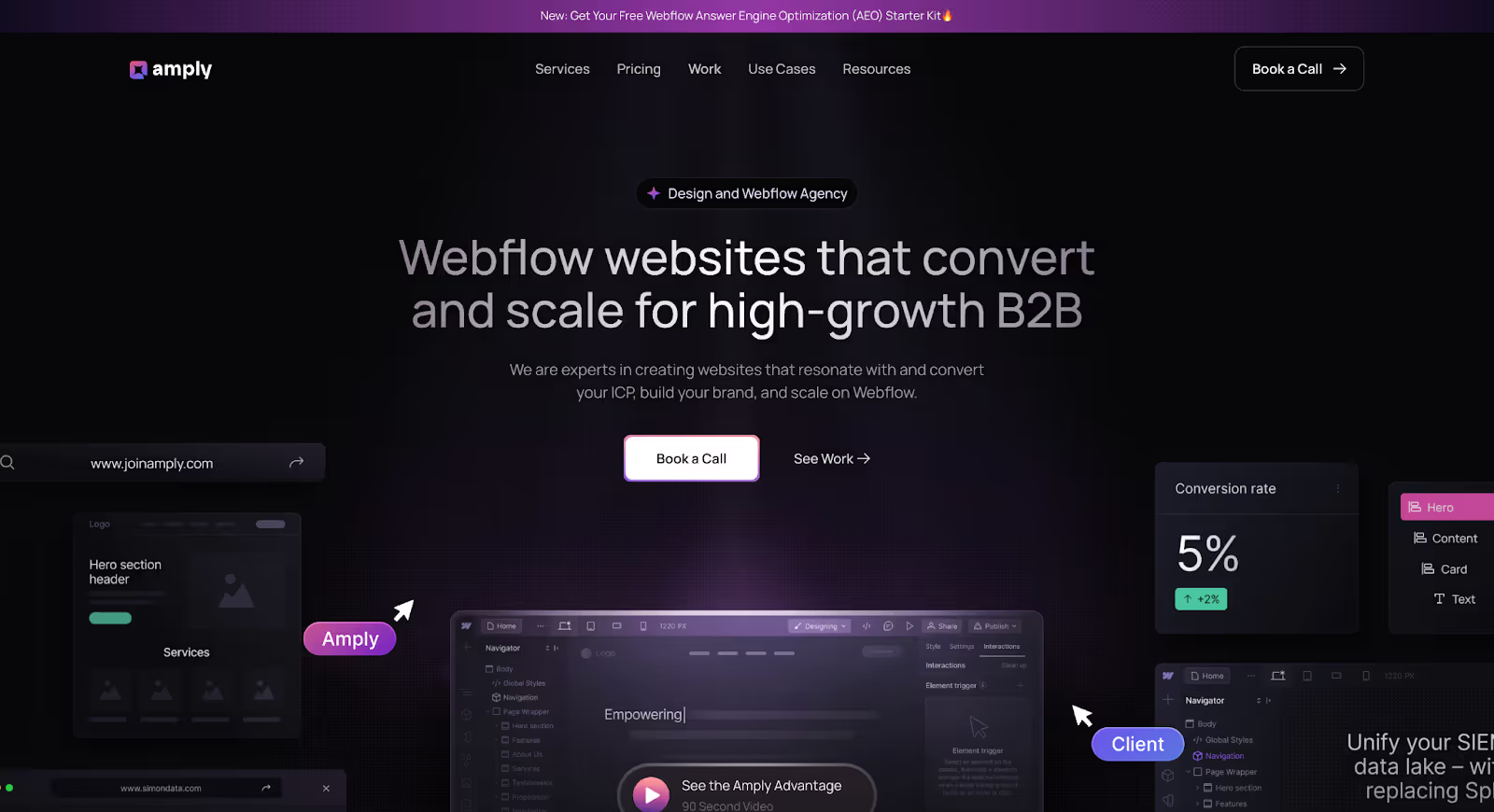
Amply is a B2B-focused Webflow agency that works with technology companies, investor brands, and startups that need structured, content-driven websites rather than purely visual brand showcases. Their approach focuses heavily on positioning, information architecture, and CMS-driven site systems that allow teams to manage content long after launch.
For venture capital firms, this approach fits particularly well because VC websites function as founder-facing platforms. Instead of treating the site as a static marketing asset, Amply structures portfolio pages, team bios, investment announcements, and essay archives as flexible Webflow CMS collections. This allows communications or operations teams to add new portfolio companies, publish insights, or update team information without relying on developers.
Best for:
- Early-stage and growth-stage VC firms
- Operator-led funds that want clear founder positioning
- Firms that regularly publish insights, essays, or market perspectives
2. Refokus

Refokus is a design-led Webflow agency known for visually distinctive websites, strong motion design, and highly polished digital experiences. Their work often features bold layouts, fluid animations, and a strong visual identity, which makes them a good match for brands that want their websites to feel modern and expressive rather than purely informational.
For venture capital firms, Refokus tends to be a strong fit when the fund’s identity leans toward forward-looking sectors such as consumer technology, crypto, gaming, or creative industries. In these cases, a visually expressive website can reinforce the fund’s positioning as design-aware and culturally aligned with the types of companies it invests in.
Best for:
- VC firms investing in consumer, crypto, gaming, or creative industries
- Funds that want a visually distinctive, design-forward website
- Teams that value motion design and expressive brand presentation
3. BX Studio
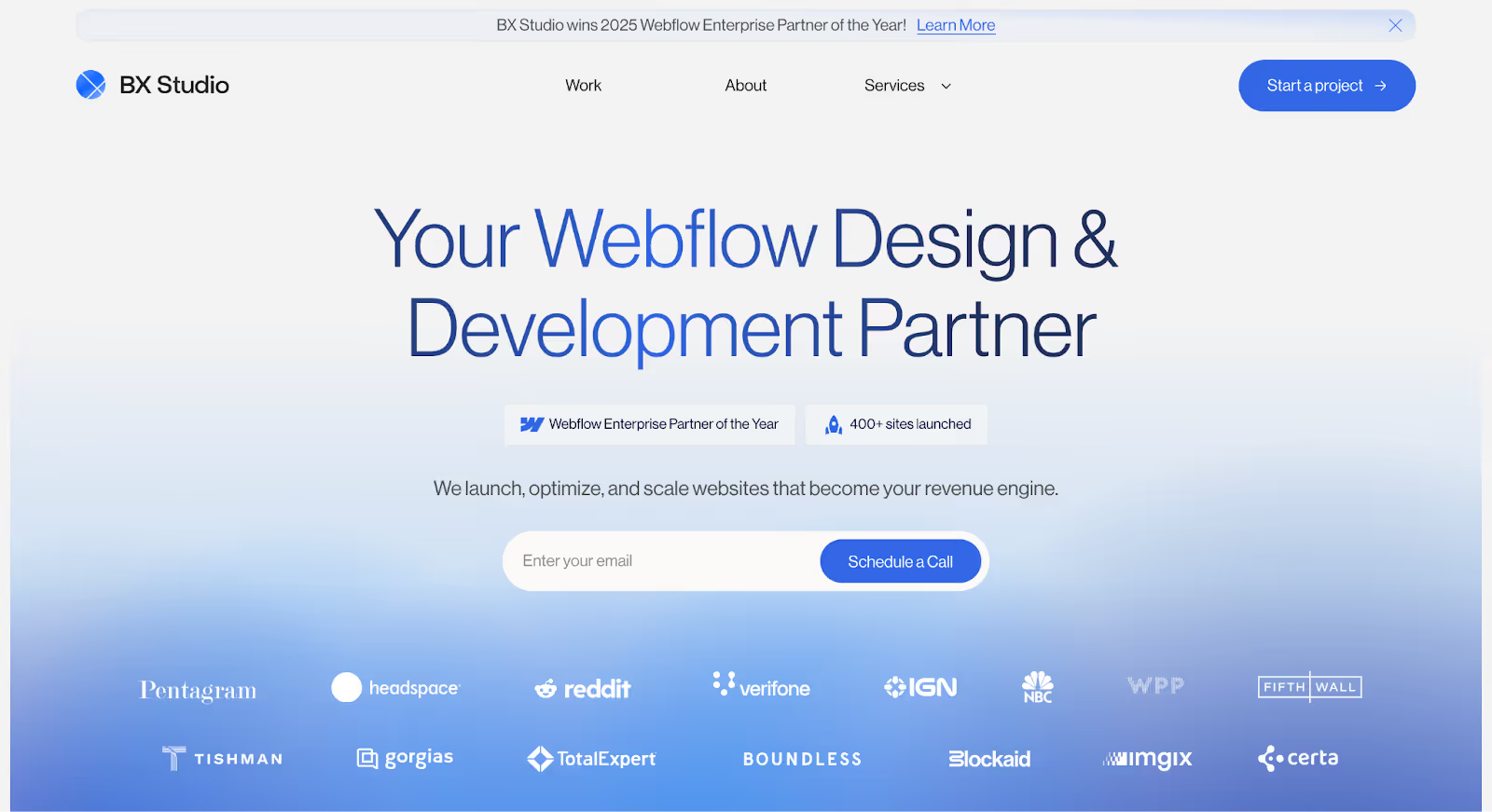
BX Studio takes a practical, structured approach to website design, focusing on clean layouts, strong typography, and reliable CMS implementation. Their work tends to emphasize clarity and professional presentation rather than heavy visual experimentation, which makes them a good fit for organizations that want a credible, well-structured website without unnecessary complexity.
For venture capital firms, this approach can work well because VC websites often prioritize information hierarchy over elaborate design. BX Studio typically focuses on building clear portfolio sections, partner pages, and supporting CMS structures that allow teams to manage updates without ongoing development work. This makes them a solid option for funds that want a polished, professional Webflow site but may not need the extensive brand strategy or design experimentation offered by higher-end brand studios.
Best for:
- VC firms looking for a clean, credible website without an overly high budget
- Funds prioritizing clarity and structured layouts over experimental design
- Teams that want a reliable CMS-driven Webflow site
4. Hello Monday
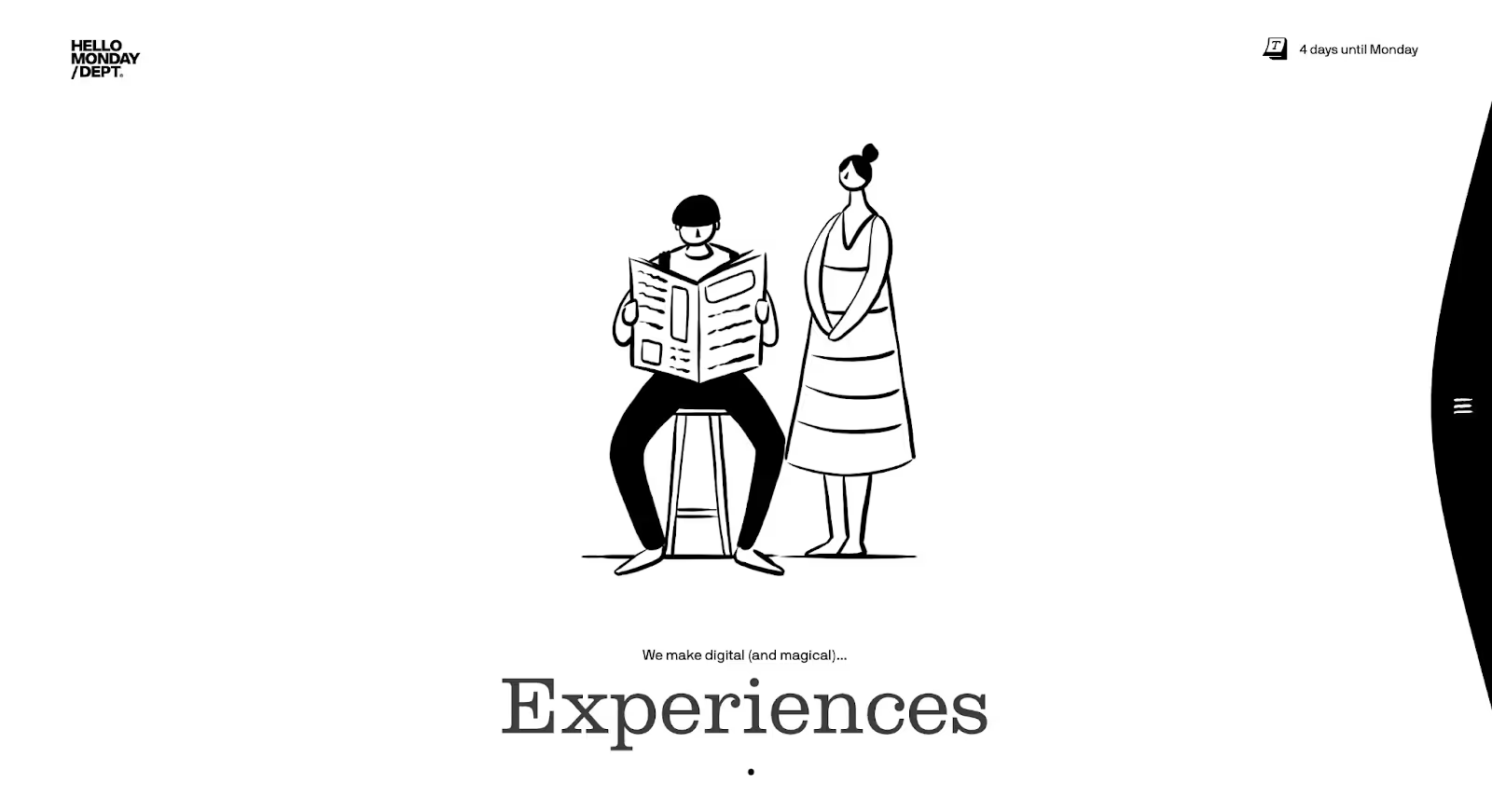
Hello Monday is known for creating narrative-driven digital experiences that translate brand strategy into cohesive website systems. Their work often focuses on storytelling, thoughtful design systems, and structured content experiences rather than purely visual experimentation. This approach can work particularly well for venture capital firms that want their website to communicate a clear perspective on markets, industries, or investment philosophy.
For VC firms that regularly publish essays, research, or thesis-driven content, a narrative-led website structure can help reinforce how the fund thinks and what it stands for. Hello Monday’s approach typically emphasizes clear storytelling, structured content sections, and brand-led design systems that support long-form publishing and idea-driven communication.
Best for:
- VC firms that publish essays, research, or thesis-driven insights
- Funds that want their website to communicate a clear narrative or point of view
- Teams investing in a strong brand system alongside the website
5. Clay

Clay is a well-known digital design agency with deep experience working with technology companies and product-focused brands. Their work often blends product thinking with brand design, creating websites that feel structured, sophisticated, and aligned with the kinds of products or platforms their clients build.
For venture capital firms investing in technically complex startups such as developer tools, AI infrastructure, fintech platforms, or enterprise software, this approach can translate well to the fund’s own website. Clay’s design style typically emphasizes clarity, product-grade design systems, and polished digital interactions that reflect the sophistication of the companies within the portfolio.
Because of their experience with product-driven companies, Clay is often a good match for funds that want their website to feel as thoughtful and technically credible as the startups they invest in.
Best for:
- VC firms investing in complex technology or product-driven startups
- Funds that want a polished, product-grade website design
- Teams prioritizing strong digital design systems and brand sophistication
6. 80/20

80/20 is a strategy-led digital agency that combines brand positioning, content strategy, and Webflow development into a single process. Rather than focusing only on design execution, their approach typically starts with clarifying how a company or organization wants to position itself, and then translating that positioning into a cohesive website structure.
For venture capital firms, this can be particularly useful during moments of transition such as launching a new fund, refining an investment thesis, or repositioning the firm’s brand in the market. By integrating brand strategy, messaging, and website development, 80/20 helps ensure that the final site clearly communicates what the firm stands for and the type of founders it wants to attract.
Because of this strategy-first approach, they are often a good fit for funds that see their website as part of a broader brand or positioning shift rather than just a design refresh.
Best for:
- VC firms undergoing rebranding or repositioning
- Funds launching a new thesis or entering a new investment category
- Teams that want brand strategy and website development handled together
What to ask a Webflow agency before hiring for your VC site?
Choosing a Webflow agency for a venture capital website isn’t just about visual design. The site will likely become a long-term platform for publishing investment announcements, updating portfolio companies, and communicating the firm’s thinking through essays or insights. Because of that, it’s important to understand how the agency approaches CMS structure, publishing workflows, and long-term site ownership before starting a project.
Before hiring an agency, venture firms should ask a few practical questions to make sure the site will remain easy to manage and evolve after launch:
- Have you built CMS systems for content-heavy B2B or financial services websites?
- Can our communications or operations team publish essays and portfolio updates without developer help after launch?
- Do you have examples of websites that balance visual restraint with strong information hierarchy?
- What does your Webflow handoff process look like? Will we fully own and control the site?
- Have you worked with clients where brand credibility is the primary conversion signal?
Final thoughts
A venture capital website does more than present a firm’s brand, it signals credibility, communicates investment thesis, and helps founders understand whether the fund is the right partner. Because these sites often include portfolio pages, partner bios, and a steady flow of insights or announcements, the underlying CMS structure and information hierarchy matter as much as the visual design.
The Webflow agencies in this guide each approach that challenge differently. Some focus on design-forward experiences, others prioritize structured CMS systems and editorial clarity, while a few emphasize brand strategy and positioning. The right choice ultimately depends on how your firm wants its website to function, whether as a simple credibility layer, a design-led brand experience, or a platform for publishing ideas and insights.
For most venture firms, the best Webflow agency will be one that understands how VC websites actually operate: a balance of credibility-driven design, scalable CMS architecture, and a site that the team can manage independently long after launch.
Frequently Asked Questions
Most venture capital websites built on Webflow typically cost between $15,000 and $60,000, depending on the scope of the project. Pricing usually depends on factors such as custom design work, the number of CMS collections (portfolio companies, team members, insights, etc.), brand strategy work, and the overall complexity of the site.
A typical VC website built on Webflow takes 6–14 weeks from kickoff to launch. Smaller sites with limited pages and simple CMS structures may be completed faster, while projects involving brand strategy, custom design systems, or complex CMS architecture can take longer.
Yes. Webflow's CMS can easily support large portfolio sections when structured properly. Each portfolio company can be stored as a CMS item with fields for descriptions, founders, logos, links, and categories, allowing the site to scale as the firm's portfolio grows.
For most venture firms, Webflow provides a strong balance of flexibility and ease of use. It allows teams to manage content without developer support while still enabling custom design and CMS functionality. Custom-built websites may make sense for firms that require highly complex integrations or custom software features, but most VC sites function well within Webflow.
Many VC firms choose Webflow because it combines design flexibility with a powerful CMS. This makes it easier for communications or operations teams to publish investment announcements, update portfolio companies, and manage team pages without relying on developers for routine updates.
Most venture capital websites include core pages such as portfolio, team, investment thesis, insights or essays, and contact. Some firms also include sections for investment announcements, founder resources, or research content depending on how actively they publish insights.