Best Webflow maintenance Agencies for B2B websites

Key Takeaways
- Webflow maintenance is not just about fixing bugs, it’s about keeping your site fast, secure, and aligned with your growth goals.
- The best maintenance agencies act like an extension of your team, handling updates, experiments, and improvements continuously.
- Core maintenance typically includes content updates, performance monitoring, SEO fixes, backups, and integrations.
- For B2B websites, maintenance directly impacts lead generation, conversion rates, and campaign speed.
- Retainer-based models work best because they allow teams to ship updates quickly without starting from scratch each time.
- Agencies that understand CRO, SEO, and CMS structure bring more value than those offering only basic support.
- Good maintenance setups help teams launch pages faster, test ideas, and avoid technical bottlenecks over time.
For most B2B teams, the website starts as a growth asset and slowly turns into a bottleneck. Simple updates require developer support. Landing pages take longer than campaign timelines allow. Small bugs pile up, but no one owns fixing them. Over time, teams stop relying on the website altogether and start working around it.
The issue isn’t Webflow itself, it’s how the system is maintained. A B2B website isn’t a one-time build. It’s a living product that evolves with your messaging, go-to-market motion, and product roadmap. Without structured maintenance, even well-designed sites become harder to manage, slower to update, and riskier to change.
There’s also a coordination challenge most teams underestimate. Marketing needs speed, product needs accuracy, and leadership expects consistency. When multiple stakeholders depend on the same website, even small updates can have downstream impact. The best Webflow maintenance agencies understand this, they don’t just execute tickets, they manage the system behind them.
This list highlights agencies that operate at that level. Not just who can fix issues, but who can help B2B teams move faster without breaking structure and where they differ depending on whether you need reactive support, proactive optimization, or a long-term partner.
What makes a great Webflow maintenance agency for B2B websites
B2B websites aren’t static assets, they’re operational systems. They sit at the intersection of marketing, sales, product, and growth, constantly evolving with new campaigns, positioning changes, and product updates. That means maintenance isn’t just about fixing bugs or making small edits, it’s about ensuring the entire system continues to function reliably as complexity increases.
Because of this, the role of a Webflow maintenance agency is fundamentally different from a typical design or development partner. It’s not about one-time delivery, but about ongoing ownership. The right agency understands how small changes impact larger systems: CMS structure, page performance, integrations, and team workflows and works in a way that keeps everything aligned over time.
A great Webflow maintenance agency for B2B websites typically excels in a few key areas:
1. System-first thinking (not ticket-first execution)
Most agencies operate reactively, you submit a request, they complete it. Strong maintenance partners go deeper. They understand how each request fits into the broader system and flag risks, dependencies, or better approaches before execution. This prevents short-term fixes from creating long-term complexity.
2. Scalable CMS and component governance
As B2B websites grow, CMS collections, components, and naming conventions can quickly become inconsistent. The best agencies maintain strict governance ensuring new pages, sections, and content types follow a structured system. This keeps the site easy to manage even as more teams contribute.
3. Fast turnaround without breaking structure
Speed matters in B2B: campaigns, launches, and experiments can’t wait. But speed without structure creates fragility. Great maintenance agencies balance both: they enable quick updates while preserving design consistency, responsiveness, and performance.
4. Proactive monitoring and optimization
Most issues don’t come from major failures, they come from small, unnoticed problems over time (broken forms, slow-loading pages, outdated integrations). Strong agencies don’t wait for tickets; they actively monitor, audit, and improve the site to prevent issues before they impact pipeline.
5. Cross-functional awareness (marketing, product, sales)
A B2B website serves multiple stakeholders. A good agency understands this context: how marketing uses landing pages, how sales relies on case studies, how product updates affect messaging and ensures changes support all teams, not just the immediate request.
6. Clear processes and ownership
Maintenance breaks down when ownership is unclear. The best agencies bring structure: defined SLAs, prioritization systems, communication workflows, and documentation. This reduces back-and-forth and ensures requests don’t get stuck or lost.
In short, great Webflow maintenance agencies don’t just “keep the site running.” They ensure the website continues to support growth without becoming a bottleneck as the business scales.
Webflow Maintenance Agencies Comparison (B2B-Focused)
For most B2B teams, the decision comes down to a trade-off between speed, structure, and strategic involvement and very few agencies balance all three.
If your bottleneck is execution (landing pages, quick fixes), subscription or fast retainer models will feel effective, but can lack system oversight leading to long-term complexity. Agencies with strong strategic input align updates with positioning and growth, but usually come with higher cost and slower turnaround.
The layer most teams overlook is system integrity over time. As more people touch the site, structure can break down. Agencies that prioritize governance may feel slower upfront, but prevent the technical debt that eventually slows everything down.
In practice, the right choice depends on where your website is breaking today: speed, clarity, scalability, or ownership.
Best 6 Webflow Maintenance Agencies for B2B Websites
Not every Webflow maintenance agency is built for B2B websites and that distinction matters more than it seems. B2B teams aren’t just making occasional updates; they’re constantly launching pages, refining messaging, supporting campaigns, and keeping multiple stakeholders aligned through the same system. That requires a very different level of structure, responsiveness, and ownership than typical “on-demand” support.
The agencies in this list aren’t just Webflow experts, they understand how B2B websites evolve over time. Some are built for speed and high-volume execution, others focus on strategy and conversion, while a few specialize in technical scalability or design quality. The goal here isn’t to rank them universally, but to help you identify which type of partner fits how your team works and what your website actually needs.
1. Amply
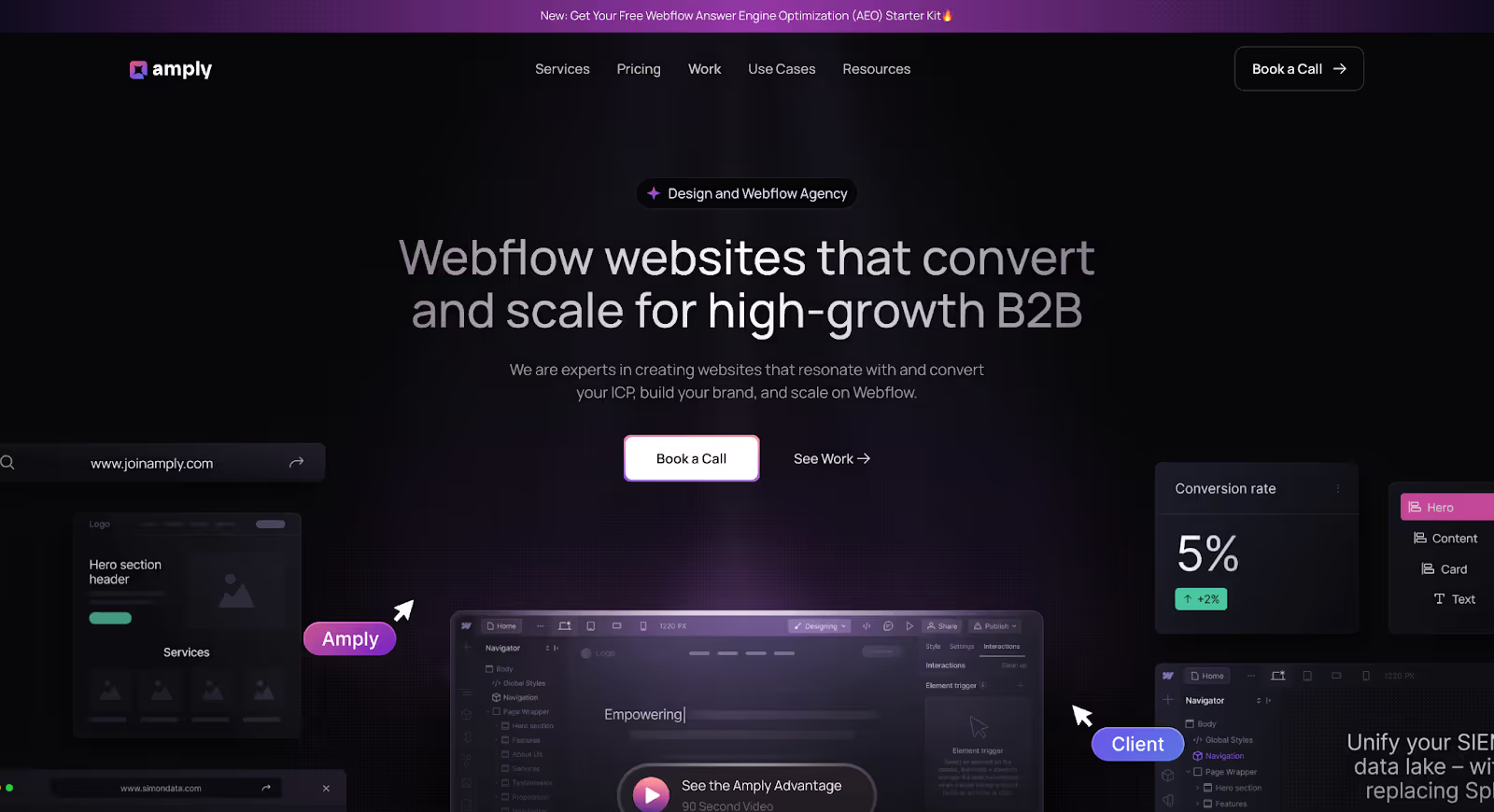
Amply is a Webflow-focused agency that works with B2B companies to manage, maintain, and scale their websites as ongoing systems, not just one-time builds. Their work typically sits alongside marketing and growth teams, supporting everything from landing page launches and CMS updates to larger structural improvements as the website evolves.
For B2B teams, the challenge isn’t just making updates, it’s making them consistently, without slowing down or breaking what already exists. Amply’s approach leans heavily into this reality. Updates are handled in a way that keeps the underlying system clean and predictable, so as more pages, campaigns, and stakeholders get added, the site doesn’t become harder to manage over time.
This becomes especially relevant for teams that are shipping frequently. Instead of treating maintenance as reactive support, the focus is on enabling ongoing iteration while keeping structure intact, something that tends to matter more as the website becomes central to marketing, sales, and product communication.
Best for:
- B2B teams that need fast execution without breaking site structure
- Companies scaling content, landing pages, and marketing campaigns
- Teams looking for a long-term partner, not just task-based support
2. Saddle
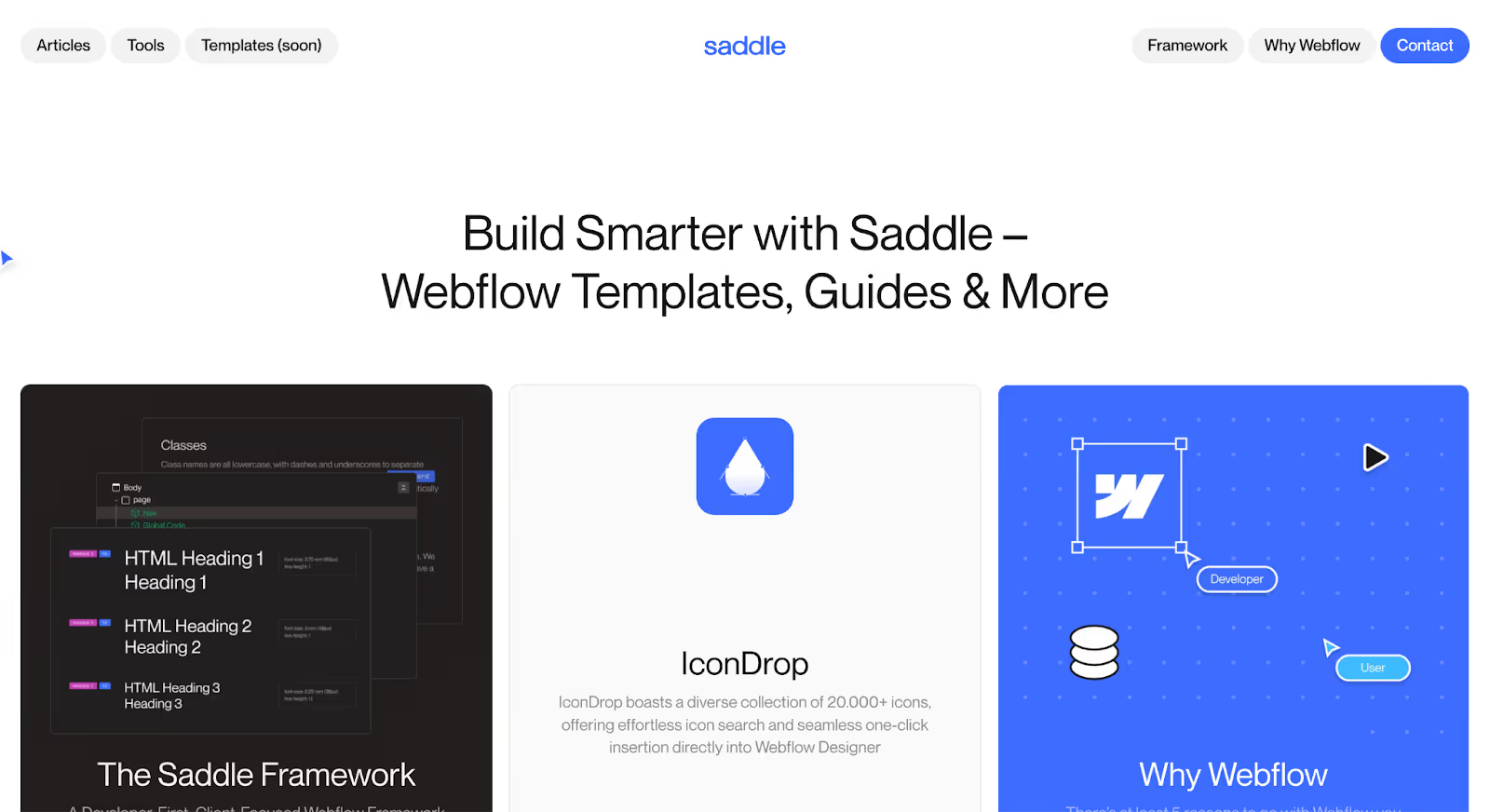
Saddle is a B2B-focused Webflow agency that works closely with startups and growth-stage companies on website design, messaging, and ongoing iteration. Their work often sits closer to brand and positioning, helping teams refine how their product is communicated while supporting updates on the Webflow side.
For teams where the website is a key part of go-to-market, Saddle’s approach tends to lean more toward strategic involvement. Updates are not just about execution, but about improving clarity, conversion, and overall narrative. This can be especially useful for companies still refining positioning or frequently testing how they present their product to different audiences.
At the same time, their maintenance support is often tied to this broader strategic lens. This means they’re a strong fit for teams that value thinking and direction alongside execution, but may be less focused on high-volume, day-to-day operational updates compared to more system-driven maintenance setups.
Best for:
- B2B teams refining positioning, messaging, and conversion
- Startups that need strategic input alongside Webflow updates
- Companies treating the website as a core part of go-to-market
3. Flowout
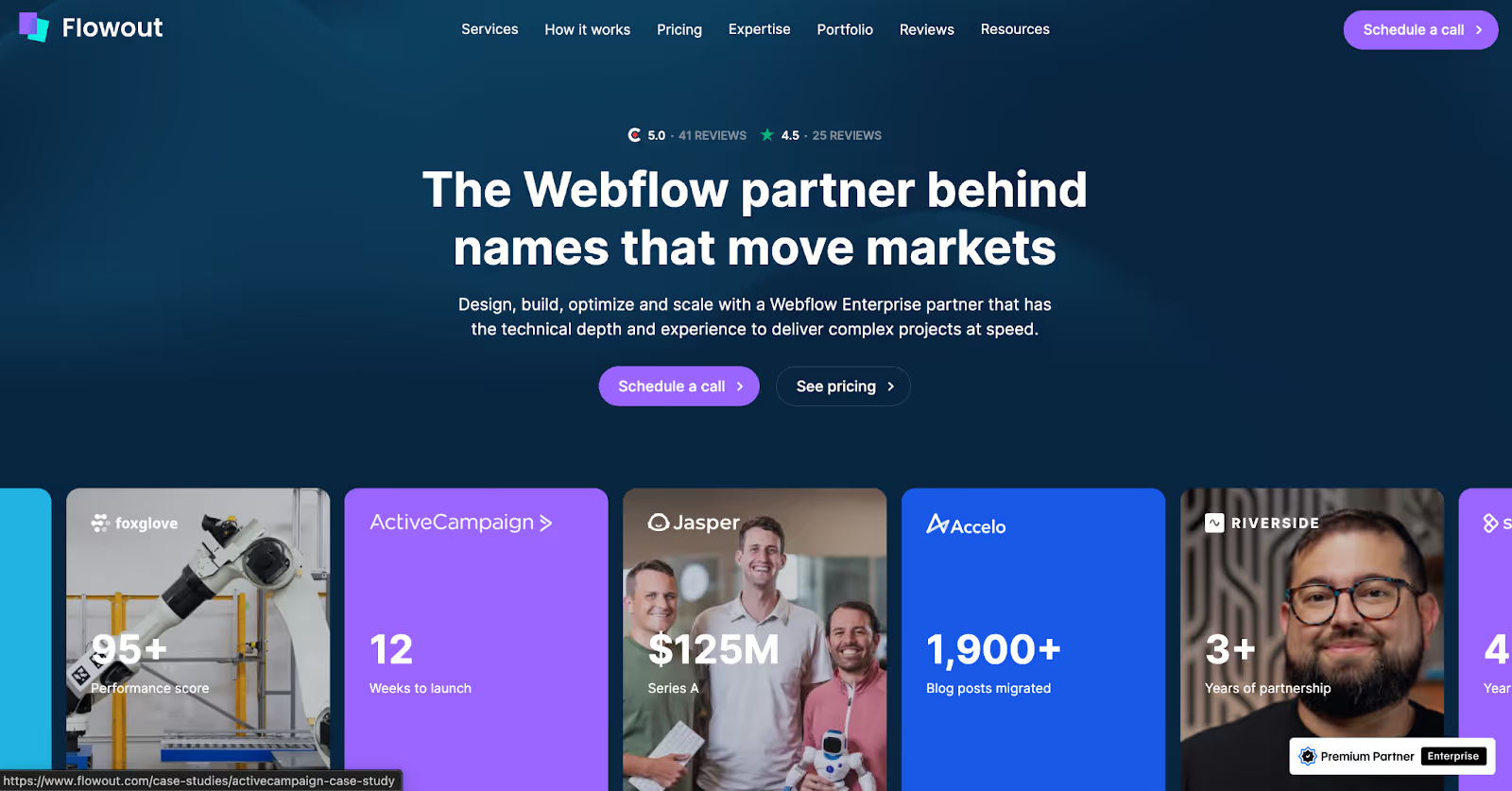
Flowout is a Webflow-focused agency known for its subscription-based model, offering ongoing design and development support through a steady stream of requests. It’s built for teams that need consistent execution whether that’s landing pages, small fixes, or regular updates without managing multiple freelancers or scoping individual projects.
For B2B teams running frequent campaigns or needing quick turnaround, this model can feel efficient. Requests are handled continuously, which makes it easier to maintain momentum without getting blocked on bandwidth. It works particularly well when the scope of work is clear and repetitive, and speed is a primary priority.
At the same time, the approach is more execution-driven. The focus is on completing requests reliably rather than managing the broader system or structure behind them. For teams that already have internal direction and just need consistent output, this can work well but it may require more internal oversight as complexity grows.
Best for:
- Teams with high-volume, ongoing Webflow update needs
- B2B companies running frequent campaigns and landing pages
- Teams looking for predictable, subscription-based support
4. Veza Digital
Veza Digital is a B2B-focused agency that combines Webflow development with conversion rate optimization (CRO) and performance-driven design. Their work often supports SaaS and tech companies looking to improve how their website contributes to pipeline, not just how it looks or functions.
For teams that are actively experimenting with messaging, landing pages, and user journeys, Veza’s approach tends to go beyond routine maintenance. Updates are often tied to performance improvements, whether that’s refining page structure, improving conversions, or supporting campaign-specific pages.
Because of this, their maintenance support is typically part of a broader growth or optimization effort. This makes them a good fit for teams that want ongoing improvements tied to metrics, but may be less aligned for companies primarily looking for fast, day-to-day execution or lightweight support.
Best for:
- B2B SaaS teams focused on conversion and performance improvements
- Companies running experiments on landing pages and user journeys
- Teams looking for CRO-led Webflow support
5. Finsweet
Finsweet is one of the most well-known names in the Webflow ecosystem, recognized for its deep technical expertise and contributions to advanced Webflow builds. Their work often involves complex CMS structures, custom functionality, and scalable systems that go beyond standard Webflow implementations.
For B2B companies with more advanced requirements, whether that’s custom integrations, large-scale CMS setups, or unique functionality, Finsweet brings a level of technical depth that few agencies match. Their approach is less about routine maintenance and more about building and supporting systems that require careful planning and precision.
Because of this, their involvement in ongoing maintenance tends to be more selective and technically focused. They’re a strong fit when the website itself is complex and requires expert handling, but may not be the most practical choice for teams needing frequent, day-to-day updates or fast-turnaround requests.
Best for:
- B2B companies with complex Webflow setups or custom requirements
- Teams needing advanced CMS structures or integrations
- Projects where technical scalability is a priority
6. Refokus
Refokus is a design-led agency known for building visually distinctive Webflow websites with strong motion and interaction. Their work is often centered around brand expression, helping companies create a more premium and differentiated digital presence.
For B2B companies where perception and visual identity play a key role, Refokus brings a high level of polish to ongoing updates. Maintenance in this context is often tied to evolving the design: refining interactions, updating sections, and ensuring the site continues to feel modern and aligned with the brand.
However, this approach is more design-centric than operational. While they provide ongoing support, it’s typically less focused on high-frequency updates or system-heavy maintenance. For teams prioritizing brand and experience, this works well but it may not be the best fit for fast-paced, execution-driven workflows.
Best for:
- B2B brands where design and visual differentiation are priorities
- Companies investing in premium, interaction-heavy websites
- Teams looking to evolve brand presence over time
What to ask a Webflow maintenance agency before hiring for your B2B website
Choosing a Webflow maintenance agency isn’t just about capability, it’s about how they work once the site is live. Most issues B2B teams face don’t come from lack of skill, but from mismatched expectations around speed, ownership, and structure. What looks like “support” on paper can quickly turn into delays, inconsistent updates, or a system that becomes harder to manage over time.
That’s why asking the right questions upfront matters. Not just to evaluate what an agency can do, but how they think about maintenance, how they handle scale, and whether their approach aligns with how your team operates day to day.
- Here are the key questions worth asking before you decide?
- What does your turnaround time look like for different types of requests?
- How do you maintain CMS structure and component consistency over time?
Do you proactively monitor and optimize the site, or only act on requests? - How do you work with multiple stakeholders (marketing, product, sales)?
- What level of strategic input do you provide beyond execution?
- What does onboarding and documentation look like?
These questions help you go beyond surface-level comparisons and understand how an agency will actually function as part of your team which is ultimately what determines whether maintenance becomes a growth lever or a bottleneck.
Final thoughts
Most B2B teams don’t struggle because they picked a “bad” agency, they struggle because they picked the wrong type of agency for how their website actually operates. A team shipping weekly campaigns needs a very different partner than one making occasional updates. A company scaling content needs structure, while one refining positioning may need more strategic input. The mismatch usually shows up later, when speed slows down, structure breaks, or ownership becomes unclear.
Before choosing an agency, it helps to step back and identify where your website is creating friction today. Is your team blocked on execution? Is the site becoming harder to manage as it grows? Are updates inconsistent across pages? Or are you struggling with conversion and messaging? The answer to these questions should guide your decision more than brand names or pricing tiers.
It’s also worth thinking beyond immediate needs. Webflow maintenance compounds over time, small decisions around CMS structure, components, and workflows either make future updates easier or harder. Agencies that bring clarity, consistency, and a defined way of working tend to create more long-term value, even if they don’t feel like the fastest option on day one.
In the end, the right agency isn’t just the one that can maintain your site, it’s the one that fits how your team works and where your website needs to go next.
Frequently Asked Questions
A Webflow maintenance agency handles ongoing updates, bug fixes, CMS management, performance monitoring, and structural improvements. For B2B websites, this often includes landing page creation, content updates, and ensuring the site remains scalable as it grows.
A one-time project focuses on building or redesigning a website. Maintenance is ongoing, it ensures the site continues to evolve with your campaigns, messaging, and product changes without breaking structure or performance.
Most Webflow maintenance agencies operate on monthly retainers or subscriptions, typically ranging from $1,500 to $5,000+ per month depending on scope, speed, and level of strategic involvement.
It depends on your internal bandwidth and expertise. Many B2B teams use agencies to extend their team, especially for faster execution, complex updates, or maintaining structure as the site scales.
Focus on how the agency works, their turnaround time, approach to CMS and structure, and level of strategic input. The right choice depends on whether your bottleneck is speed, scalability, or clarity.
Yes, some agencies go beyond execution and help with CRO, messaging, and UX improvements. However, not all agencies offer this, so it’s important to choose based on your goals.