Best Video Production Agencies for Cybersecurity Companies in 2026


Key Takeaways
- Wyzowl: Best for depth of cybersecurity client experience at a fixed price
- Apollo Studio: Best for security products sold to technical buyers
- CRFT Video: Best for enterprise security brands wanting a New York animation studio
- Broadcast2World: Best for published fixed-fee animation with security case studies
- Motionvillee: Best for a dedicated cybersecurity practice with published ranges
- Videodeck: Best for presenter-led security content at monthly volume
- Demo Duck: Best for flagship creative on an abstract security product
- What a Story: Best for SaaS-style explainers with a published project range
- HackerContent: Best for security-native marketing that includes video
- Punch: Best for brand, web and video from one cybersecurity-specialist agency
Every cybersecurity marketer has sat through the same video. A hooded figure at a keyboard. Green text scrolling. A padlock that glows red, then a padlock that glows green. A voice explains that threats are evolving, that the perimeter is gone, and that this platform protects what matters most. Two minutes later the viewer knows the company is in security and has no idea what the product does.
The buyer notices. A CISO, a SOC lead or a security engineer has watched hundreds of these, and the moment a video reaches for the hoodie they file the vendor under "marketing" and move on. In a category where the buyer is more technical than the person who wrote the script, vagueness is not neutral. It reads as not knowing.
Cybersecurity video is hard for specific reasons. The product usually works invisibly, so there is nothing obvious to film. Every claim gets checked by someone who knows the field, so the script cannot overstate detection or promise "unhackable". And the message has to pass legal and compliance review before it ships, which breaks agencies that treat sign-off as a formality.
This guide ranks the agencies that handle those constraints well. It covers agencies, not awareness-training libraries and not video software. What each one is good at, which security companies it has actually worked for, what it costs, and who it genuinely suits.
How We Ranked These Agencies (Methodology)
We ranked for security vendors whose buyer is technical (a CISO, a security architect, a SOC or detection engineering lead) and whose product does its work invisibly. If you mainly need security awareness content for employees, or a corporate brand film, weight these criteria differently, because ours start from the product.
Verified cybersecurity client work
Weighted heaviest. We looked for named security clients we could confirm on the agency's own site or portfolio, not a "cybersecurity" tab added to an industries menu. Video for a detection platform is a different job from video for a project-management tool, and the difference shows in the first week of scripting.
Technical credibility with security buyers
Can the agency describe what the product does at the level a security engineer would accept, working from documentation and a conversation with the product team, rather than from marketing copy that has already been softened? We watched for scripts that name the mechanism (what is detected, where, how the response happens) instead of the vibe.
Making invisible protection visible
Most security products have no interface worth showing for long, and the value is in what did not happen. This is a genuine creative problem, and agencies solve it very differently: attack-path animation, data-flow motion graphics, dashboards treated selectively, or a person on camera. We favoured work where the visual carried real information.
Review and sign-off workflow
Security messaging goes through product, legal and often compliance before it ships. Agencies that build those review gates into the process, at script and storyboard stage rather than at final delivery, finish on time. Agencies that don't produce a beautiful video that gets rewritten.
Pricing transparency and turnaround
Whether the agency publishes figures before a call, and how fast it can deliver. Security marketing runs on a calendar of launches, conference seasons and disclosure cycles, and a video that lands two weeks after the news is worth much less than one that lands with it.
The Best Cybersecurity Video Production Agencies Compared
| Agency | Best For | Pricing | Turnaround | Better Suited For… Than… |
|---|---|---|---|---|
| Wyzowl | Depth of security experience | From £2,000 (about $2,700) | 4 to 6 weeks | Volume of security work at a fixed price, than a small dedicated team |
| Apollo Studio | Technical security buyers | From $10,000 | Full productions in about 3 weeks | Security products that need explaining, than employee awareness content |
| CRFT Video | Enterprise security brands | Custom quote | 4 to 6 weeks | Polished 2D and 3D animation, than live-action and presenters |
| Broadcast2World | Fixed-fee animation | $2,400 to $7,000 per 60s | 4 to 6 weeks | Animated explainers and training, than founder-led films |
| Motionvillee | Dedicated cyber practice | $5,000 to $15,000 | 3 to 6 weeks | Explainer plus distribution planning, than a single hero piece |
| Videodeck | Presenter-led volume | From $5,000 per video | Under 10 days | Steady educational and social output, than one cinematic launch |
| Demo Duck | Flagship creative | ~$8,000 to $25,000+ | 6 to 10 weeks | Planning a quarter ahead, than launch-week deadlines |
| What a Story | Published project range | $2,500 to $25,000 per asset | 2 to 8 weeks | SaaS-style security explainers, than deep enterprise infrastructure |
| HackerContent | Security-native marketing | Retainers from $2,000/mo | By project | Ongoing technical marketing with video in it, than video alone |
| Punch | Brand, web and video together | Custom | By project | Rebrands and launches needing everything, than a single video |
The 10 Best Video Production Agencies for Cybersecurity Companies in 2026
1. Wyzowl
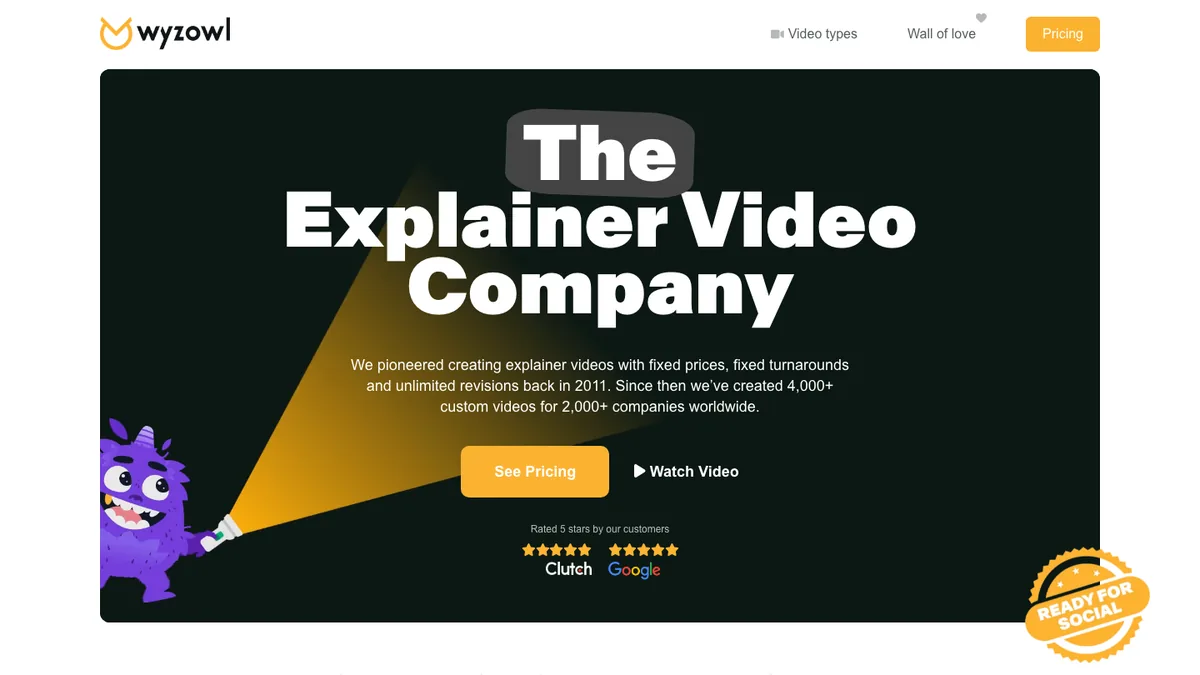
Best for: Security companies that want an agency which has made this kind of video many times, at a price known before the call.
Wyzowl leads on the criterion we weighted heaviest. The UK studio reports 150-plus videos for more than 50 cyber security companies, from early-stage vendors to global platforms, and it publishes the work: explainers for CybSafe's behavioural security platform, Wordfence's WordPress protection, TPx's managed security services and Arkivum's data preservation platform, alongside a hero explainer and ten feature videos for Glassbox.
The reason it ranks first rather than merely appearing is the process. Wyzowl builds dedicated review stages into every project so that technical, legal and compliance stakeholders sign off the script before design starts, the storyboard before animation, and the final cut before delivery. That is exactly the workflow our fourth criterion tests for, and Wyzowl is the most explicit agency on this list about how it runs. The studio also says it regularly cuts two versions of the same product story, a high-level explainer for the C-suite and a detailed demo for IT decision-makers.
Pricing is fixed and published from £2,000 (about $2,700) for an animated video, including scripting, voiceover, animation and unlimited revisions, with subscription packages for teams producing regularly. Most projects complete in four to six weeks.
Who it's less suited for: Better suited to teams who value a deep category track record and a fixed price than to those who want live action, founders on camera or a small senior team on every call. Wyzowl's security work is animation-led, so a vendor that wants real people and a real SOC on screen should look at a studio built for that.
2. Apollo Studio
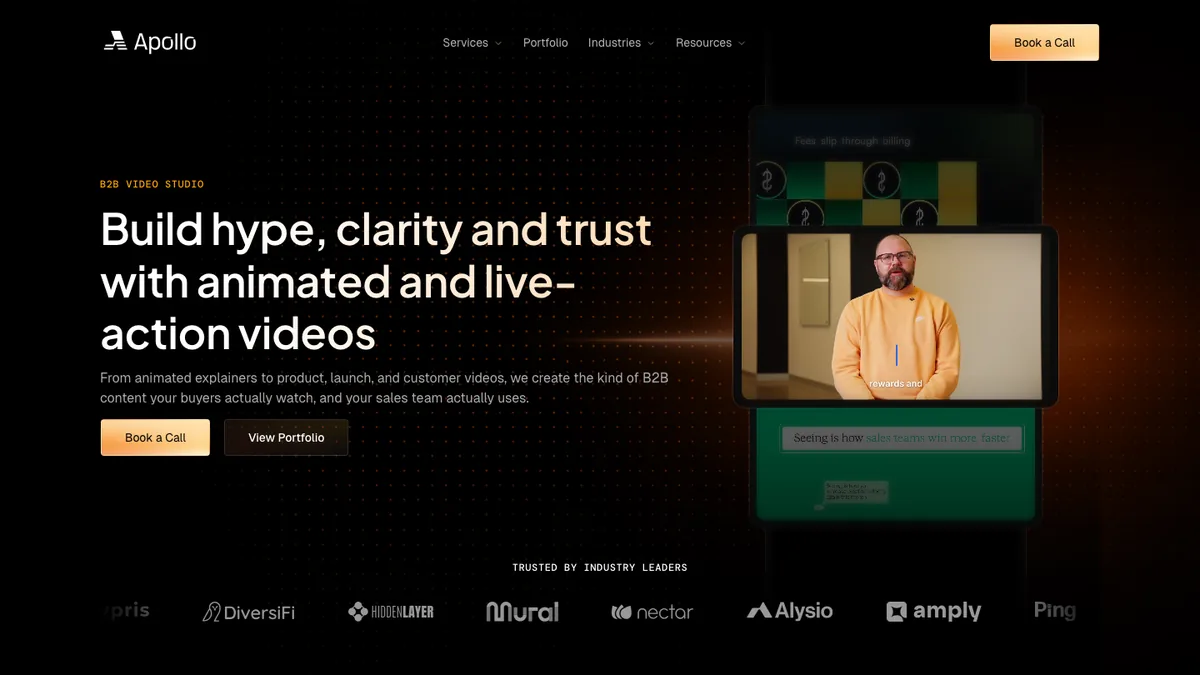
Best for: Security and compliance products whose buyer is technical and whose story is the mechanism, not the threat landscape.
Apollo Studio is a specialist studio for B2B tech, with cybersecurity named alongside SaaS, AI, fintech and healthcare as a core category. It ranks second on the depth reading of our axis rather than the volume one: its work is aimed squarely at technical evaluators.
The evidence is in the portfolio. Apollo Studio produced a fully animated product promo for Anvilogic, the detection engineering platform for security operations teams. For Vanta, the compliance and trust-management platform, it made a product promo built to work as explainer, launch asset and paid ad from one piece, followed by an ongoing monthly product-update series shot in Apollo's own studio. That second arrangement is the one to notice: security-product content on a release cadence rather than as a one-off. Mural, Awardco and Cypris AI round out the roster.
Motion design is produced in-house, so the data-flow and interface sequences that carry a security story are animated by the team that wrote the script. A lean senior team turns post around in about a week and full productions in about three, which matters when the video has to land with a launch or a conference. Pricing starts at $10,000, scoped per project, and co-founder Cade Biegel runs strategy calls directly.
Who it's less suited for: Better suited to security vendors explaining a product to technical buyers than to enterprises that need a library of employee awareness and compliance-training videos, which is where a fixed-price animation studio with a training practice fits better.
3. CRFT Video
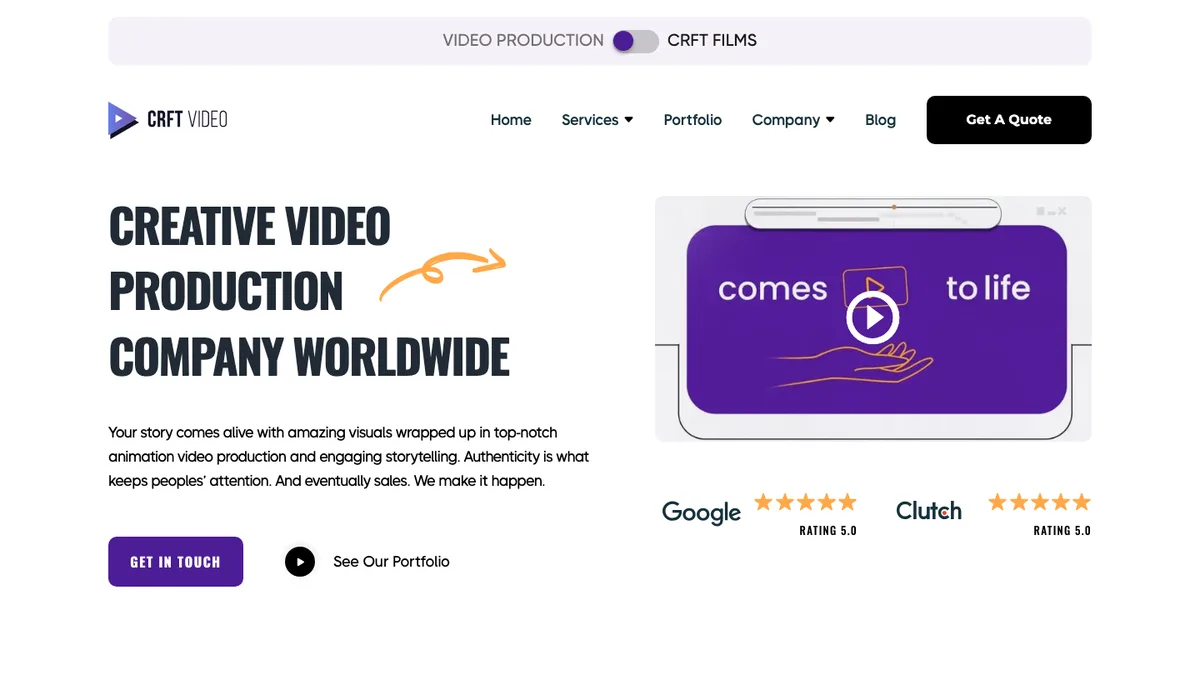
Best for: Enterprise security brands that want polished 2D and 3D animation from a US studio with a security page and the logos to back it.
CRFT Video is a New York animation studio with a dedicated cybersecurity practice, and its named security clients are the strongest on this list: Kaspersky, Malwarebytes and Cisco, alongside Microsoft, Slack and TeamViewer in the wider roster. The studio positions the work around simplifying abstract security concepts through animation, which is the right frame for products whose value cannot be photographed.
The style range is broad for a studio of its size: 2D and 3D animation, motion graphics, whiteboard and interactive video, with storyboards and style frames as standard stages so the client sees the visual language before animation begins. Unlimited revisions apply on script, storyboard, voiceover and illustration. CRFT reports more than 300 reviews across Clutch, Google and the directory sites, with a 5.0 rating on the two that matter.
Pricing is by fixed quote rather than a published rate card, with discounts for multi-video programmes and a premium for rush delivery. Standard turnaround is four to six weeks from kick-off.
Who it's less suited for: Better suited to companies that want animation as the primary medium than to those planning live action, customer testimonials or a presenter series. A vendor whose plan is a founder on camera every month should look at a studio with a stage.
4. Broadcast2World
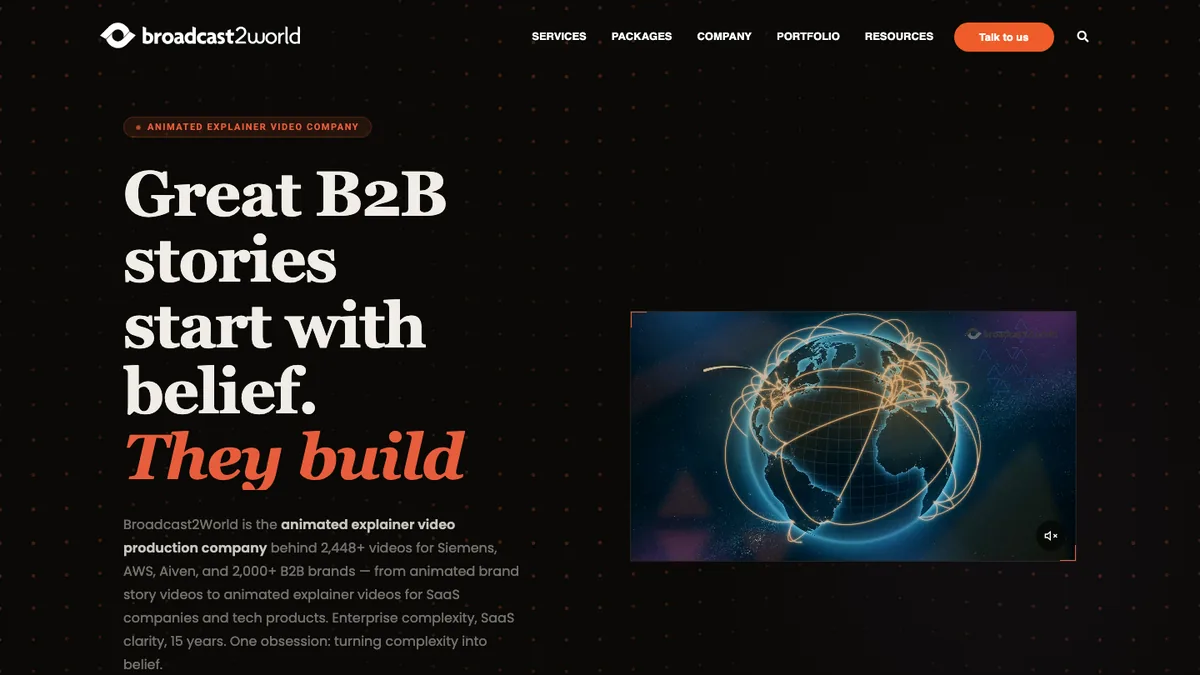
Best for: Security teams that want a published fixed fee and animation across explainers, training and sales enablement.
Broadcast2World has a dedicated cybersecurity animation service and the case studies to support it: McAfee, Attivo Networks, Asigra and Cervais are named, with Fujitsu, Siemens and AWS in the enterprise roster. The use cases it lists read like a security marketer's calendar: product explainers, threat visualisation, feature demos, awareness and compliance training, board briefings and investor communications.
The pricing is the most fully published on this list. Three fixed-fee tiers for a 60-second animation, Growth from $2,400, Premium from $4,200 and Flick from $7,000, plus a monthly retainer from $3,200. Standard turnaround is four to six weeks, complex work eight to twelve, with rush available. The studio reports 2,500-plus videos and a 4.8 Clutch rating.
For a security company that needs a product explainer, an awareness module and a sales-deck cutdown from the same partner, the range of formats and the fixed tiers make budgeting straightforward.
Who it's less suited for: Better suited to animation-led programmes than to founder-led or live-action films. A vendor whose differentiator is its research team on camera needs a different kind of studio.
5. Motionvillee
Best for: A dedicated cybersecurity explainer practice with published ranges and a distribution plan attached.
Motionvillee is a B2B video company with a specific cybersecurity service line, and the work on that page is named: a series for BlackFog covering anti-data-exfiltration and bot mitigation, an insider-threat video for LabCorp, and pieces on penetration testing, SecOps cloud platforms and security for cyber-physical systems. The company reports 4,370-plus videos overall, an 86% repeat-client rate and a 5.0 Clutch rating.
Two things distinguish it for security buyers. It publishes a range for cybersecurity explainers, $5,000 to $15,000, with shorter pieces from $3,000, which is rare in a category where most agencies quote only after a call. And it treats distribution as part of the job, planning where the video runs rather than delivering a file and stepping back, which suits a security marketer who needs the explainer to do work in paid and outbound as well as on the site.
Turnaround is three to six weeks depending on complexity, through a four-stage process from strategic onboarding to delivery.
Who it's less suited for: Better suited to a produced explainer with a distribution plan than to a single cinematic hero film or a presenter-led series. Teams wanting real people on camera each month should look at a studio set up for that.
6. Videodeck
Best for: Security companies that want a steady stream of presenter-led product and educational videos, delivered in days.
Videodeck runs a productised model for B2B software: pick from a roster of in-house presenters, choose a branded set, and the team handles scripting, production, animation and edit, with delivery in under ten days. It has a dedicated cybersecurity industry page and names its security clients: Cyberhaven, Nightfall AI and Noname Security, alongside more than 100 software companies overall.
The formats are the ones a security content team actually needs at volume: product demos and tutorials, educational explainers, comparison videos, sales enablement and short cuts for social. Real presenters rather than AI voices is a stated policy. Pricing is published in full: $5,000 for a single video, $3,500 each for five and $3,000 each for ten, with monthly plans from $10,000 for four videos falling to $2,000 per video on the twelve-video plan.
For a vendor that publishes threat research, ships features monthly and needs someone credible on camera explaining them, this is the arrangement that keeps pace.
Who it's less suited for: Better suited to continuous educational and social output than to one cinematic launch film or a heavily animated visualisation of an attack path. If the brief is a single flagship piece, a project studio will give it more concentrated creative attention.
7. Demo Duck
Best for: A flagship explainer for a security product with no interface to show.
Demo Duck is a Chicago studio best known for animated explainers, and its security work is visible in the portfolio: an animated commercial and explainer for Bitdefender GravityZone, a 3D-led piece for Adlumin's security operations platform, and explainers, trade-show loops and an about-us series for DivvyCloud, the cloud security company later acquired by Rapid7. Identiq, the privacy-preserving identity network, is also on the client list.
The studio's strength is the one our third criterion tests: turning a product with nothing to film into a visual argument. The Adlumin work mixes 2D, 3D and stock footage; the Bitdefender pieces run as broadcast-style spots. For a company launching a category, or a product whose value is entirely in what it prevents, this is the kind of creative concentration that pays.
Pricing is by quote; third-party reporting puts custom work at roughly $8,000 to $25,000 and up depending on format. Timelines run six to ten weeks.
Who it's less suited for: Better suited to teams planning a quarter ahead than to those needing a video in launch week. The creative process is deliberate, and it rewards the time.
8. What a Story
Best for: SaaS-style security and compliance explainers with a published project range.
What a Story is a SaaS-focused video agency that reports 1,200-plus videos over ten-plus years, and its security-adjacent work is on the portfolio page: a 2D product overview for Qanapi explaining zero-trust integration for Google Workspace, an explainer for Duplocloud's DevOps automation platform, and fraud-detection pieces for fintech clients. The style is clean vector illustration and simplified UI, which suits security products sold to IT and operations buyers rather than to a SOC.
The commercial model is unusually transparent for a project studio. What a Story publishes $2,500 to $25,000 per asset depending on format and complexity, alongside a Content Engine subscription at $6,000 per month, and offers a pricing calculator on the site. Timelines run from two weeks for a short piece to eight for a full explainer.
Who it's less suited for: Better suited to security and compliance products with a SaaS buying motion than to deep infrastructure or detection tooling sold to security engineers, where a studio with named work in that exact category will ask sharper questions in week one.
9. HackerContent
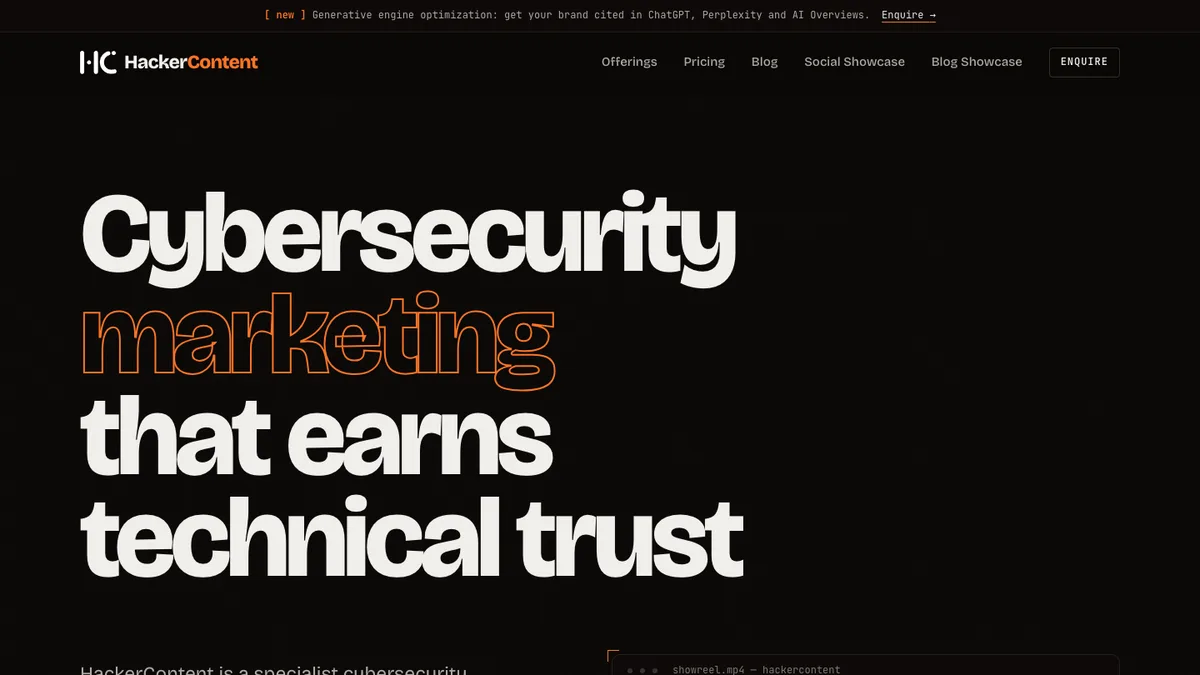
Best for: Security companies that want video produced inside a marketing programme built by people who understand the audience.
HackerContent is not a video studio; it is a cybersecurity marketing agency whose headline is "marketing that earns technical trust", and it earns a place here because of who it works for and what that implies about the scripts. Clients named on the site include Snyk, Bugcrowd, Detectify, ProjectDiscovery and IPinfo: companies whose customers are developers and security researchers, the hardest audience in the category to write for without getting caught out.
Video is one of six core services, covering product demos, explainers, launch videos and video ads, and it is sold inside retainers alongside technical blogs, social and SEO rather than as a standalone production. Retainers start at $2,000 per month, with video and custom work priced by project.
For a security vendor whose problem is that agency scripts keep getting rewritten by the product team, an agency staffed for technical accuracy first may be the better starting point, even if the production values sit below a dedicated studio.
Who it's less suited for: Better suited to an ongoing technical marketing engagement that includes video than to a single high-production film. If the brief is one cinematic launch piece, a video studio should make it.
10. Punch
Best for: A security company that needs brand, website and video from one agency that has done it for the category before.
Punch is a creative agency founded in 2014 that has worked with more than 150 cybersecurity companies and public-sector security organisations, and video and motion is one of its practice areas alongside branding, web and campaigns. Named security clients include Onapsis, HUMAN, DomainTools, Blackbird.AI, BlackCloak and Cerby, with the Global Cyber Alliance in the non-profit roster.
The video service covers product explainers, brand films, event and sizzle content, paid social creative and motion graphics for web, through a seven-stage process from concept to sound design. The argument for Punch is coherence: a security company mid-rebrand or mid-launch gets the video, the site and the messaging from one team that already knows the category's buyers. Pricing is custom, with an ongoing Punch-as-a-Service option for teams that want a standing creative partner.
Who it's less suited for: Better suited to programmes that need brand, web and video together than to a team that only needs one excellent video. A vendor with a settled brand and a single production brief will get more specialist attention from a video studio.
Honorable Mentions
- MotionGility: Animation studio with a cybersecurity service page and published bands from $2,000 to $7,000-plus, a reasonable option for a straightforward animated explainer on a budget.
- Vidico: Names cybersecurity among its technical SaaS categories, with a subscription model from around $5,000 per month; worth a look when video has to scale across formats.
- Content Beta: Subscription creative for B2B SaaS with published per-video costing, relevant when a security company needs demos refreshed every release.
- CyberEdge Group: A cybersecurity marketing and research firm rather than a video agency, but its content and animated deliverables for Tenable, Recorded Future and Webroot make it a name security marketers will meet.
- Explainly: An animation studio with a cybersecurity explainer page; we could not review the site from our location, so it appears here rather than in the ranking.
Why Cybersecurity Video Is Different
Three things make security video harder than software video generally, and they explain most of the ranking above.
The product is invisible. A collaboration tool has a screen worth showing. A detection platform's best moment is an alert that did not need to fire. Agencies solve this with attack-path animation, data-flow motion graphics, a selectively shown dashboard, or a person explaining what happened. The wrong solution is the hoodie, which fills the screen without saying anything.
The claims get checked. Security buyers know the field better than most agencies do, and they disqualify vendors over one wrong sentence about how detection or response works. That is why technical credibility is our second criterion, and why the agencies that work from documentation and an engineer conversation outperform those that work from a softened brief.
The message has to pass review. Product, legal and compliance will all read the script. An agency that schedules those gates at script and storyboard stage delivers on time; one that treats them as a final formality delivers a rewrite.
There is also a split in what "cybersecurity video" means, and it is worth being clear which one you need before you brief anyone.
Security awareness videos train employees to spot phishing, handle data and follow policy. The audience is everyone, the tone is instructional, and volume matters more than cinema. Wyzowl and Broadcast2World both produce this kind of work, and the large training-library vendors sell it by subscription.
Security product videos explain a product to the person who might buy it. The audience is technical, the tone has to earn trust, and one excellent piece beats ten adequate ones. This guide is ranked for the second kind. If you need the first, weight fixed pricing and volume heavily and most of the animation studios above will serve you well.
Which Cybersecurity Video Agency Is Best For You?
Your buyer is a CISO or a security engineer and the product needs explaining. Apollo Studio or Wyzowl. The constraint is technical credibility, and both are built for it, one through a dedicated senior team, the other through volume of security work and a formal review process.
You want a published price before the first call. Broadcast2World, Wyzowl, Motionvillee, Videodeck or What a Story, all of which publish figures. Apollo Studio publishes a starting point of $10,000.
You need a steady stream of product and educational videos, not one film. Videodeck for presenter-led output in days; Apollo Studio if the cadence is a monthly product-update series with in-house motion design.
You're an enterprise security brand with a formal procurement process. CRFT Video, Broadcast2World or Demo Duck, all used to multi-stakeholder review and long approval cycles.
Your product has no interface and the story is entirely conceptual. Demo Duck or CRFT Video. Abstract-concept animation is their core practice.
You're rebranding or launching and need web, messaging and video together. Punch. One team for the whole programme is the point.
Your scripts keep getting rewritten by the product team. HackerContent. Technical accuracy is the agency's premise rather than a claim on a services page.
You need employee awareness and compliance training at volume. Wyzowl or Broadcast2World, both of which list training as a named service alongside product work.
How Much Does Video Production for a Cybersecurity Company Cost in 2026?
Security video is priced like B2B software video generally, with a premium where the concept is abstract or the review cycle is long. The bands below use published figures where they exist and attributed ranges where they don't.
- From about $2,700: Wyzowl's published starting point (£2,000) for an animated video, all-inclusive with unlimited revisions.
- $2,400 to $7,000 per 60 seconds: Broadcast2World's three published fixed-fee tiers, with a monthly retainer from $3,200.
- $2,000 to $7,000-plus: MotionGility's published bands for animated explainers.
- $3,000 to $5,000 per video: Videodeck's published one-off pricing, from $5,000 for a single video down to $3,000 each in a pack of ten.
- $2,500 to $25,000 per asset: What a Story's published project range.
- $5,000 to $15,000: Motionvillee's published range for a cybersecurity explainer, with shorter pieces from $3,000.
- From $10,000: Apollo Studio's published starting point for project work.
- $8,000 to $25,000 and up: Demo Duck's reported range for custom work, depending on format and complexity.
- Custom quote: CRFT Video and Punch, both of which price per project.
- From $2,000 per month: HackerContent's retainer floor, with video priced by project inside it.
Factors That Influence Pricing for Cybersecurity Companies
- How abstract the product is. A product with a usable interface can be shown; a detection engine or an encryption layer has to be visualised from scratch, which means more design time and a higher price for the same runtime.
- Review cycles. Legal and compliance sign-off adds rounds. Agencies that build the gates in price them; agencies that don't absorb them as delays and change requests.
- Live action versus animation. A founder or a security researcher on camera adds a shoot day, a crew and often travel, but produces the kind of trust an avatar cannot.
- Volume and cadence. Single videos cost the most per piece. Videodeck's pricing falls 40% from one video to ten, Broadcast2World and Wyzowl both offer retainers, and Apollo Studio runs monthly update series for at least one security client.
- Technical depth of the audience. Video for a security engineer needs a scriptwriter who can read documentation. That is either priced in or, more often, the reason the cheaper script gets rewritten.
- Speed. Rush delivery for a launch or a conference is available from most of the studios above at a premium; Videodeck's ten-day standard and Apollo Studio's three-week productions avoid the surcharge by design.
Final Thoughts
The temptation when hiring a security video agency is to judge the reel. Reels are where the hoodies live. Watch a full video from each agency you're considering, for a security product you have never heard of, and ask at the end whether you could explain to a colleague what it detects, prevents or proves. If you can't, the agency made a mood piece.
Then ask about the review process before you ask about the price. Who reads the script, at what stage, and what happens when your legal team changes a claim in week five? The agencies that answer that quickly have done it before.
Finally, be honest about which problem you have. If your buyers don't understand what the product does, you need one excellent explainer and the studio that can make it. If they do understand and you need to stay in front of them, you need a cadence and a team that can hold it. Very few security companies need both from day one, and the ones that do should buy them in that order.
Related Articles
Frequently Asked Questions
A cybersecurity explainer video is a short produced film, usually 60 to 120 seconds, that explains what a security product does, for whom, and why it matters, to a buyer who is often more technical than the marketing team. It differs from a security awareness video, which trains employees on policy and phishing, and from a screen-recorded demo, which shows an interface without explaining the mechanism. The best ones name what is detected, prevented or proven rather than describing the threat landscape.
Most professionally produced cybersecurity explainers cost between $2,500 and $25,000 in 2026, based on published agency figures. Wyzowl publishes a starting point of about $2,700, Broadcast2World $2,400 to $7,000 per 60 seconds, Motionvillee $5,000 to $15,000 for cybersecurity explainers, Videodeck $5,000 for a single presenter-led video, What a Story $2,500 to $25,000 per asset, and Apollo Studio a starting point of $10,000 for project work. Abstract products and long compliance review cycles push costs toward the upper end.
Wyzowl reports more than 150 videos for over 50 security companies and has a dedicated cyber security practice. Apollo Studio names cybersecurity as a core category, with Anvilogic and Vanta in its portfolio. CRFT Video, Broadcast2World, Motionvillee and Videodeck each run a dedicated cybersecurity service page with named security clients. HackerContent and Punch are cybersecurity-specialist marketing and creative agencies that include video production.
Animation for the mechanism, live action for the trust. Most security products have no interface worth showing for long, so animation and motion graphics carry the explanation of what the product detects or prevents. A founder, a researcher or a customer on camera supplies the credibility that a category built on trust needs. Many of the strongest security videos combine the two: a person framing the problem, animated sequences explaining the product.
Give the agency access to documentation and to an engineer, not just to marketing copy, and choose an agency whose process starts there. Build review gates at script and storyboard stage for product, legal and compliance, so claims are checked before anything is animated. Avoid absolute language ("unhackable", "100% detection") and prefer specific statements about what the product does. Agencies with named security clients tend to know this already.
Ten days to ten weeks depending on the agency and format. Videodeck delivers presenter-led videos in under ten days, Apollo Studio completes full productions in about three weeks, Motionvillee runs three to six, Wyzowl, CRFT Video and Broadcast2World four to six, and Demo Duck six to ten. Legal and compliance review on your side is usually the biggest variable, so schedule it rather than hoping it will be quick.
Security awareness video trains employees to recognise phishing, handle data and follow policy; the audience is the whole workforce and the format is instructional, often bought as a library by subscription. Security product video explains a product to a potential buyer; the audience is technical and the aim is to earn trust and a sales conversation. They need different agencies, different budgets and different scripts, and this guide is ranked for the second.
On the homepage or product page first, then in outbound sequences, on the booth screen at RSA or Black Hat, in the sales deck, as a 30-second cut in paid campaigns, and on LinkedIn where security buyers actually spend time. Plan the cutdowns into the production so each placement gets the right length and aspect ratio rather than the same file everywhere.
The good ones plan for it rather than handle it. Wyzowl builds explicit review stages for technical, legal and compliance stakeholders before design, before animation and before delivery. Most project studios will do the same if asked at the briefing stage. What no agency can do is compress a review your own team hasn't scheduled, so agree the gates and the reviewers before the script is written.
Track completion rate first, then conversion on the page where the video sits against the same page without it. Downstream, watch whether prospects who saw it arrive at the first call already understanding the product, which your sales engineers will notice before your dashboard does. The most reliable informal signal is whether reps and researchers send the video without being asked, because they drop assets that embarrass them in front of technical buyers.